



Why Understanding How a Heat Pump Works for Both Heating and Cooling in New Jersey Can Save You Money Year-Round
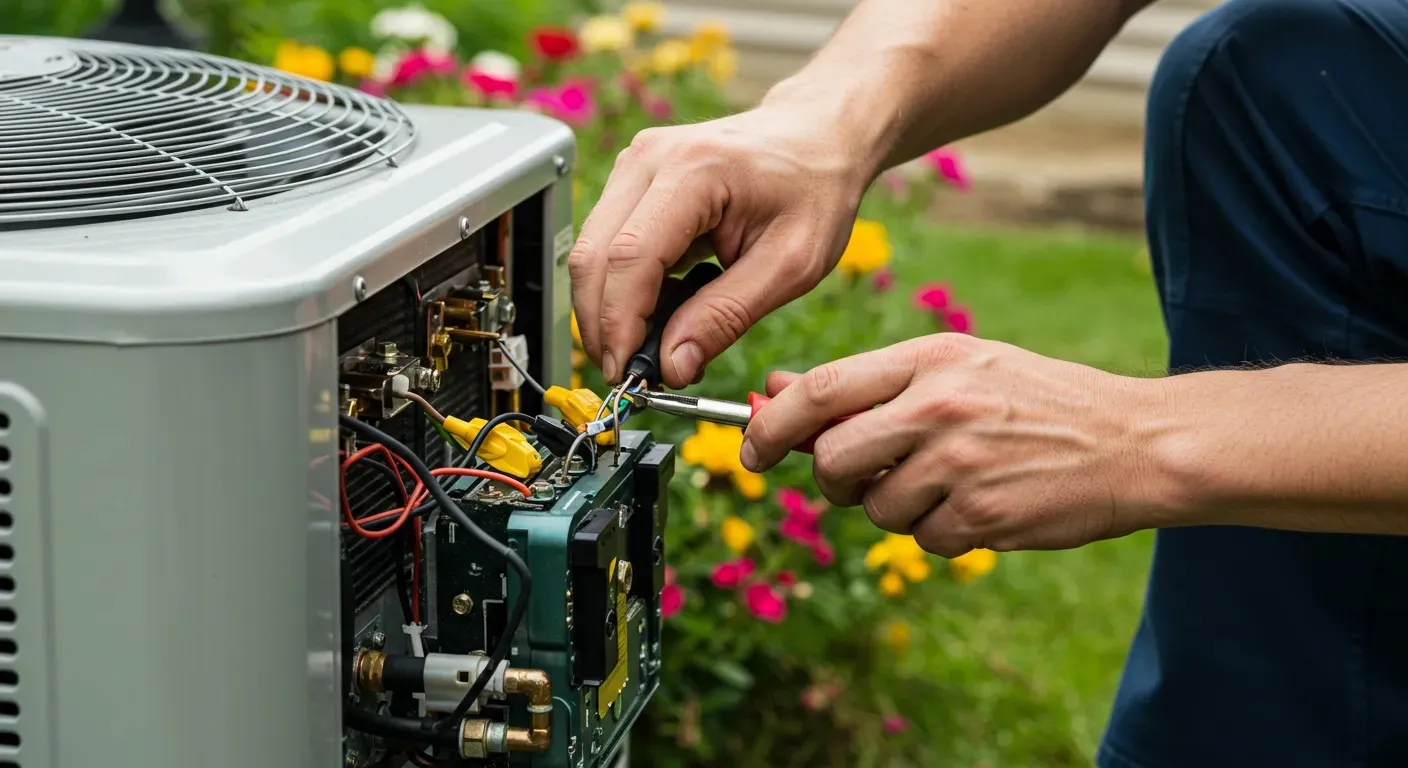
If you've ever wondered how does a heat pump work for both heating and cooling in New Jersey, here's the short answer: a heat pump doesn't burn fuel to create heat — it moves heat from one place to another using electricity. In summer, it pulls heat out of your home and releases it outside. In winter, it does the opposite, extracting heat energy from the outdoor air and bringing it inside. One system handles both jobs.
Quick Answer: How a Heat Pump Works in NJ
• Cooling — What It Does: Pulls heat from inside your home and releases it outdoors — When It Runs: Spring through fall
• Heating — What It Does: Extracts heat energy from outdoor air and moves it indoors — When It Runs: Fall through spring
• Both modes — What It Does: Uses electricity and refrigerant — no combustion, no fuel — When It Runs: Year-round
Modern cold-climate heat pumps are built to keep working even when New Jersey temperatures drop below freezing — some models stay effective down to -13°F. That's a big deal for South Jersey homeowners who are tired of sky-high oil or gas bills and inconsistent comfort throughout the year.
According to energy research, New Jersey homeowners who switch from oil heating to a heat pump can save up to 6,200 kWh annually. Those switching from electric resistance heaters can save around 3,000 kWh per year. And with the NJ Clean Energy Program rebates plus federal tax credits still on the table in 2026, the timing to make the switch has rarely been better.
This guide walks you through exactly how heat pumps work, which system fits your home, and what to expect living with one in New Jersey's four-season climate.
How Does a Heat Pump Work for Both Heating and Cooling in New Jersey?
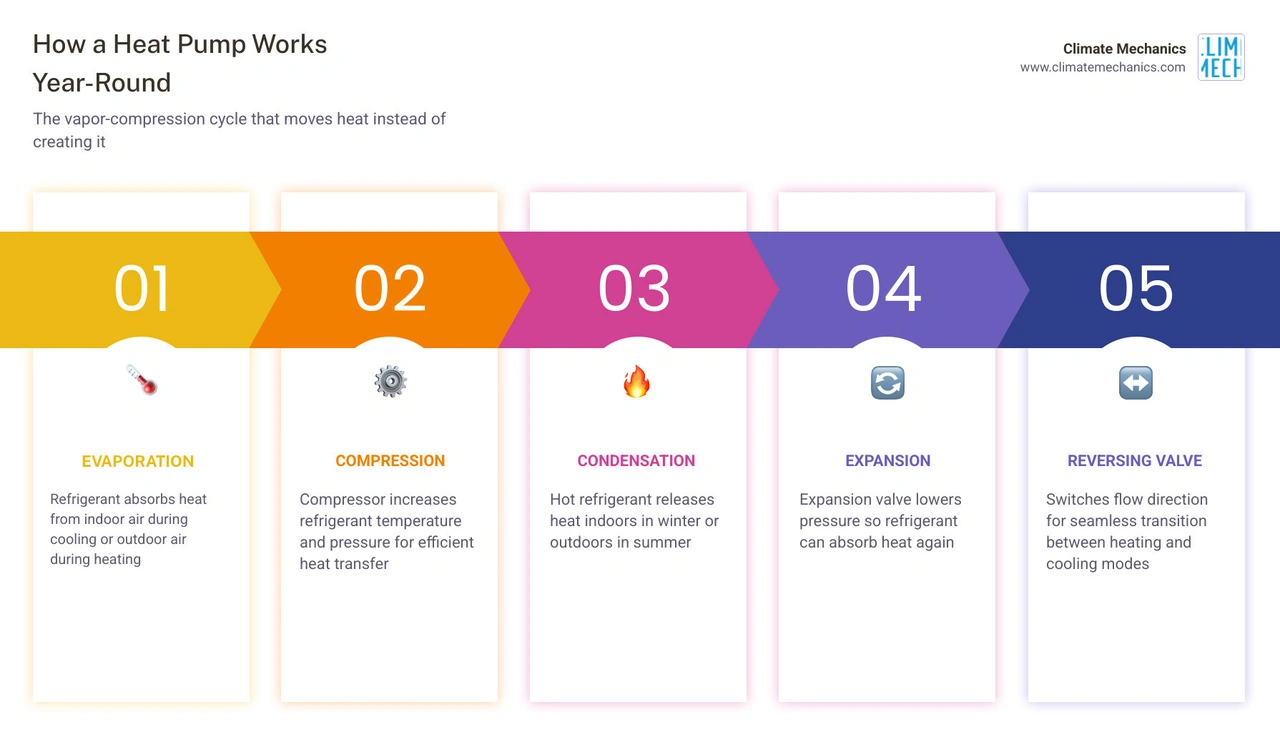
To understand how a single piece of outdoor equipment can keep your home cozy in the dead of a winter freeze and refreshingly cool during a humid July, we have to look at the vapor-compression refrigeration cycle.
At its core, a heat pump is an electricity-powered heat transporter. It relies on a closed loop of chemical refrigerant that circulates between your indoor air handler and an outdoor condenser unit.
The real magic that allows a heat pump to perform this double duty is a component called the reversing valve. This valve physically changes the direction of the refrigerant flow based on what you select on your thermostat. If you want to dive deeper into the core mechanics, check out our article on Understanding Heat Pumps.
The Cooling Cycle: Keeping NJ Homes Crisp in Summer
During the summer months in South Jersey towns like Marlton or Pennsauken, outdoor humidity can make your home feel like a sauna. In cooling mode, a heat pump operates exactly like a traditional central air conditioner.
1. Heat Absorption: Warm indoor air is blown across the indoor evaporator coil. The cold liquid refrigerant inside the coil absorbs the heat from your indoor air, causing the refrigerant to evaporate into a gas.
2. Dehumidification: As the warm, humid indoor air hits the cold coil, moisture condenses on the metal fins and drains away, lowering your home's humidity.
3. Compression & Release: The gaseous refrigerant travels outdoors to the compressor, which squeezes it to raise its temperature and pressure. The hot gas then flows through the outdoor condenser coil, where a fan blows outdoor air over the coil to release the heat into the atmosphere.
4. Expansion: The refrigerant cools back down into a liquid, passes through an expansion valve to drop its pressure, and returns indoors to repeat the process.
Because it works so similarly to a standard AC, many homeowners wonder if they should just buy a central air unit instead. We break down those differences in Heat Pumps: Central ACs, What's the Difference?.
The Heating Cycle: How Does a Heat Pump Work for Both Heating and Cooling in New Jersey Winters?
When late autumn hits Burlington and Willingboro, the reversing valve flips. The heat pump runs the exact same cycle, but in reverse.
Instead of taking heat out of your living room and dumping it in your backyard, the system extracts ambient heat from the outdoor air and pumps it inside. Yes, even when it feels freezing to you, there is still a massive amount of thermal energy present in the outdoor atmosphere.
The refrigerant in the outdoor coil is kept at an extremely low temperature. Because heat naturally flows from a warmer area to a colder area, the outdoor air—even at 30°F—warms up the super-cold refrigerant. The refrigerant is then compressed to concentrate that warmth, bringing it up to a high temperature before sending it to your indoor coil, where a fan circulates the cozy warmth throughout your home.
To learn more about how this process saves you energy in cold weather, take a look at Your Guide to Heat Pumps.
Heat Pumps vs. Traditional Systems: Key Differences
Unlike furnaces or boilers, which burn natural gas, heating oil, or propane to generate heat, a heat pump simply transfers existing heat. This fundamental difference makes heat pumps incredibly efficient. In fact, they can deliver up to three times more heat energy than the electrical energy they consume, achieving efficiencies up to 300%.
• Primary Function — Heat Pump: Heating & Cooling — Gas/Oil Furnace: Heating Only — Central Air Conditioner: Cooling Only
• Energy Source — Heat Pump: Electricity — Gas/Oil Furnace: Gas, Oil, or Propane — Central Air Conditioner: Electricity
• Operation Method — Heat Pump: Transfers heat — Gas/Oil Furnace: Generates heat via combustion — Central Air Conditioner: Transfers heat (one direction)
• Maximum Efficiency — Heat Pump: ~300% to 400% — Gas/Oil Furnace: 80% to 98% — Central Air Conditioner: N/A (Cooling only)
• Indoor Comfort Feel — Heat Pump: Consistent, gentle warmth — Gas/Oil Furnace: Intense, hot blasts — Central Air Conditioner: Cool, dry air
If you are trying to decide which setup is best for your specific South Jersey property, read our detailed comparison: Heat Pump vs Furnace: A Practical Guide for South Jersey Homeowners.
Heat Pump vs. Furnace: Comfort and Air Delivery
One of the first things families in Audubon or Haddonfield notice after upgrading to a heat pump is that the air coming out of the registers feels different.
A traditional gas or oil furnace blasts air out of your vents at roughly 120°F to 140°F. While this feels incredibly hot, it often leads to a "rollercoaster" effect—your home gets very hot quickly, the system shuts off, the temperature drops, and then it blasts hot air again.
A heat pump delivers air at a gentler, steadier 90°F to 100°F. Because this is closer to your actual body temperature, the air doesn’t feel "hot" to the touch, but it heats your home much more evenly. The system runs on longer, lower-speed cycles, eliminating drafts and keeping your indoor climate incredibly stable. To understand how this affects your daily comfort, read Home Comfort with Efficient Heat Pump.
Types of Heat Pump Systems Available for Garden State Homes
No two New Jersey homes are identical. A historic home in Collingswood has very different HVAC needs than a modern build in Marlton. Fortunately, heat pumps come in several distinct configurations.
To explore these options in-depth, check out A Comprehensive Guide to Heat Pumps.
Ducted Air-Source Heat Pumps
If your home already has a central ductwork system from an old furnace or central AC, a ducted air-source heat pump is often the easiest swap. The outdoor unit connects directly to your existing ducts via an indoor air handler. This provides seamless, whole-home heating and cooling without changing the look of your interior spaces. Learn more about the installation process at Heat Pump Installation: Home Comfort Upgrade.
Ductless Mini-Split Systems
Many older properties in Camden and Haddonfield rely on radiator heat and lack the space to install bulky metal ductwork. For these homes, ductless mini-splits are a game-changer.
An outdoor compressor connects to one or more indoor air handlers (mounted on walls, ceilings, or floor consoles) via small refrigerant lines. This allows you to create independent "comfort zones" throughout your home, heating or cooling only the rooms you are using. To see if this matches your layout, read Heat Pump Right for Me?.
Geothermal (Ground-Source) Systems
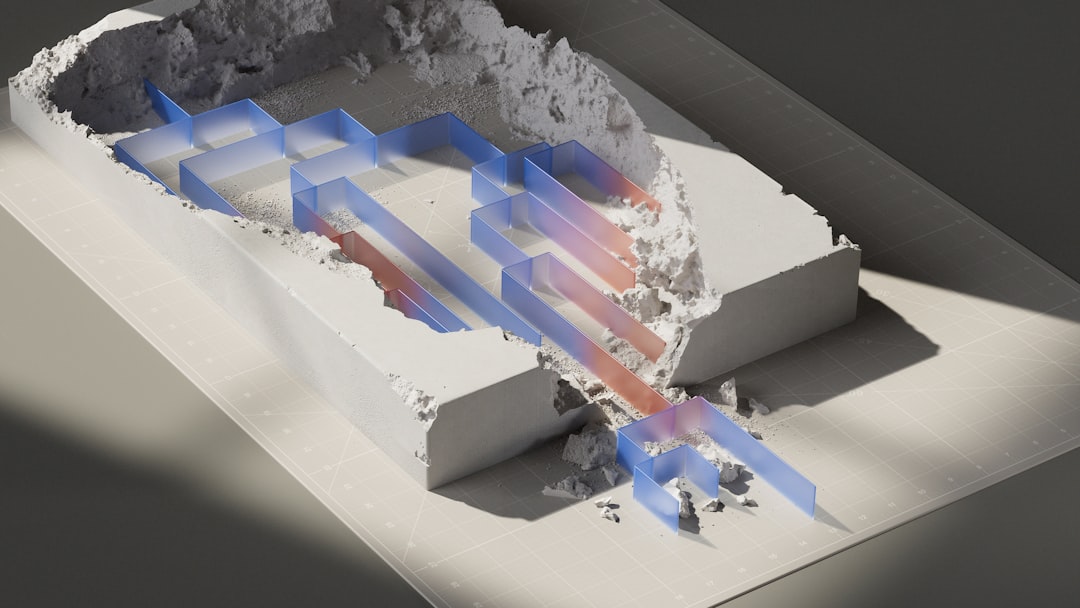
Instead of exchanging heat with the outdoor air, geothermal heat pumps utilize the constant temperature of the earth (usually between 50°F and 55°F just a few feet below the frost line in New Jersey).
By burying a loop of pipes in your yard, these systems achieve unmatched efficiency because they don't have to work harder during extreme winter freezes or summer heatwaves. While they require more initial yard work, their underground loops can last up to 50 years. Ready to schedule a site evaluation? Visit Schedule Heat Pump Installation.
Performance, Efficiency, and Maintenance in the New Jersey Climate
Living in South Jersey means experiencing the full spectrum of weather—from humid 95°F summer days to freezing, snowy winter nights. Here is how heat pumps handle our local climate.
Efficacy of Cold-Climate Heat Pumps in Freezing Temperatures
A common myth is that heat pumps stop working when it drops below freezing. While this was true for older models from decades ago, modern cold-climate heat pumps (CCHPs) utilize variable-speed inverter compressors and advanced refrigerants to maintain high efficiency even when it is 5°F outside.
If you notice your system running for long stretches during a January cold snap, don't panic! It is designed to run continuously at a low, energy-saving speed to maintain your temperature. To learn more about this behavior, read Why Heat Pump Constantly Running.
Dual-Fuel Hybrid Systems: The Best of Both Worlds
For some homeowners, a dual-fuel (or hybrid) system offers ultimate peace of mind. This setup pairs an electric heat pump with a high-efficiency gas furnace.
• Mild Weather (Above 35°F–40°F): The heat pump handles all the heating, saving you money by utilizing highly efficient electricity.
• Extreme Cold (Below 35°F): The system automatically switches over to the gas furnace to deliver rapid, high-temperature heat when the outdoor air is frigid.
If your system is having trouble toggling between these modes, you can find troubleshooting tips at Heat Pump Not Switching Modes Properly.
Financial Incentives and Environmental Impact
Adopting a heat pump is one of the most impactful ways to reduce your carbon footprint. Residential electrification in New Jersey could cut over 10 million metric tons of CO2 emissions by 2030.
To encourage this transition, New Jersey utilities like PSE&G and Atlantic City Electric offer robust rebates ranging from $1,000 to $1,400 for qualifying high-efficiency models. Additionally, the federal government offers tax credits covering up to 30% of the project (capped at $2,000 per year).
To maximize these savings, your system must be properly charged and free of leaks. Learn more about maintaining system integrity at Heat Pump Refrigerant Leaks Detection Solutions.
Essential Maintenance and Recognizing Performance Issues
Because your heat pump works hard all 12 months of the year, keeping up with basic maintenance is crucial for protecting your investment.
• Change Filters: Wash or replace indoor air filters every 1 to 3 months.
• Keep Outdoor Unit Clear: Ensure leaves, snow, grass clippings, and weeds don't block airflow around your outdoor condenser.
• Professional Tune-Ups: Schedule professional maintenance twice a year—once in the spring before cooling season, and once in the fall before heating season.
Ignoring these steps can lead to performance drops or unexpected breakdowns. Keep an eye out for warning signs by reading:
• Signs Your Heat Pump Needs Repair
• Heat Pump Warning Signs to Watch
• Common Heat Pump Performance Issues
Frequently Asked Questions About New Jersey Heat Pumps
How does a heat pump work for both heating and cooling in New Jersey during extreme weather?
Modern cold-climate heat pumps use inverter-driven compressors that speed up or slow down incrementally. During extreme summer heat or winter freezes, the compressor ramps up to meet the demand. In extreme winter temperatures, standard models may switch to auxiliary electric resistance heat strip backups, while cold-climate models continue to extract heat from outdoor air down to subzero temperatures without backup assistance.
Can a heat pump completely replace a furnace in an older NJ home?
Yes, but insulation is key. Older homes in areas like Camden or Burlington often benefit from weatherization (adding insulation and sealing air leaks) before installing a heat pump. This ensures the heat pump doesn't have to be oversized to compensate for drafty windows and walls. Ductless mini-splits are also an excellent way to replace old radiator systems in historic properties.
How long do heat pumps typically last in New Jersey's climate?
On average, a well-maintained air-source heat pump lasts between 12 and 15 years. Because they operate year-round, they experience more wear and tear than a standalone furnace. Regular professional tune-ups and keeping the outdoor unit clear of coastal salt air or heavy winter snow are the best ways to maximize your system's lifespan.
Conclusion
Now that you know how does a heat pump work for both heating and cooling in New Jersey, you can see why so many of your neighbors in Maple Shade, Pennsauken, Audubon, Willingboro, Collingswood, Haddonfield, Burlington, Marlton, and Camden are making the switch. By transferring heat instead of burning fossil fuels, these systems offer a cleaner, safer, and incredibly efficient way to keep your family comfortable all year long.
At Climate Mechanics, we bring over 38 years of NATE and NCI-certified expertise to every single job. We don’t believe in one-size-fits-all solutions; we provide personalized, friendly service to ensure your new system is sized perfectly for your home's unique layout.
Ready to see if a heat pump is the right upgrade for your South Jersey home? Schedule a professional consultation with Climate Mechanics today!
