


What Are the Symptoms of a Dirty Condenser Coil in a Humid South Jersey Environment?
If you've noticed dirty condenser coil symptoms in a humid South Jersey environment, here's a quick summary of what to look for:
• Warm air from vents even when the AC is running constantly
• Higher energy bills — a dirty coil can cut efficiency by up to 30%
• AC running non-stop without reaching the set temperature
• Sticky, humid indoor air even with the system on
• Musty odors from increased indoor moisture and potential mold growth
• Ice buildup on refrigerant lines or the indoor coil
• Visible dirt, pollen, or debris packed into the outdoor unit's fins
South Jersey summers hit hard. Temperatures climb into the 90s, relative humidity regularly pushes past 70%, and your air conditioner is working overtime just to keep your home livable. Now add a condenser coil caked in pollen, grass clippings, and coastal moisture — and your system isn't just working harder, it's fighting against itself.
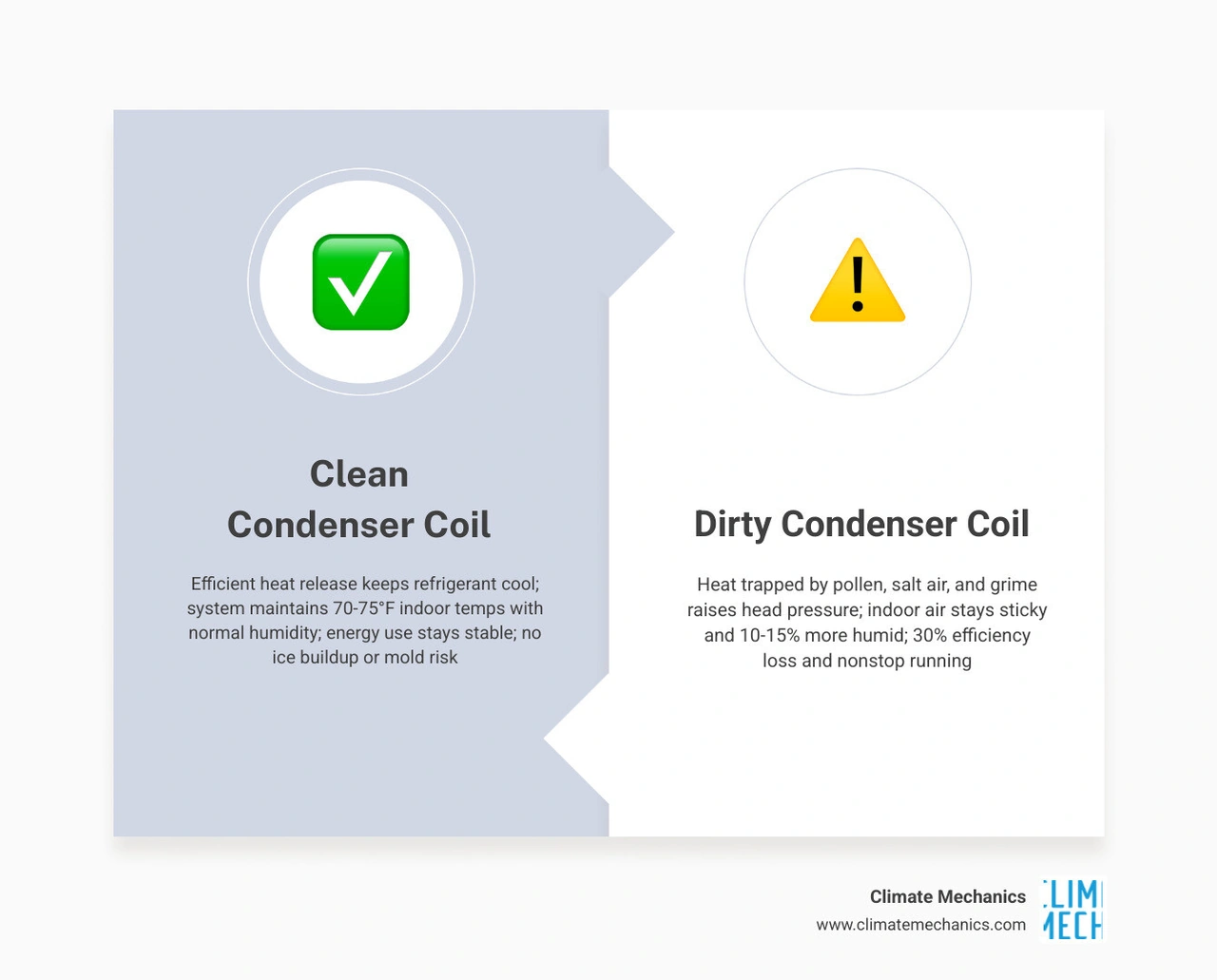
The condenser coil is the outdoor unit's heat-release engine. When it's clean, refrigerant dumps heat outside efficiently and returns indoors ready to cool again. When it's coated in grime, that heat has nowhere to go. The system strains, your home stays warm and muggy, and your utility bill climbs — all while you wonder if something is seriously broken.
In South Jersey specifically, the combination of coastal humidity, seasonal pollen, and salt air makes condenser coils dirtier faster than in drier inland climates. That means the symptoms show up sooner, and they hit harder.
How South Jersey's High Humidity Worsens Condenser Coil Issues
South Jersey’s unique geography creates a perfect storm for outdoor AC units. Whether you are living along the Delaware River in Pennsauken or Camden, or tucked into the suburban neighborhoods of Haddonfield and Collingswood, your outdoor condenser unit is constantly exposed to heavy, moisture-laden air.
This humidity does more than make you sweat; it acts like a magnet for airborne debris. When the air is highly humid, pollen from our local oak and pine trees, fine dust, and fresh grass clippings from weekly lawn maintenance stick to the damp aluminum fins of your outdoor unit. Over time, this mixture bakes under the summer sun, forming a thick, cement-like crust.
This crust acts as a thermal insulation blanket. Instead of allowing heat to escape into the outdoor air, the dirt traps the heat inside the refrigerant lines. When heat cannot escape, your air conditioner has to run longer and longer cycles to try and cool your home. This is a primary reason behind Why Does My AC Run All Day Without Stopping in a South Jersey Summer, leaving your system vulnerable to premature wear and tear.
Why Dirty Condenser Coil Symptoms in a Humid South Jersey Environment Are Worse in Summer
Our region sits squarely in Climate Zone 4A, which is classified as a mixed-humid environment. During a typical South Jersey summer, your air conditioner faces two distinct types of heat loads:
• Sensible Heat: The actual temperature you read on a thermometer (e.g., a scorching 92°F afternoon in Marlton).
• Latent Heat: The hidden heat stored in water vapor (the heavy humidity that makes 92°F feel like 102°F).
In a dry climate, an AC unit only has to focus on lowering the sensible temperature. In our humid climate, the system must work twice as hard because it has to wring gallons of water out of the air while simultaneously lowering the temperature. When a dirty condenser coil limits the system's ability to release heat, the entire cooling and dehumidification process grinds to a halt. The system’s workload spikes, causing it to run continuously in a desperate attempt to satisfy the thermostat.
The Physics of Heat Transfer and Latent Heat
Inside your air conditioner, refrigerant cycles back and forth, changing states from liquid to gas to absorb and release heat. For this cycle to work efficiently, the refrigerant must undergo a process called subcooling in the outdoor condenser coil. Subcooling ensures the refrigerant cools down enough to transition back into a liquid state before heading back indoors.
When dirt blocks the airflow through your condenser coil, the heat transfer process fails. The refrigerant remains too hot, causing the system's internal "head pressure" to skyrocket. This extreme pressure forces the compressor — the heart of your AC unit — to draw more electrical current and work under dangerous thermal stress. If left unaddressed, this extra strain can lead to catastrophic compressor failure. To protect your system, it is crucial to recognize these AC Compressor Problems Warning Signs before your compressor overheats and burns out.
Recognizing Dirty Condenser Coil Symptoms in a Humid South Jersey Environment

Because your outdoor condenser unit sits quietly in your backyard or on the side of your house in Audubon or Maple Shade, it is easy to ignore. However, learning to recognize the early warning signs of a dirty coil can save you from a sudden system breakdown during the hottest week of July.
If you suspect your system is struggling, start by taking a close look at the outdoor unit. Walk up to the condenser and inspect the metal grilles. You should be able to see the delicate, silver aluminum fins. If those fins are covered in a gray or brown layer of dust, matted with white cottonwood seeds, or blocked by overgrown weeds and bushes, your coils are dirty. You should also check for bent fins, which restrict airflow just as badly as dirt. Recognizing these physical indicators is one of the first Signs You Need Expert AC Repair to restore proper system airflow.
How to Spot Dirty Condenser Coil Symptoms in a Humid South Jersey Environment Before a Breakdown
You don't always have to look at the outdoor unit to know there is a problem; your indoor comfort will tell you first. When condenser coils are dirty, you will notice a gradual drop in cooling capacity.
At first, you might notice that the air coming out of your supply vents isn't quite as cold as it used to be. As the dirt accumulates, this lukewarm breeze becomes more pronounced. Your thermostat will struggle to reach your target temperature, running continuously throughout the afternoon without ever making the house feel truly comfortable. If you find yourself asking, "Why Is My AC Blowing Warm Air?", a heavily soiled outdoor coil is very often the culprit.
Spiking Energy Bills and Constant System Cycling
Have you noticed your monthly electric bills climbing higher than usual? A dirty condenser coil can reduce your air conditioner’s operating efficiency by up to 30%, which translates directly to higher utility costs.
Because the compressor has to run longer and draw more power to overcome the high head pressures, your energy consumption can spike by 16% or more. In highly humid regions like South Jersey, neglecting your outdoor unit can cause summer utility bills to rise by 20% to 30%. You may also notice your system constantly turning on and off (short-cycling) or running indefinitely without a break. When your system is AC Not Responding to Temperature Adjustments, it is wasting massive amounts of electricity while subjecting internal components to unnecessary wear.
The Impact of Dirty Coils on Indoor Comfort and Dehumidification
An air conditioner is not just a cooling machine; it is also a giant dehumidifier. In fact, proper dehumidification is the key to feeling comfortable in South Jersey’s muggy climate. However, when the outdoor condenser coil is dirty, the indoor evaporator coil cannot maintain the correct temperature to condense moisture out of the air.
To help visualize how a dirty condenser coil degrades your system's performance, look at the comparison below:
• Indoor Relative Humidity — Normal AC Operation (Clean Coils): Comfortable (45% – 55%) — Dirty Condenser Coil Operation: High & Sticky (60% – 70%+)
• Airflow Temperature — Normal AC Operation (Clean Coils): Crisp & Cold (16°F–22°F drop) — Dirty Condenser Coil Operation: Lukewarm / Warm
• Energy Efficiency — Normal AC Operation (Clean Coils): Peak Performance (100%) — Dirty Condenser Coil Operation: Reduced by up to 30%
• System Run Times — Normal AC Operation (Clean Coils): Standard, efficient cycles — Dirty Condenser Coil Operation: Continuous running or short-cycling
• Compressor Stress — Normal AC Operation (Clean Coils): Low to Moderate — Dirty Condenser Coil Operation: Extremely High (Risk of failure)
• Indoor Air Quality — Normal AC Operation (Clean Coils): Fresh, dry, and clean — Dirty Condenser Coil Operation: Musty, humid, mold risk
The "Cold Swamp" Effect and Indoor Moisture Buildup
When your AC cannot properly dehumidify, your home falls victim to what HVAC professionals call the "cold swamp" effect. This occurs when the indoor temperature drops slightly, but the relative humidity remains incredibly high (often exceeding 60% or 70%).
You will know you are experiencing this when your skin feels tacky, your bedsheets feel damp, and the air inside feels heavy and stale. In humid climates, dirty coils can increase indoor moisture levels by 10% to 15%. This excess humidity does more than cause discomfort; it creates an ideal breeding ground for mold, mildew, and dust mites. You may also start to notice musty odors coming from your vents. In some cases, high indoor humidity can even lead to moisture pooling around your indoor air handler. If you notice water pooling, consult our guide on AC Leaking Water: Causes and Solutions to prevent water damage to your home.
Frozen Evaporator Coils and Lukewarm Airflow
It sounds counterintuitive, but a dirty outdoor unit can actually cause your indoor unit to freeze solid. When the outdoor condenser coil cannot release heat, the refrigerant cycle is disrupted. The pressure inside the indoor evaporator coil can drop below safe levels, causing the temperature of the coil to fall below freezing.
As the humid indoor air passes over this freezing coil, the moisture instantly turns to ice. Over several hours, this ice sheet grows thicker, completely blocking airflow through your ductwork. Eventually, your system will stop blowing air altogether, or it will blow warm air while water drips from your indoor unit as the ice melts. If your system is iced over, check out AC Freezing Up: What to Know to learn how to safely thaw it out before calling for service.
Preventive Maintenance and Cleaning for South Jersey Homeowners
Keeping your condenser coils clean is one of the most effective ways to protect your HVAC investment. Regular coil cleaning can improve overall AC performance by 15% to 20% and extend your equipment's lifespan by 5 to 10 years, saving you from premature and expensive system replacements.
Safe DIY Maintenance Steps
While deep chemical cleaning should be left to the experts, there are several simple steps South Jersey homeowners in Willingboro, Burlington, or Haddonfield can take to keep their outdoor units breathing easily:
1. Maintain a Clear Zone: Keep a minimum 2-foot clearance around your outdoor unit. Trim back any shrubs, weeds, or decorative plantings that could block airflow.
2. Clear Loose Debris: Turn off the power to your AC unit at the outdoor disconnect box. Gently brush away loose leaves, twigs, and grass clippings from the exterior grilles using a soft brush.
3. Rinse with Low Pressure: Using a standard garden hose with a gentle spray nozzle, rinse the coils. Always spray from the top down and from the inside out if possible. Never use a pressure washer, as the high pressure will instantly flatten the delicate aluminum fins.
4. Straighten Bent Fins: If you notice small sections of bent fins, you can use a specialized HVAC fin comb to gently straighten them and restore airflow.
For more helpful home care strategies, read our guide on 4 Ways to Keep Your A/C Running Properly throughout the summer.
When to Call a Professional for Coil Service
While basic rinsing is helpful, DIY cleaning has its limits. If your condenser coil has years of baked-on dirt, pollen, and salt crust, a simple garden hose won't cut it. In fact, hosing down a heavily soiled unit without the proper cleaners can actually pack the dirt deeper into the center of the coil, making the blockage worse.
Professional technicians use specialized, non-acidic foaming chemical cleaners that penetrate deep into the coil layers. These cleaners dissolve the stubborn grime and float it to the surface where it can be safely rinsed away. Furthermore, professional maintenance includes checking refrigerant pressures, measuring electrical draw, and verifying system airflow. To keep your system running at peak efficiency, we highly recommend scheduling a professional tune-up. If you live in the Camden County area, you can easily book your seasonal check-up through our AC Maintenance Voorhees NJ service page.
To stay ahead of the summer heat, make sure to follow these essential AC Maintenance Tips for Summer to keep your home cool and dry all season long.
Frequently Asked Questions About AC Condenser Coils
Can I use a pressure washer to clean my AC condenser coils?
No, absolutely not. You should never use a pressure washer on your air conditioner. The aluminum fins on your condenser coil are incredibly thin and delicate. The high-pressure stream from a pressure washer will bend and flatten these fins instantly, completely blocking airflow. This can permanently damage the coil and require an expensive replacement. Stick to a gentle spray from a standard garden hose.
How often should I have my condenser coils cleaned in South Jersey?
For most homes in South Jersey, an annual professional cleaning is highly recommended, ideally in the spring before the cooling season begins. However, if you live in a coastal area exposed to salt air, or if your property has heavy pollen, cottonwood trees, or frequent lawn mowing nearby, your coils may need to be cleaned twice a year to maintain peak efficiency.
Will cleaning my condenser coils actually lower my energy bills?
Yes, significantly. Cleaning a dirty condenser coil can improve your air conditioner's efficiency by 15% to 20%. By allowing the system to release heat easily, the compressor doesn't have to work as hard or run as long, which directly reduces your monthly electricity consumption and lowers your utility bills.
Conclusion
A dirty condenser coil is more than just an eyesore; it is a silent efficiency killer that thrives in South Jersey's humid climate. From sky-high electric bills to sticky indoor air and frozen coils, neglecting your outdoor unit can quickly turn your comfortable home into a humid swamp.
At Climate Mechanics, we bring over 38 years of NATE and NCI-certified expertise to every job. Our family-owned business is dedicated to providing personalized, high-quality service to homeowners across South Jersey, including Maple Shade, Pennsauken, Audubon, Willingboro, Collingswood, Haddonfield, Burlington, Marlton, and Camden. Don't let a dirty coil burn out your compressor or ruin your summer comfort.
Schedule expert AC repair in Delran, NJ with the friendly team at Climate Mechanics today, and let us bring the cool, dry comfort back to your South Jersey home!
