


Why a Grinding Air Conditioner Needs Immediate Attention on a Hot Summer Day
Your thermostat reads eighty degrees, the vents are barely pushing out cool air, and a harsh, metallic noise is echoing from the equipment outside. The real reason your AC unit sounds like it's grinding during peak afternoon heat usually comes down to severe mechanical stress caused by continuous operation. In our years of serving the Cinnaminson area, the team at Climate Mechanics frequently finds that many homeowners mistakenly assume that a loud, struggling air conditioner is simply "working hard" to overcome the intense July peak afternoon heat. Unfortunately, this assumption often leads to catastrophic equipment failure.
A grinding sound is never a normal operational noise. It is a critical mechanical warning that metal components are scraping against one another without proper lubrication or clearance. When you hear this distinct, heavy friction, you are facing an immediate decision point: ignore the noise and risk destroying the core components of your system, or take immediate action to halt the damage. Understanding the physical toll that extreme temperatures take on moving parts is the first step in protecting your investment.
To keep your home safe and comfortable, you need reliable air conditioning services that address these mechanical emergencies before they result in a total system breakdown. The longer a grinding unit runs, the more internal damage it sustains. By recognizing the warning signs early, you can intervene before a relatively minor mechanical fault escalates into a complete system replacement.
The Mechanical Toll of Unrelenting Afternoon Temperatures
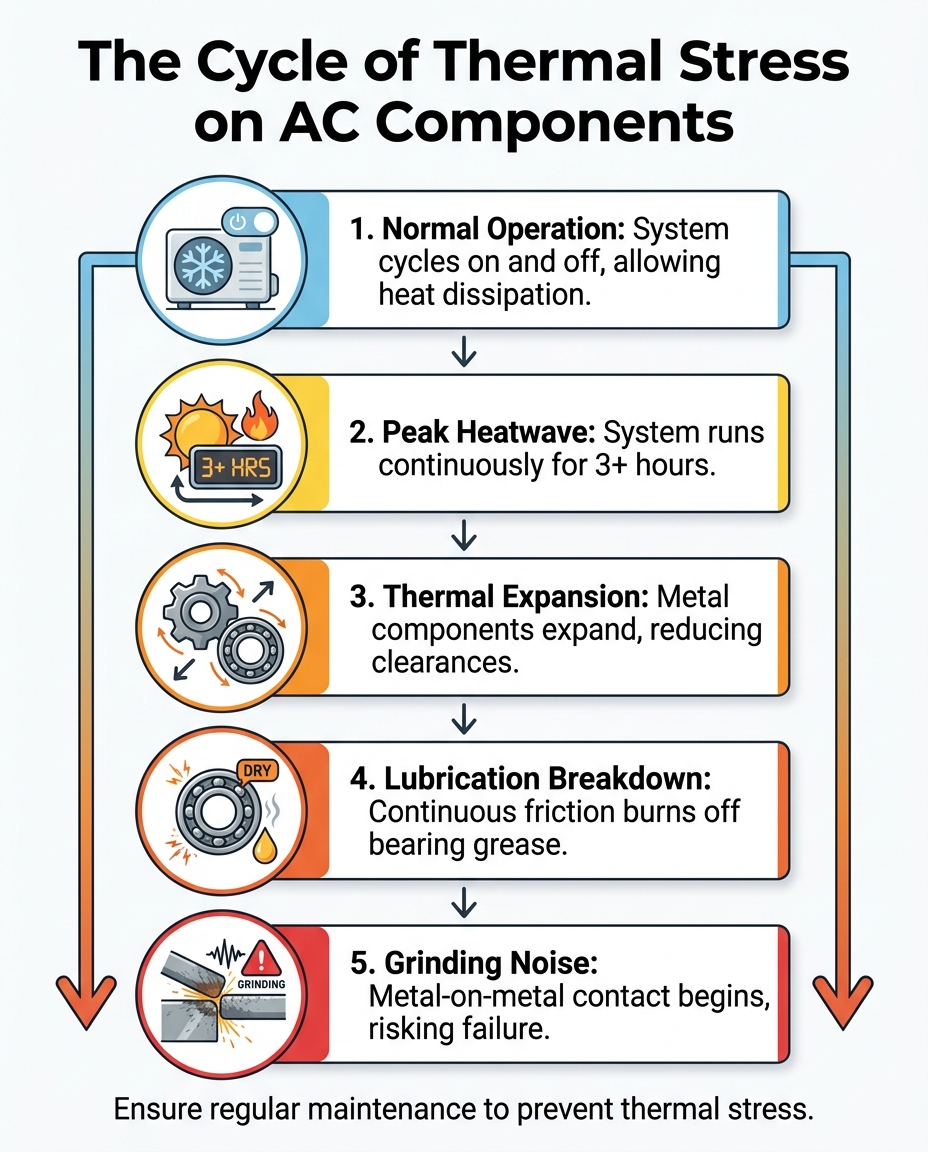
Air conditioning systems are engineered to operate in cycles. Under normal conditions, the unit runs until the indoor temperature reaches your thermostat setting, then powers down. This resting phase is not just for energy efficiency; it is a vital mechanical requirement that allows internal motors and compressors to dissipate the intense heat generated during operation.
The Physics of Thermal Expansion
During severe afternoon heatwaves, your system loses its ability to cycle off. The ambient outdoor temperature combined with the heat transfer from inside your home forces the unit into continuous run times exceeding 3-4 hours. As the equipment runs without a break, the internal temperature of the metal components skyrockets. This leads to thermal expansion—a physical process where extreme heat causes metal parts to swell and expand slightly.
While air conditioners are built to handle heat, prolonged thermal expansion reduces the microscopic clearances between moving parts. Bearings, shafts, and pistons that normally glide smoothly begin to experience severe friction. The natural resting phase that the equipment relies on to cool down is completely eliminated, creating a compounding cycle of heat and friction.
The Breakdown of Essential Lubrication
As the metal expands and friction increases, the factory-sealed lubrication inside the motors and compressor begins to break down. High temperatures thin out the oil and grease, causing it to lose its protective viscosity. Without that vital fluid barrier, you are left with raw metal scraping against raw metal at thousands of revolutions per minute. This intense mechanical friction is exactly what produces the harsh grinding noises you hear from the yard.
Addressing this requires professional AC repair in Cinnaminson. Our technicians see this exact scenario every July, and we know how critical it is to properly diagnose the extent of the friction damage and restore the mechanical integrity of the system before the components fuse together entirely.

Unmasking the Metal-on-Metal Grind: Failing Fan Motor Bearings
One of the most common culprits behind a loud grinding noise is the condenser fan motor. Located at the top of the outdoor unit, this fan is responsible for pulling air through the condenser coils to exhaust heat away from the refrigerant. The fan blade is attached to a motor shaft, which relies on a set of internal bearings to spin smoothly and quietly.
When subjected to the relentless July peak afternoon heat, these bearings take massive amounts of abuse. If you are wondering why your AC unit is vibrating excessively along with the grinding noise, our field experience shows that failing bearings are highly likely. The progression of bearing failure typically follows a specific mechanical sequence:
1. Thermal Degradation: Continuous hours of operation in high ambient heat cause the internal grease inside the sealed bearing to liquefy and seep out, or simply burn away.
2. Increased Friction: Without lubrication, the steel ball bearings begin to drag against their outer casing rather than rolling smoothly.
3. Scraping and Grinding: The dragging metal creates deep grooves in the bearing race, producing a distinct, high-pitched grinding or screeching sound that fluctuates as the fan spins.
4. Motor Seizure: If left running, the friction generates so much heat that the bearings can actually weld themselves together, seizing the motor entirely and stopping the fan dead.
If the fan stops spinning, the entire outdoor unit loses its ability to reject heat. The internal temperature of the system will spike dramatically, immediately putting the compressor at risk of catastrophic failure.
When the Heart of Your System Struggles: Compressor Over-Pressurization
While a failing fan motor is a serious issue, a grinding noise emanating from the compressor is a true mechanical emergency. The compressor is the heart of your cooling system; it acts as a heavy-duty pump that pressurizes refrigerant and circulates it between the indoor and outdoor coils. Because it operates under immense pressure, it requires precise internal tolerances to function.
Continuous run times exceeding 3-4 hours without a cooling break cause the internal pressure and heat within the compressor to build to dangerous levels. Whether your system uses a modern scroll compressor or a traditional reciprocating piston design, extreme over-pressurization forces the internal mechanisms to grind against their housings. The lubricating oil that typically protects the compressor can overheat and migrate away from the moving parts, leaving the core mechanics completely unprotected.
Distinguishing the Source of the Grind
Telling the difference between a failing fan motor and a struggling compressor is critical, as the repair paths are vastly different. Here is a breakdown of how these two issues typically present themselves:
• Fan Motor Bearings — Type of Noise: High-pitched, metallic scraping or screeching from the top of the unit. — Operational Impact: Fan may spin slowly, wobble, or eventually stop entirely. — Severity Level: Moderate to High. Requires motor replacement before it seizes.
• Compressor — Type of Noise: Deep, heavy, rumbling grind from the bottom base of the unit. — Operational Impact: System struggles to cool; frequent tripping of the electrical breaker. — Severity Level: Severe. Indicates impending catastrophic failure of the entire system.
A failing compressor often sounds like a heavy diesel engine struggling to turn over, whereas a fan motor sounds more like a screeching metal blade. Regardless of which component is failing, neither issue will resolve itself.
How High Humidity Compounds Cooling System Stress
In many regions, extreme heat is only half the battle. Air conditioners actually perform two distinct jobs simultaneously: they lower the indoor temperature (sensible cooling) and they remove moisture from the air (latent cooling). When the air is thick with moisture, the system has to work significantly harder to achieve the desired comfort level.
The Cinnaminson NJ area is notorious for heavy summer moisture. Having repaired countless systems in South Jersey's intense summer humidity, our technicians know that this weather requires extended latent cooling cycles. Before the air conditioner can effectively drop the temperature in your living room, it first has to extract gallons of water vapor from the indoor air. This dehumidification process forces the system to run for much longer periods than it would in a dry climate.
These extended, humidity-driven run times push aging fan motors and compressors past their operational limits. The combination of high ambient heat preventing the outdoor unit from cooling down, and high indoor humidity forcing the system to run non-stop, is the ultimate trigger for mechanical grinding. The components are simply denied the downtime they need to shed heat and allow lubricants to settle.
Why You Must Shut Off a Grinding Air Conditioner Immediately
If you hear a grinding noise during the July peak afternoon heat, the most important action you can take is to stop the system. An air conditioner will never "fix itself" or push through a mechanical failure. Continuing to run the unit guarantees that the friction will worsen, turning a repairable issue into a permanent disaster.
Here are the immediate steps you should take to protect your home and your equipment:
1. Turn the Thermostat Off: Do not just raise the temperature; switch the cooling mode completely to "OFF" to halt all electrical signals to the outdoor unit.
2. Check the Breaker: If the unit was grinding heavily, it may have already tripped the circuit breaker due to high electrical draw. Leave the breaker off.
3. Do Not Attempt DIY Inspections: Never open the access panels of a grinding AC unit while it is powered on. The combination of high-voltage electricity and violently seizing mechanical parts is incredibly dangerous.
4. Call for Emergency Service: Contact a licensed professional to diagnose the exact source of the friction.
The mechanical difference between shutting the system down early and letting it run is massive. Catching a failing fan motor early might result in a minor bearing or motor replacement. Letting it run until it seizes and destroys the compressor will require replacing the entire outdoor unit.
One of our local customers reached out on a sweltering summer holiday weekend when their central air unit suddenly stopped working. Because they noticed the strange noises and shut the system down quickly, we dispatched a technician who diagnosed the mechanical fault and had the system back up and running within 30 minutes. Fast action saves equipment. Following up with routine AC maintenance ensures these mechanical stresses are caught before they ever cause a breakdown.
Expert Diagnostics: Pinpointing the Source of the Grind
Distinguishing between a bad fan motor bearing and a failing compressor requires professional diagnostic tools and specialized training. When a technician arrives to inspect a grinding unit, they do not just guess based on the sound; they perform a systematic analysis of the equipment's mechanical and electrical health.
Because continuous run times exceeding 3-4 hours place immense stress on the entire system, a thorough diagnostic process includes several critical checks:
• Electrical Draw (Amperage) Testing: A failing motor or struggling compressor will pull significantly more electricity than normal as it fights against internal friction. Technicians use multimeters to measure this amp draw and determine exactly which component is failing.
• Refrigerant Pressure Analysis: By attaching digital gauges to the system, professionals can see if a failing compressor is struggling to pump refrigerant, which indicates severe internal wear.
• Capacitor Evaluation: Sometimes, a weak run capacitor fails to provide enough voltage to the motors, causing them to struggle, overheat, and grind.
• Bearing Integrity Checks: Technicians can safely test the play and resistance in the fan motor shaft to confirm if the bearings have collapsed.
Our expert diagnostic capabilities and reliable emergency response at Climate Mechanics are designed to catch these mechanical issues before they lead to catastrophic compressor failure. For example, another customer called our team on short notice with severe AC and heating system issues on a stifling summer evening. We provided an immediate response, addressing the mechanical issues promptly and professionally to restore comfort before the house became dangerously hot.
The best way to avoid these emergency scenarios entirely is by enrolling in our preventative maintenance program. Regular inspections ensure that bearings are properly lubricated, electrical components are sound, and the system is prepared to handle the relentless strain of continuous summer operation.
Frequently Asked Questions About AC Grinding Noises
Why does my AC make a grinding noise in the afternoon?
Afternoon heat causes the system to run continuously, leading to thermal expansion and broken-down lubrication in moving parts. When the unit runs for hours without cycling off, the internal temperature of the motors spikes. This heat thins out protective greases, causing metal components like bearings to scrape against each other, which produces the grinding sound.
Should I turn off my AC if it's grinding?
Yes, immediately. Continuing to run it can turn a minor bearing issue into a catastrophic compressor failure. A grinding noise indicates active metal-on-metal friction that will only worsen the longer the unit operates. Shutting the system down at the thermostat is the safest way to prevent total equipment destruction.
What happens if AC fan bearings fail?
The fan motor seizes, stopping airflow over the condenser coils, which rapidly overheats and destroys the compressor. Without the fan pulling air through the outdoor unit, the heat removed from your home has nowhere to go. The internal pressure skyrockets, forcing the compressor to work itself to death in a matter of hours.
Is a grinding noise always the compressor?
No. It is often the condenser fan motor bearings, which is a much less severe issue if caught early. While a failing compressor produces a deep, heavy rumbling grind, a failing fan motor typically creates a higher-pitched, screeching metal sound. A professional technician must test the electrical draw to confirm which component is at fault.
Can high humidity cause my AC to make strange noises?
Indirectly, yes. High humidity forces the AC to run longer to dehumidify the air, increasing the mechanical wear that leads to grinding. Because the system has to extract heavy moisture from the indoor air before it can effectively lower the temperature, it runs continuously, denying the outdoor motors the resting phase they need to cool down.
Protect Your Cooling System From Catastrophic Failure
Grinding noises are a direct result of continuous mechanical stress, thermal expansion, and failing lubrication. When your system is pushed to the limit by continuous run times exceeding 3-4 hours, the worst thing you can do is ignore the warning signs. Shutting the system down at the first sound of metal-on-metal friction is the smartest immediate decision you can make. Reach out to our team at Climate Mechanics for professional diagnostics to pinpoint the friction, replace the struggling components, and ensure your cooling system survives the peak summer heat without suffering a catastrophic failure.
