


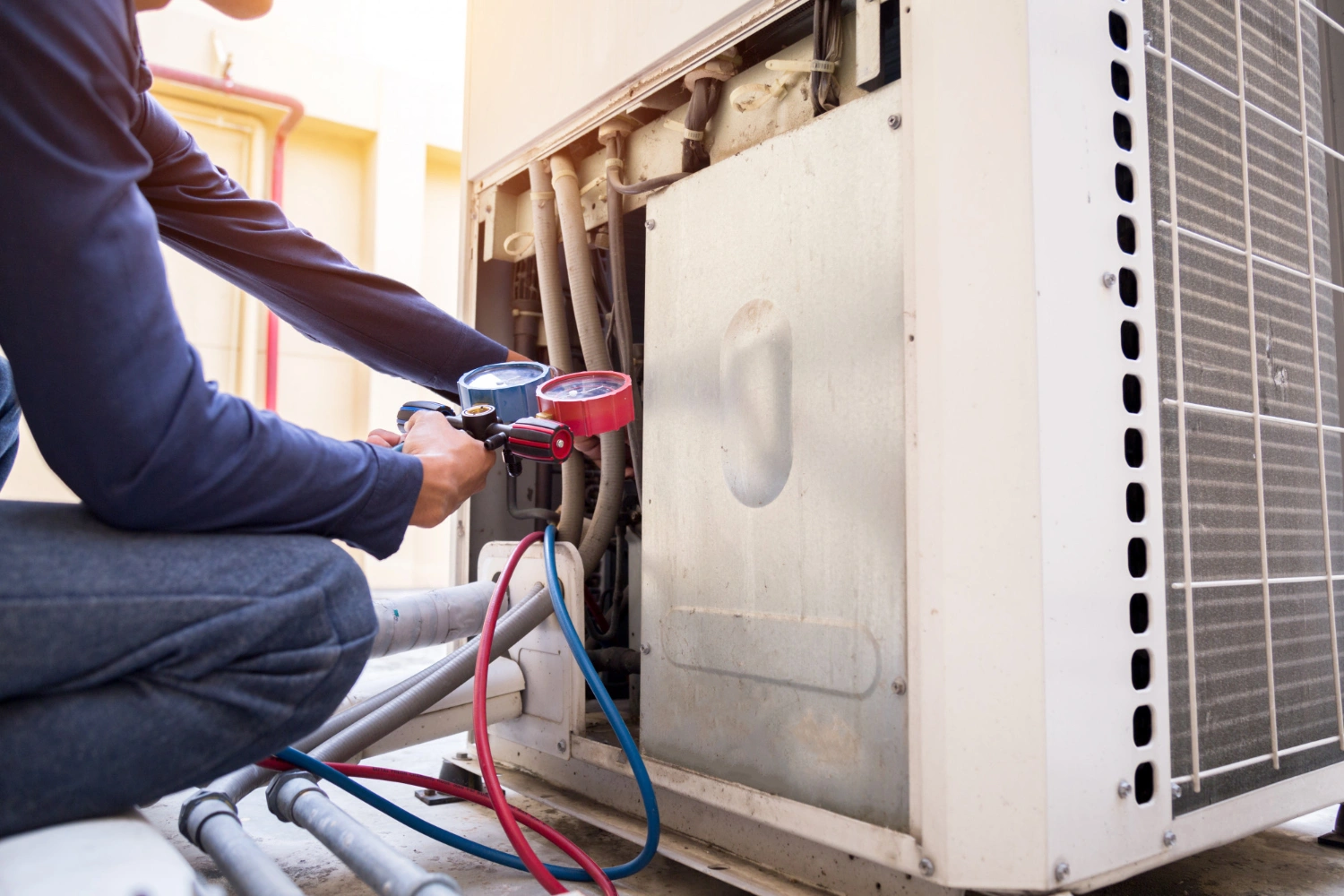

Why Humidity in the Philadelphia Metro Area Is Quietly Destroying Your HVAC System
How humidity in the Philadelphia metro area accelerates hvac wear and corrosion is one of the most overlooked causes of early equipment failure for homeowners across South Jersey and the surrounding region. Philadelphia sits in ASHRAE Climate Zone 4A — a mixed-humid classification — where relative humidity averages 60 to 75% for much of the year and regularly spikes to 80% during summer. That persistent moisture doesn't just make your home feel uncomfortable. It actively attacks the metal, electrical, and mechanical components inside your HVAC system, shortening a system that might last 15 to 17 years in a drier climate down to far fewer years of reliable service.
Here is a quick summary of how Philadelphia-area humidity damages HVAC systems:
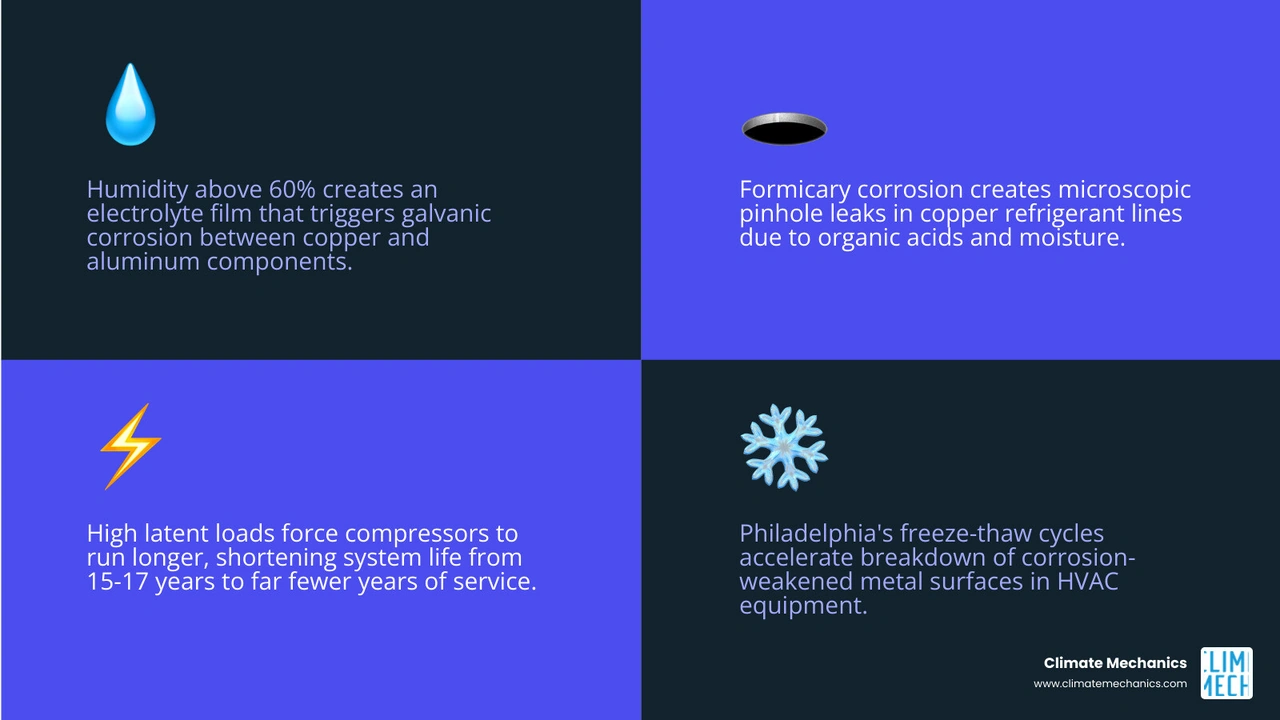
• Galvanic corrosion - Humidity above 60% creates a moisture film that acts as an electrolyte, triggering corrosion between dissimilar metals like copper and aluminum in your coils and components
• Formicary corrosion - Moisture combined with airborne organic compounds eats microscopic tunnels through copper refrigerant lines, causing pinhole leaks
• Condenser fin oxidation - Aluminum fins on outdoor units develop a powdery white oxide layer that restricts airflow and reduces efficiency
• Electrical component failure - Control boards, contactors, and wiring corrode and short-circuit when exposed to sustained high humidity
• Mold and biofilm buildup - Wet evaporator coils and drain pans become breeding grounds for mold, which clogs drain lines and degrades air quality
• Freeze-thaw compounding - Philadelphia's winter freeze-thaw cycles strip away corrosion-weakened metal surfaces, accelerating structural breakdown
• Compressor overwork - High latent heat loads force compressors to run longer and harder, wearing them out years ahead of schedule
The city's geography makes this worse. The bowl-shaped corridor between the Schuylkill and Delaware Rivers traps humid air at low altitudes, meaning your outdoor unit sits in a near-constant moisture environment from late spring through early fall. For homeowners in Delaware County, Chester County, and across South Jersey, this is not a theoretical risk — it shows up as musty smells, unexplained energy bill spikes, standing water near the indoor unit, and systems that fail well before their expected lifespan.
The Science of How Humidity in the Philadelphia Metro Area Accelerates HVAC Wear and Corrosion
To understand why how humidity in the Philadelphia metro area accelerates hvac wear and corrosion is such a critical issue, we have to look at the chemistry of moisture. Air conditioning is not just about lowering the temperature; it is about removing moisture. In fact, a massive portion of your system's energy goes toward removing "latent heat"—the thermal energy stored in water vapor—rather than "sensible heat," which is the temperature you read on a standard thermometer.
When relative humidity exceeds the critical threshold of 60%, a microscopic liquid film of water forms on all exposed metal surfaces. In South Jersey communities like Maple Shade, NJ and Pennsauken, NJ, this moisture film acts as an electrolyte. Under these conditions, atmospheric galvanic corrosion takes place. When two dissimilar metals—such as the copper tubing and aluminum fins of a standard condenser coil—are in physical contact and joined by an electrolyte (the water film), a miniature electrical current flows between them. The more active metal (aluminum) corrodes to protect the more noble metal (copper). This chemical process slowly dissolves the aluminum fins, turning them into a brittle, white, powdery oxide that eventually crumbles away.
Furthermore, this high humidity forces the air conditioner to run significantly longer cycles. If you have ever wondered, "Why Does My AC Run All Day Without Stopping in a South Jersey Summer," the answer is almost always related to excessive latent load. Because humid air holds heat much more effectively than dry air, your system must run continuous, grueling cycles just to pull the moisture out of your indoor air. This constant operation accelerates mechanical wear on the compressor, bearings, and fan motors, bringing them to the end of their operational lives years ahead of schedule.
Key HVAC Components Vulnerable to Moisture and Oxidation
Every part of your cooling and heating grid is vulnerable to the silent, corrosive effects of regional moisture. Whether the equipment is sitting outdoors in Willingboro, NJ or tucked away in a basement in Collingswood, NJ, the combination of high humidity and condensation leaves distinct marks of degradation.
• Evaporator Coils — Primary Moisture Threat: Formicary and galvanic corrosion from indoor condensation — Visual and Operational Failure Signs: Pinhole refrigerant leaks, ice buildup, drop in cooling capacity
• Condenser Fins — Primary Moisture Threat: Atmospheric galvanic corrosion and salt/debris trapping — Visual and Operational Failure Signs: White powdery oxidation, bent or crumbling fins, restricted airflow
• Heat Exchangers — Primary Moisture Threat: Condensation pooling on cold metal during humid summers — Visual and Operational Failure Signs: Rust flakes inside furnace cabinet, hairline cracks, carbon monoxide risk
• Electrical Contactors — Primary Moisture Threat: Arcing and oxidation on copper and silver contact points — Visual and Operational Failure Signs: Pitted contacts, chatter or clicking sounds, system failing to start
• Condensate Drain Pans — Primary Moisture Threat: Algae, mold, and standing water accumulation — Visual and Operational Failure Signs: Rust-through holes, water dripping from ceiling, mold odors
How Humidity in the Philadelphia Metro Area Accelerates HVAC Wear and Corrosion on Evaporator Coils
Your indoor evaporator coil is the ground zero for humidity-driven degradation. As warm, humid indoor air passes over the cold coil, water vapor rapidly condenses on the metal surfaces. While this process successfully dehumidifies your home, it also creates a persistent wet environment.
If your home's Indoor Air Quality is compromised by common household chemicals—such as cleaning sprays, cosmetics, paints, or building materials—these organic acids dissolve into the condensate film on the coil. This mixture triggers formicary corrosion. Unlike general rust, formicary corrosion is highly localized and insidious. It eats microscopic, branch-like tunnels directly through the copper tubing of your evaporator coil.
Because these tunnels are so small, they are virtually invisible to the naked eye. Over time, they create pinhole refrigerant leaks. You might notice your system struggling to cool, running constantly, or eventually freezing over. Once formicary corrosion takes hold of a copper coil, the only reliable solution is to replace the entire coil assembly, which can be a highly disruptive and costly event.
How Humidity in the Philadelphia Metro Area Accelerates HVAC Wear and Corrosion on Electrical and Heating Systems
While we naturally associate humidity with summer cooling, its corrosive reach extends deep into your heating system and electrical components. During our muggy South Jersey summers, homeowners in Haddonfield, NJ and Audubon, NJ turn off their furnaces. However, the high humidity in basements, crawl spaces, and utility closets doesn't take a vacation.
Sustained humidity levels above 60% cause moisture to settle on the cold metal of your furnace's heat exchanger. Over the summer months, this moisture slowly eats away at the steel, creating structural rust. When winter arrives and the furnace fires up, the metal expands and contracts. This thermal cycling, combined with the rust-weakened metal, can lead to hairline cracks in the heat exchanger, allowing dangerous carbon monoxide to enter your home's breathing air. This is why understanding How Your Furnace and Humidifier Work Together and managing year-round moisture is so critical to your family's safety.
Electrical components are equally vulnerable. Control boards, relays, and electrical contactors sit inside unconditioned spaces where humidity runs rampant. When copper wires and silver-plated contact points oxidize, their electrical resistance increases. This leads to voltage drops, localized overheating, and electrical arcing. Eventually, the control board can short-circuit, or the contactor can weld itself shut, causing sudden system failure during the hottest week of July.
Measurable Signs of Humidity-Driven System Degradation
Because moisture damage often starts on a microscopic level, it is easy to ignore until your system suddenly stops working. Fortunately, there are several clear, measurable signs that homeowners in Burlington, NJ and Marlton, NJ can monitor to catch these issues early:
1. White or Green Crusting on Copper Lines - If you look at the copper refrigerant lines entering your indoor or outdoor unit and see a chalky white or greenish-blue crust, you are looking at active oxidation. This is a clear sign that moisture is reacting with the metal and weakening the lines.
2. Musty Odors When the system Starts - A damp, musty towel smell coming from your supply registers indicates that mold, mildew, or biofilm is thriving on your evaporator coil or inside your drain pan. You can Test Your Indoor Air Quality to determine the exact spore counts and take action before it affects your health.
3. Frequent Short Cycling - If your air conditioner turns on and off every 5 to 10 minutes, it may be short-cycling. This often happens because the system is oversized or because dirty, corroded coils are causing the system to overheat and shut down on safety limits.
4. Standing Water or Rust Streaks - Check your utility closet or basement floor. If you see rust streaks trailing down your furnace cabinet or puddles of standing water around the indoor unit, your condensate management system has failed, and moisture is actively damaging the surrounding metal.
Practical Steps to Mitigate Moisture Damage and Extend Equipment Lifespan
Preventing humidity-induced HVAC damage requires a proactive approach. By managing indoor moisture levels and keeping your system clean, you can protect your investment and ensure your equipment reaches its full operational potential.
Implementing Whole-House Dehumidification
Your air conditioner is designed to control temperature first and humidity second. In our mixed-humid climate, there are many days in the spring and late summer when the air is sticky and humid, but the temperature is relatively mild. On these days, your AC won't run long enough to remove the moisture, leaving your home feeling cold and clammy.
Installing a whole-house dehumidifier is one of the most effective ways to combat this issue. By removing the latent moisture load from your primary cooling system, you allow your AC to focus solely on cooling the air. This significantly reduces the run-time and mechanical wear on your compressor.
There are massive Dehumidifiers in Humid Climates Benefits that extend far beyond equipment protection. For instance, there are clear 4 Benefits of Using a Dehumidifier for Your New Jersey Home, including lower energy bills, improved comfort, and a dramatic reduction in dust mites and mold spores. If you have a damp basement in Camden, NJ, learning Why You Need a Dehumidifier in Your New Jersey Homes Basement can save your structural beams and prevent mold from traveling through your ductwork.
Scheduling Regular Professional Maintenance
The simplest and most cost-effective way to protect your HVAC system from humidity-driven corrosion is to keep it clean. Dust and dirt act like a sponge, trapping acidic moisture against your copper coils and accelerating galvanic and formicary corrosion.
A professional maintenance plan ensures that your coils are regularly cleaned with specialized, non-acidic solutions that remove corrosive buildup without damaging the delicate metal fins. Following basic AC Maintenance Tips for Summer can help you keep your outdoor unit clear of leaves, grass clippings, and debris that trap moisture against the cabinet.
When you invest in regular service, there are Four Reasons to Schedule Regular HVAC Maintenance that directly impact your wallet: you preserve your manufacturer's warranty, lower your monthly energy bills, prevent emergency breakdowns, and extend your system's lifespan. If your system is already showing signs of advanced corrosion, understanding Why Updating Your HVAC System Is So Important can help you make a smart, proactive decision before an expensive mid-summer breakdown leaves you stranded in the heat.
Frequently Asked Questions About Humidity and HVAC Wear
How does Philadelphia's humidity compare to other climate zones for HVAC lifespan?
In dry, arid climate zones (like the Southwest), a central air conditioner can easily last 15 to 20 years because there is very little moisture to trigger galvanic or formicary corrosion. However, in ASHRAE Zone 4A (which includes the Philadelphia metro area and South Jersey), the high relative humidity and seasonal temperature swings accelerate wear.
Because our systems must work twice as hard to remove both heat and moisture, the average lifespan of an outdoor condenser in our region is shortened to 12 to 17 years. Without regular maintenance and moisture management, that number can drop even lower due to premature coil failures and compressor burnouts.
Why does my air conditioner smell musty when it first turns on?
That musty smell—often referred to as "dirty sock syndrome"—is caused by mold, mildew, and bacterial biofilm growing on your indoor evaporator coil and inside the condensate drain pan. Because the coil is dark, damp, and warm when the system is off, it becomes the perfect breeding ground for microorganisms.
When the blower motor turns on, it pushes air across this moldy surface, carrying spores and unpleasant odors directly into your living spaces. This is one of the Top Summer Indoor Air Quality Concerns for local homeowners, and it should be addressed promptly with a professional coil cleaning to protect your family's respiratory health.
Can a clogged condensate drain cause permanent damage to my system?
Yes, absolutely. During our humid summer months, your air conditioner can pull gallons of water out of your indoor air every single day. If your condensate drain line becomes clogged with algae, dust, or mold biofilm, that water has nowhere to go.
It will overflow the drain pan, pooling inside your furnace cabinet or air handler. This standing water quickly rusts out electrical connections, ruins control boards, and damages the heat exchanger. In addition to destroying your HVAC components, a clogged drain line can cause thousands of dollars in water damage to your ceilings, walls, and floors before the system shuts down.
Conclusion
Managing how humidity in the Philadelphia metro area accelerates hvac wear and corrosion is essential if you want to protect your home's comfort system and avoid premature replacement costs. From the high latent heat loads that overwork your compressor to the silent threat of formicary corrosion eating holes in your coils, moisture is a constant challenge for homeowners across South Jersey.
At Climate Mechanics, we bring over 38 years of NATE and NCI-certified expertise to every home we serve. Whether you need a comprehensive spring tune-up, a whole-house dehumidifier installation, or a complete system upgrade, our team provides the personalized, high-quality service you deserve. There are many 4 Reasons to Choose Climate Mechanics for Air Conditioning Services, including our deep familiarity with local climate challenges and our commitment to doing the job right the first time.
Don't let South Jersey's sticky summer humidity cut your HVAC system's life short. Explore our professional heating, cooling, and air quality solutions by visiting our Climate Mechanics Services page, and let us help you keep your home comfortable, efficient, and dry all year long.
