


How Long Does a Central AC Last in the Humid Mid-Atlantic? (Quick Answer)
The average lifespan of a central air conditioner in a humid Mid-Atlantic climate is typically 12 to 15 years — noticeably shorter than the national average of 15 to 20 years cited by ASHRAE. Here's a quick breakdown of what South Jersey homeowners can realistically expect:
• National average (standard maintenance) — Expected Lifespan: 15-20 years
• Mid-Atlantic climate, well-maintained — Expected Lifespan: 13-15 years
• Mid-Atlantic climate, minimal maintenance — Expected Lifespan: 8-12 years
• Coastal Mid-Atlantic with salt air exposure — Expected Lifespan: 10-13 years
The Mid-Atlantic region sits in IECC Climate Zone 4A — a mixed-humid classification that combines summer humidity, heavy pollen seasons, coastal salt air, and hard freeze-thaw cycles in winter. That combination puts your AC system under stress from multiple directions at once.
Unlike homeowners in drier or more temperate parts of the country, South Jersey residents run their central AC systems hard through long, muggy summers where the unit isn't just cooling the air — it's constantly working to pull moisture out of it, too. That extra workload accumulates fast.
If your system is approaching the 10-year mark and you've been dealing with inconsistent cooling, rising energy bills, or more frequent repair calls, you're not imagining it. The climate here genuinely accelerates wear on even well-built equipment.
What is the Average Lifespan of a Central Air Conditioner in a Humid Mid-Atlantic Climate?
When evaluating the longevity of home comfort systems, we have to look past broad national estimates and focus on regional realities. A system operating in a moderate, dry environment will naturally experience less mechanical wear than one tasked with managing the heavy, moisture-laden summers of the Mid-Atlantic.
Below is a climate-adjusted comparison of expected lifespans for different HVAC systems in South Jersey compared to national benchmarks:
• Central Split-System AC — National Average Lifespan: 15–20 Years — Mid-Atlantic Humid Climate Lifespan: 12–15 Years
• Air-Source Heat Pump — National Average Lifespan: 15 Years — Mid-Atlantic Humid Climate Lifespan: 10–13 Years (due to dual-season usage)
• Gas Furnace — National Average Lifespan: 18–25 Years — Mid-Atlantic Humid Climate Lifespan: 15–20 Years
• Ductless Mini-Split — National Average Lifespan: 20 Years — Mid-Atlantic Humid Climate Lifespan: 14–18 Years
• Geothermal Heat Pump — National Average Lifespan: 20–25 Years (Unit) / 50+ Years (Loop) — Mid-Atlantic Humid Climate Lifespan: 18–22 Years (Unit) / 50+ Years (Loop)
As your system ages, its internal components degrade, leading to a steady decline in operating efficiency. This gradual wear and tear is Why Updating Your HVAC System Is So Important; older systems must work significantly harder to deliver the same cooling output, driving up your monthly utility bills while increasing the risk of an unexpected breakdown during a July heatwave.
Understanding the Average Lifespan of a Central Air Conditioner in a Humid Mid-Atlantic Climate
According to the American Society of Heating, Refrigerating and Air-Conditioning Engineers (ASHRAE), the standard median service life for a central air conditioning unit is 15 years under average climatic exposure. However, the Mid-Atlantic’s high relative humidity levels alter this equation.
To understand why, we have to look at how an air conditioner actually cools your home. A central AC has two primary jobs: lowering the air temperature (sensible cooling) and removing airborne moisture (latent cooling).
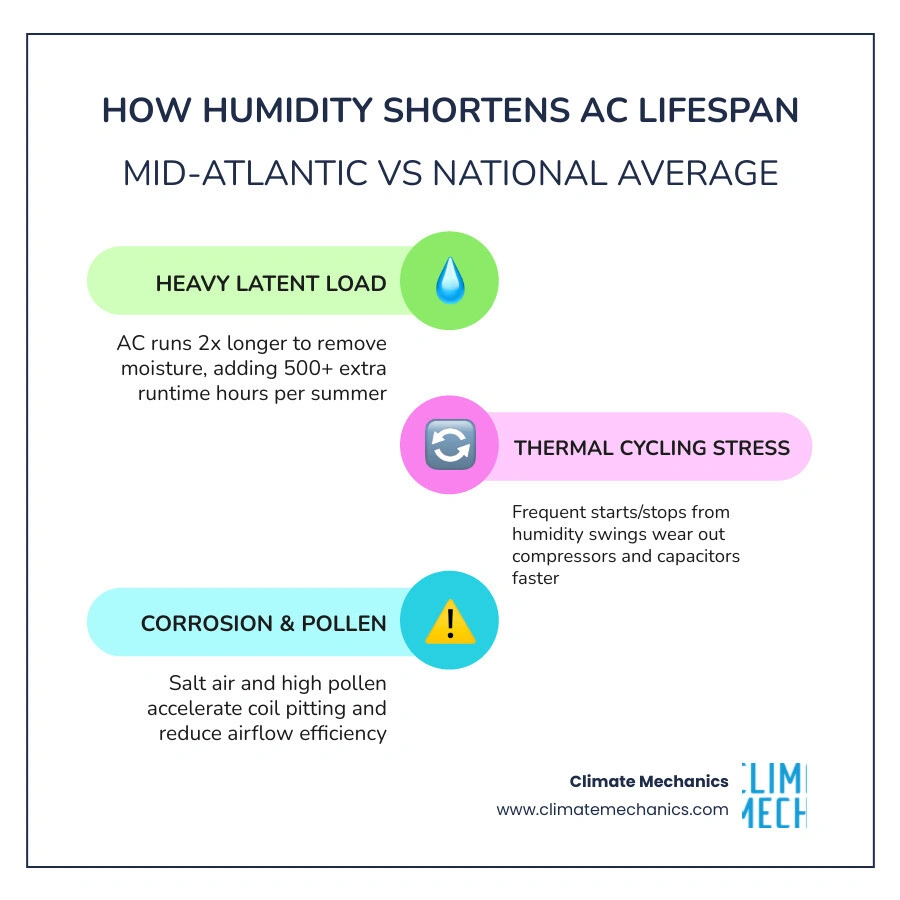
In South Jersey, our summers are characterized by high latent loads. This means your air conditioner must spend roughly half of its energy simply condensing water vapor out of the air before it can effectively lower the indoor temperature.
This heavy moisture removal requirement explains Why Does My AC Run All Day Without Stopping in a South Jersey Summer. When relative humidity consistently exceeds 70%, the system must run extended cycles to keep your home comfortable. These prolonged runtimes translate directly to increased motor wear, higher compressor temperatures, and a accelerated path toward mechanical retirement.
Key Factors That Reduce the Average Lifespan of a Central Air Conditioner in a Humid Mid-Atlantic Climate
Several regional environmental factors work in tandem to compress the average lifespan of a central air conditioner in a humid mid-atlantic climate:
• Elevated Relative Humidity: Persistent moisture keeps the outdoor condenser coils damp, creating a breeding ground for biological growth and accelerating surface oxidation.
• Coastal Salt Air: For homes near the Delaware River or coastal areas in South Jersey, windborne salt particles settle on aluminum condenser fins and copper tubing, causing rapid galvanic corrosion.
• Four-Season Temperature Swings: Unlike Southern states where heating systems are rarely used, or Northern states with mild summers, the Mid-Atlantic experiences extreme temperature swings. Systems face bitter winter freezes and scorching summer humidity, forcing components to expand and contract dramatically.
• Winter Freeze-Thaw Cycles: Outdoor units are subjected to snow, ice, and freezing rain, which can physically damage fan blades and coil fins when moisture freezes, expands, and thaws repeatedly.
Environmental Stressors: How Mid-Atlantic Weather Accelerates Wear
The physical toll that our local weather takes on an outdoor condenser unit is cumulative and often hidden from plain sight until a critical component fails.
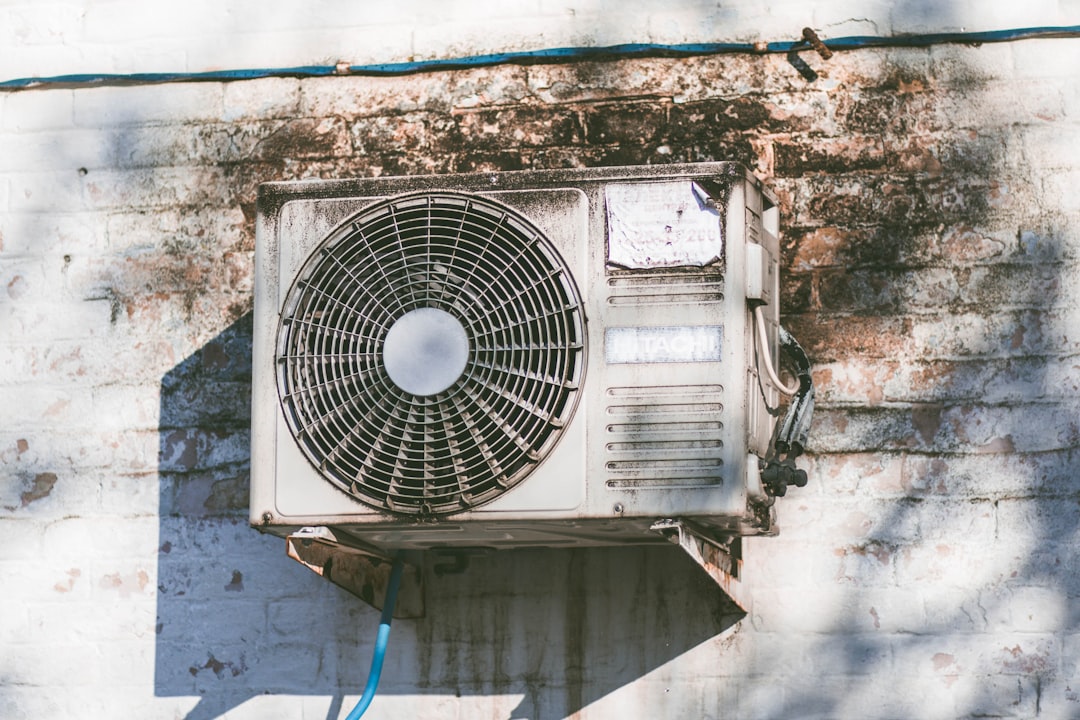
One of the most destructive chemical processes occurring in humid climates is formicary corrosion. This occurs when moisture on the copper evaporator or condenser coils reacts with volatile organic compounds (VOCs) found in household air (such as those from cleaning products, paints, and cosmetics). This reaction creates a mild acid that eats microscopic tunnels through the copper tubing, eventually leading to hard-to-pinpoint refrigerant leaks.
Additionally, coil pitting occurs when airborne pollutants and moisture settle on the aluminum fins. Over time, this corrosion reduces the surface area available for heat transfer, forcing your compressor to run at higher temperatures and pressures to cool your home.
Spring in South Jersey also brings heavy oak, pine, and grass pollen. This sticky yellow powder coats the wet outdoor condenser coils, forming a thick barrier that blocks airflow. If not washed away regularly, this pollen blanket insulation causes the compressor to overheat, significantly shortening its operational life.
Best Maintenance Practices to Maximize System Longevity
While we cannot change the South Jersey weather, we can directly control how our HVAC systems respond to it. Regular preventative care is the single most effective tool for extending your air conditioner's operational life.
Implementing these key habits will help keep your system running smoothly:
• Regular Filter Replacements: A clogged filter restricts return airflow, forcing the blower motor to work double-time and potentially causing the evaporator coil to freeze. Check your filters monthly during peak cooling season.
• Keep the Outdoor Condenser Clear: Maintain at least two feet of clear space around your outdoor unit. Trim back shrubs, weeds, and overhanging branches to ensure unrestricted airflow.
• Clear the Condensate Drain Line: High humidity means your system produces gallons of condensate water daily. Flush your drain line with vinegar or a specialized tablet to prevent algae blockages that can cause water damage inside your home.
To get the absolute most out of your investment, explore these AC Maintenance Tips for Summer and discover 4 Ways to Keep Your A.C Running Properly.
While DIY tasks are helpful, they cannot replace the precision of professional tuning. Understanding the Regular HVAC Maintenance Importance is key; a certified technician can identify failing capacitors, check refrigerant levels, and clean dirty coils before they cause catastrophic compressor failure. Investing in HVAC System Preventative Maintenance twice a year ensures your system is fully prepared for both summer humidity and winter chills.
When to Repair vs. Replace Your Aging Mid-Atlantic AC
Eventually, every homeowner faces the difficult decision of whether to sink more money into an aging air conditioner or invest in a modern, high-efficiency replacement.
To help make this decision easier, HVAC professionals rely on the Rule of 5,000. To apply this rule, multiply the age of your air conditioner by the estimated cost of the repair. If the resulting number is greater than 5,000, replacing the system is generally the more financially sound option. If the number is below 5,000, a repair may be warranted.
There are several other critical factors to keep in mind:
• The R-22 Refrigerant Phase-Out: As of January 1, 2020, the EPA completely banned the production and import of R-22 (Freon). If your system was installed before 2010, it likely uses R-22. Repairing a refrigerant leak on these older units is incredibly expensive and environmentally irresponsible, making replacement the logical path.
• Modern SEER2 Standards: Department of Energy regulations mandate higher efficiency standards for new equipment. Upgrading from an old 10 SEER system to a modern 15+ SEER2 unit can slash your summer cooling energy consumption by up to 30%.
• Frequent Breakdowns: If you have had to call for service multiple times over the last two summers, your system is sending clear warning signs of impending failure.
If you are noticing inconsistent temperatures or unusual noises, review these 4 Signs It's Time for a New AC Unit and learn When to Consider an AC Replacement. Planning your upgrade ahead of time allows you to avoid emergency replacement fees during peak summer. For instance, there are distinct advantages to planning ahead, which is Why Replace AC This Fall is a popular strategy for many proactive South Jersey homeowners. When you are ready to take the next step, our AC Installation Ultimate Guide will walk you through everything you need to know about selecting the perfect system for your home.
Frequently Asked Questions about Mid-Atlantic AC Lifespan
How does high humidity affect my AC's daily operation?
High relative humidity increases the "latent heat" load on your air conditioner. This means the system must work harder to condense water vapor out of the air before it can lower the sensible (dry bulb) temperature of your home. This extra work requires longer runtimes and increases overall wear on the compressor and blower motor.
Can coastal salt air damage my air conditioner if I live inland?
Yes. While homes directly on the coast face the most severe salt exposure, windborne salt particles can travel several miles inland, especially during major coastal storms. In South Jersey towns like Pennsauken, Audubon, or Cherry Hill, salt and industrial chemical pollutants can settle on condenser coils, leading to gradual pitting and corrosion if the coils are not washed regularly.
How often should I change my air filters during a South Jersey summer?
During peak summer, we recommend checking your air filters every 30 days. If you have pets, allergies, or live in a dusty area, you will likely need to replace them monthly. Using high-quality filters with an appropriate MERV rating protects your system's evaporator coil from dust buildup without restricting vital airflow.
Conclusion
Managing the unique comfort challenges of the Mid-Atlantic climate requires local expertise. At Climate Mechanics, we bring over 38 years of NATE and NCI-certified experience to every home we serve in South Jersey, including Maple Shade, Willingboro, Haddonfield, Marlton, and surrounding communities.
Whether you need to schedule a preventative tune-up to protect your system's compressor or require a complete system replacement, our team is committed to providing personalized, high-quality service tailored to our local climate.
Don't wait for the next heatwave to test your system's limits. Contact us today to schedule your professional Air Conditioning Services and ensure your home stays cool and comfortable all summer long.
