



Facing the First Cold Snap: Is Your HVAC System Ready?
You turn the thermostat to "heat" for the first time this fall, and instead of comforting warmth, you are immediately greeted by a strange burning odor or a loud, unexpected rattle from the vents. When searching for reliable home maintenance tips and troubleshooting, few scenarios create as much immediate anxiety for a homeowner as a heating system that acts up on the very first cold night of the year. Here at Climate Mechanics, our team fields countless calls during these October first heating startups. Your equipment is waking up from months of dormancy, and it is entirely normal to wonder if these strange symptoms are harmless quirks or serious mechanical hazards.
The primary decision you face right now is whether to let the system run or shut it down and call for professional help. Understanding how your heating equipment behaves after a long summer off is the key to maintaining a safe, comfortable home. Because your furnace or heat pump shares critical components with your cooling system, an aging heater struggling through its fall startup might also signal that it is time to evaluate your broader Air Conditioning setup. We often advise homeowners that the transition into fall is the most strategic time to assess their entire indoor climate strategy, ensuring they are prepared for the deep winter freeze ahead.
Decoding the Burning Smell During Your Initial Fall Startup
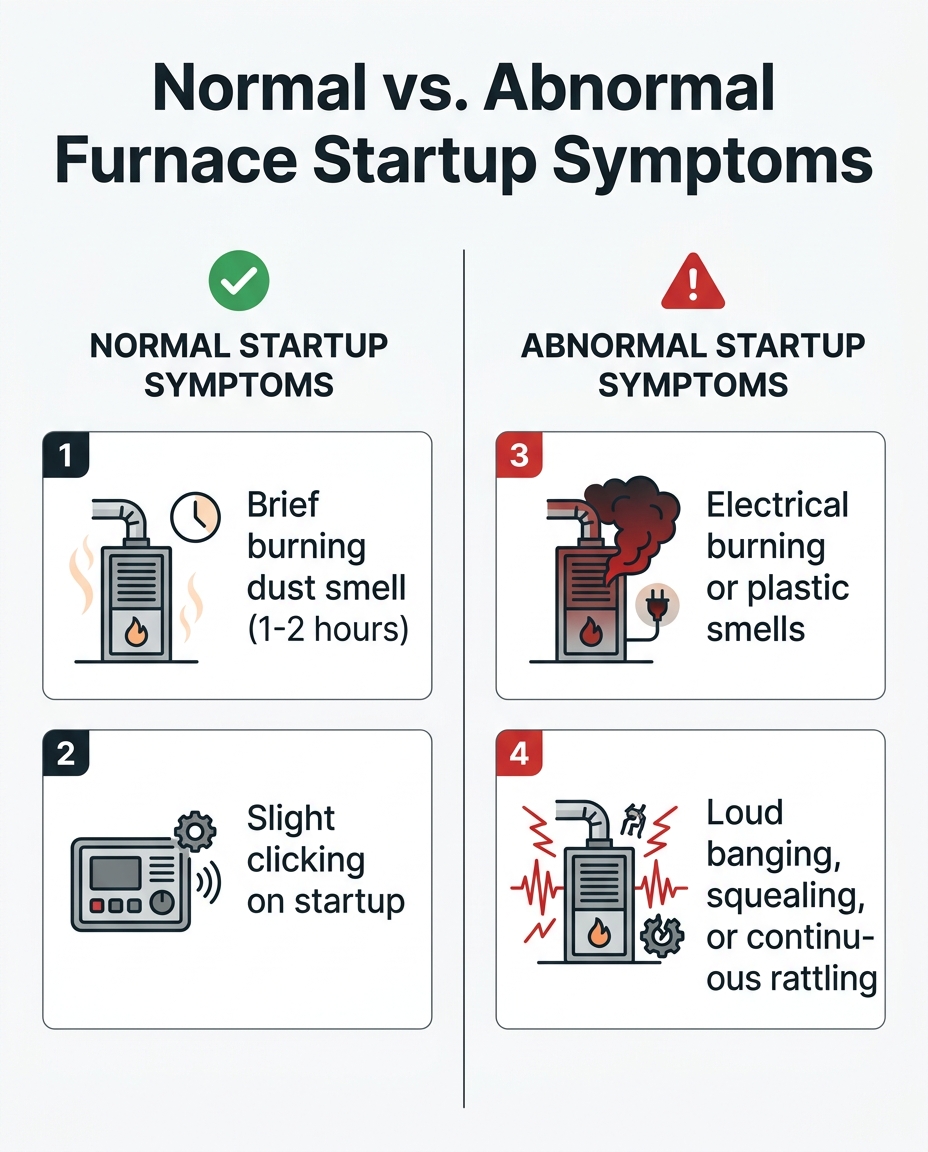
The most common symptom homeowners experience during an October first heating startup is a distinct burning smell permeating the house. While this can be alarming, understanding the underlying cause often provides immediate peace of mind. Over the long summer months of inactivity, your furnace heat exchangers, burners, and heat pump coils sit idle. During this time, household dust, pet dander, and microscopic debris settle on these internal components.
The underlying cause: When you finally trigger the heating cycle, the system generates intense heat for the first time in over half a year. The accumulated layer of dust instantly incinerates on the metal surfaces, sending a temporary burning odor through your ductwork and into your living spaces. This is a normal physical reaction and happens in almost every home, regardless of how clean the interior is kept.
The safest solution: The key to navigating this issue is knowing where to draw the line between normal dust burn-off and a genuine safety hazard. Harmless dust burn-off smells slightly like toasted dirt or warm lint. However, if you detect the sharp, acrid scent of melting plastic, burning rubber, or an electrical ozone smell, this is not normal. These odors indicate overheating wires, a failing blower motor, or melting insulation. If you smell electrical burning, shut the system off immediately at the thermostat and contact a licensed professional.
How Long Should the Smell Last?
A standard dust burn-off should be a brief, temporary event. Typically, the smell will peak within the first ten to fifteen minutes of the system running and should completely dissipate within one to two hours. Opening a few windows to create cross-ventilation can help clear the air faster.
If the burning odor persists for several hours, returns every time the system cycles on, or grows stronger instead of fading, shut the heater down. Persistent smells indicate that the debris is not burning away, or worse, that a mechanical component is actively overheating and requires immediate professional diagnostics.
How Late-Summer Humidity Complicates Heat Exchanger Performance
To fully understand why your system behaves the way it does in the fall, it helps to look at the specific environmental factors in the Cinnaminson NJ and surrounding South Jersey area. Our local team experiences this distinct climate transition alongside you, and we see firsthand how it directly impacts dormant heating equipment.
The impact of summer moisture: Throughout August and September, South Jersey is known for stretches of high humidity. This heavy, moisture-laden air circulates through your home and into your idle HVAC ductwork and furnace cabinet. The damp conditions cause the airborne dust to cling far more stubbornly to internal components, acting almost like a mild adhesive on the heat exchangers and blower fans.
The October transition: When the sharp temperature drops finally arrive in October, nighttime lows frequently plunge into the 40s. This sudden cold snap forces your system to work harder right out of the gate. Because the late-summer humidity allowed a thicker, more stubborn layer of dust to adhere to the components, the resulting burn-off is often more noticeable, longer-lasting, and slightly more intense than it might be in drier climates.
This regional reality makes a pre-winter inspection incredibly valuable. Moisture inside an idle furnace does not just trap dust; over time, our technicians frequently find subtle rust and corrosion on heat exchangers caused by this very issue. A thorough professional evaluation ensures that the summer humidity hasn't compromised the structural integrity of the metal, keeping your family safe from potential carbon monoxide risks before the heavy winter usage begins.
Normal vs. Abnormal Furnace Noises After Summer Inactivity
Beyond odors, unusual sounds are the second most common source of concern during a fall heating startup. Just like a car engine that hasn't been started in months, an HVAC system in the Cinnaminson NJ area may make a few protests as it warms up. Distinguishing between harmless operational sounds and sounds that indicate failing parts can save you from a mid-winter breakdown—a situation our emergency dispatch team works hard to help you avoid.
What to listen for: A slight clicking sound upon initial startup is typically just the ignitor or gas valve engaging. You may also hear a dull "popping" or "banging" sound echoing from your walls or ceilings; this is usually just the sheet metal ductwork expanding as warm air hits the cold metal for the first time. However, persistent rattling, loud scraping, or high-pitched squealing are red flags that require attention.
• Brief clicking at startup — Normal or Abnormal?: Normal — Likely Cause: Electronic ignitor or relays engaging. — Action Required: None. Should stop once the burner lights.
• Dull popping in the walls — Normal or Abnormal?: Normal — Likely Cause: Cold metal ductwork expanding as it warms. — Action Required: None. Often resolves as ducts acclimate.
• High-pitched squealing — Normal or Abnormal?: Abnormal — Likely Cause: Failing blower motor bearings or a slipping belt. — Action Required: Call a professional to lubricate or replace parts.
• Loud banging at ignition — Normal or Abnormal?: Abnormal — Likely Cause: Delayed gas ignition (gas buildup before lighting). — Action Required: Shut off immediately; requires urgent repair.
• Continuous metallic rattling — Normal or Abnormal?: Abnormal — Likely Cause: Loose panels, shifting blower wheel, or loose screws. — Action Required: Requires professional tightening and balancing.
The danger of DIY: While it might be tempting to open the cabinet to track down a rattle, it is critical to remember the dangers involved. Modern gas furnaces and high-voltage heat pumps contain complex safety switches, combustible gas lines, and powerful electrical capacitors. Attempting DIY repairs on these systems is highly dangerous. If a noise falls into the "abnormal" category, leave the diagnostics to a licensed technician.

When a Failing Heater Means It's Time for a Full System Replacement
If your October first heating startup reveals major mechanical failures, it is often a catalyst for a larger conversation about your entire home comfort system. Because central heating and cooling systems share the same blower motor and ductwork, their lifespans are deeply interconnected. If a heating system fails its fall startup and requires a major, expensive repair, the central air conditioning unit sitting outside is likely nearing the end of its functional life as well.
The root of the problem: Aging systems lose their efficiency gradually, often masking how much extra energy they are consuming to maintain basic comfort. When a major component like a heat exchanger or compressor fails, homeowners are faced with a difficult choice: pour money into an obsolete unit, or upgrade. We see this pattern frequently in our service area. For example, our installation crew recently helped a local family who realized their existing central air unit was old and struggling severely during a hot, humid summer, prompting the need for a total replacement. A new, efficient central air unit was installed quickly, with everything explained in detail, leaving the family pleased with the professional service and ready for the shifting seasons. Upgrading also allows homeowners to explore generic federal tax credits or local utility incentive programs that may apply to qualifying high-efficiency installations—be sure to verify current programs with your utility or tax professional.
The strategic solution: Rather than replacing the heater in October and waiting for the AC to fail the following July, we typically recommend coordinating a central air conditioning installation alongside a new furnace as the most efficient path forward. Modern HVAC systems handle both heating and rigorous summer dehumidification far better than models built even ten years ago.
The Benefits of Dual-System Upgrades
• Perfectly Matched Components: An indoor evaporator coil must properly match the outdoor condenser for optimal efficiency. Replacing both ensures they are engineered to work together seamlessly.
• Reduced Labor Overlap: Installing both systems simultaneously requires opening the duct plenum and wiring just once, significantly minimizing future labor time and household disruption.
• Enhanced Air Quality: A completely new, matched system provides better airflow, superior filtration, and improved overall indoor air quality year-round.
Targeted Solutions for Uneven Fall Heating
Sometimes the issue with an October startup isn't a strange smell or a loud noise, but rather a frustrating lack of consistent warmth. In our years of working on homes in the Cinnaminson NJ and surrounding South Jersey area, we frequently encounter properties that struggle with uneven heating. You might find that the main living room is perfectly comfortable, but a second-story bedroom, a finished basement, or a newly added sunroom remains stubbornly chilly during the first fall cold snaps.
The limitations of central ductwork: Uneven heating often occurs because the existing central ductwork was not originally designed to push conditioned air to the furthest reaches of the home. As systems age, or as homes are renovated and expanded, the original blower motor simply cannot overcome the static pressure required to heat every room evenly.
The modern alternative: Instead of tearing open walls to install new, larger ductwork, our team often installs versatile, targeted solutions. Installing ductless AC systems (which also function as highly efficient heat pumps) provides independent climate control for specific zones. These systems operate entirely independently of your main central ductwork. They provide robust, supplemental heating during the winter months and deliver targeted, whisper-quiet cooling during the summer. Because they require no major ductwork modifications, the installation process is quick, clean, and highly energy-efficient.
Planning Your HVAC Upgrade: Professional Standards and Compliance
If your fall troubleshooting journey leads you to the conclusion that a system replacement is necessary, the next step is ensuring the job is done right. The long-term success of an HVAC system depends far more on the quality of the installation and the precision of the sizing than it does on the specific brand name printed on the metal cabinet.
The importance of precision sizing: This is where the approach of true local mechanics shines. Impersonal corporate HVAC services often rely on generic rule-of-thumb sizing, rushing through the estimating process to close a quick sale. At Climate Mechanics, we take a different approach. We know an oversized system will short-cycle, failing to properly dehumidify the air, while an undersized system will run constantly, driving up energy bills and burning out prematurely. Our local professionals take the time to perform detailed load calculations, factoring in your home's square footage, insulation levels, and window placements to recommend the exact right fit for your specific property.
Navigating local regulations: Beyond the physical installation, proper compliance is essential. Major HVAC replacements require adherence to local building codes to ensure electrical safety and proper exhaust venting. Before approving any major work, it is highly advisable to check if you need a permit to replace AC in New Jersey. As a reputable, locally established contractor, we handle all permitting and municipal inspections on your behalf, guaranteeing that your new investment is safe, compliant, and fully protected under manufacturer warranties.
Schedule Your Pre-Winter HVAC Assessment Today
Navigating an October first heating startup doesn't have to be a stressful experience. While brief burning smells and minor expansion noises are often perfectly normal, persistent odors, loud banging, or stubborn cold spots are clear indicators that your system needs professional attention. Catching these issues now, during the mild fall weather, provides vital peace of mind before the harsh, deep winter freeze settles over South Jersey.
Whether you need a thorough inspection to verify that your current furnace is safe for another season, or you are ready to explore the benefits of a complete system upgrade, consulting with our local experts is the smartest next step. If your aging equipment is showing signs of permanent fatigue, let our team help you explore your options for an AC replacement in Cinnaminson alongside your heating upgrade. By relying on clear, non-technical criteria and the guidance of our seasoned professionals, you can ensure your home remains safe, efficient, and perfectly comfortable all winter long.
Frequently Asked Questions
Why does my heater smell like burning when I turn it on in the fall?
This is typically caused by the accumulation of household dust and debris on the heat exchangers and burners during the summer months. When the system ignites for the first time, this dust instantly incinerates, pushing a temporary burning odor through your vents. As long as the smell resembles toasted dust and not melting plastic, it is a normal part of the fall startup process.
How long does the burning smell last when you turn on the heat for the first time?
A normal dust burn-off smell should peak within the first 10 to 15 minutes of operation and completely dissipate within one to two hours. Opening windows to ventilate the home can help clear the odor faster. If the smell persists for several hours or returns during subsequent heating cycles, we recommend shutting the system down and contacting a professional.
What is considered normal when turning on a furnace or heat pump for the first time?
It is entirely normal to experience a brief, dusty burning smell and to hear minor clicking sounds from the ignitor or dull popping sounds from the ductwork expanding. The system may also run slightly longer on its first cycle as it works to raise the ambient temperature of the entire house. Any high-pitched squealing, loud banging, or electrical odors are not normal and require immediate attention.
When should I call a professional for furnace noises?
You should call a professional if you hear continuous metallic rattling, loud banging upon ignition, or high-pitched squealing from the blower motor. These sounds indicate loose components, delayed gas ignition, or failing belts and bearings. Attempting to diagnose or fix these mechanical issues yourself on gas or high-voltage equipment is highly dangerous.
Is it better to replace my AC and furnace at the same time?
Yes, replacing both systems simultaneously is generally the most efficient and cost-effective approach. Because the heater and AC share critical components like the blower motor and ductwork, matching a new indoor coil with a new outdoor condenser ensures optimal performance. It also minimizes labor costs and household disruption by condensing two major installations into a single project.
Can a ductless system help with uneven heating in older homes?
Absolutely. Ductless heat pumps are an excellent solution for older homes that struggle with cold spots, room additions, or poorly designed central ductwork. Because they operate independently of the main central system, they can provide precise, targeted warmth to specific rooms in the winter and dedicated cooling in the summer, all without the need for invasive ductwork renovations.
