


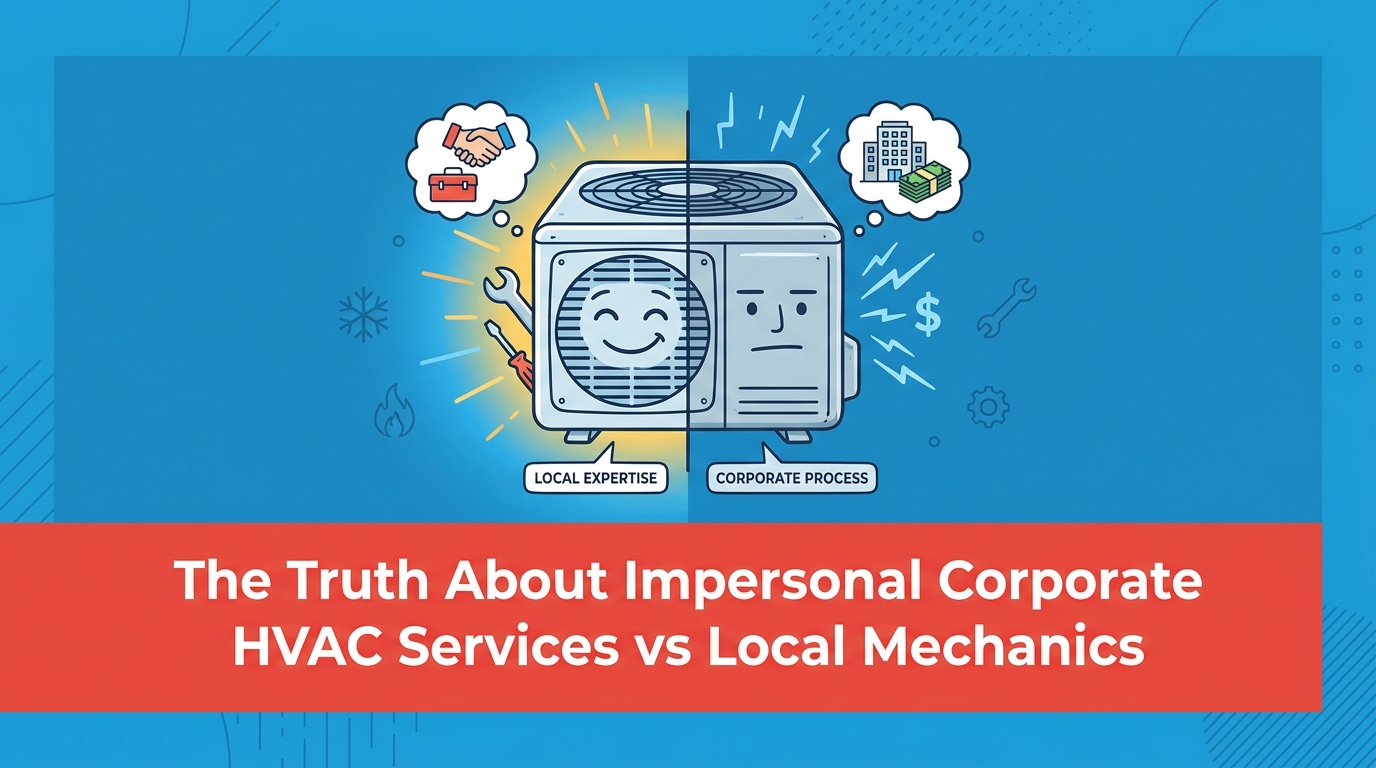

The Tune-Up Trap: When Routine Maintenance Turns Into a Sales Pitch
You invite a technician into your home for a routine check-up, expecting peace of mind, but instead, you get a high-pressure presentation on why you need to replace your entire system. At Climate Mechanics, our team hears this story all too often. The truth about impersonal corporate HVAC services vs local mechanics often reveals itself right at your kitchen table during these seasonal visits. As the weather begins to shift, we see many Cinnaminson homeowners schedule a proactive September pre-heating tune-up to ensure their furnace is ready for the cold months ahead. Unfortunately, what should be a straightforward inspection of your heating equipment frequently transforms into an aggressive sales pitch. Instead of cleaning sensors and checking electrical connections, the corporate technician spends most of their time pointing out supposed catastrophic flaws and pushing you to sign a contract for a full system replacement.
This frustrating experience is becoming increasingly common across the home services industry. When you book HVAC services with the expectation of preventative maintenance, being handed an ultimatum to "repair or replace" feels manipulative. The core issue stems from a fundamental difference in business models. A diagnostic-focused local mechanic visits your home to evaluate, clean, and repair the machinery. In contrast, a sales-focused corporate technician arrives with a quota to meet, using the guise of a tune-up to get a foot in the door.
Transitioning Your System for the Changing Seasons
In our experience serving South Jersey, early fall is genuinely the critical window for system assessments. Transitioning your home from summer cooling to winter heating requires a thorough evaluation of components that have sat dormant for months. A proper pre-season check involves inspecting the heat exchanger, testing the ignition system, and ensuring the blower motor is operating within safe parameters. Because homeowners are highly motivated to avoid winter breakdowns, this transition period is prime time for proactive maintenance.
However, this same motivation is often exploited. A standard check-up can unexpectedly pivot when a corporate technician claims they found a "fatal flaw" in your aging system. They might point to a small amount of rust or a standard wear-and-tear component, framing it as an imminent danger. Before you know it, the tools are put away, the tablet comes out, and you are being walked through financing options for a completely new furnace you had no intention of buying.
Understanding the Industry Shift: Private Equity vs. Owner-Operators
To understand why these aggressive sales tactics are happening, you have to look at the structural business changes sweeping through the home services sector. We've watched over the last decade as the HVAC industry has experienced a massive surge in acquisitions by private equity firms. Large investment groups are buying up successful, historically trusted brands in neighborhoods like Cinnaminson NJ. From the outside, the company looks exactly the same—the trucks have the same logo, and the name on the building hasn't changed. But internally, the entire operational philosophy has been overhauled.
When a corporate buyout occurs, the focus shifts rapidly from community service and long-term reliability to meeting strict revenue quotas and maximizing shareholder returns. The traditional local owner-operator shop is built on reputation, word-of-mouth referrals, and the understanding that treating a neighbor fairly ensures a customer for life. Private-equity-owned companies, on the other hand, often prioritize immediate, high-ticket sales to generate rapid returns on their investment.
The Rise of the 'Sales Technician'
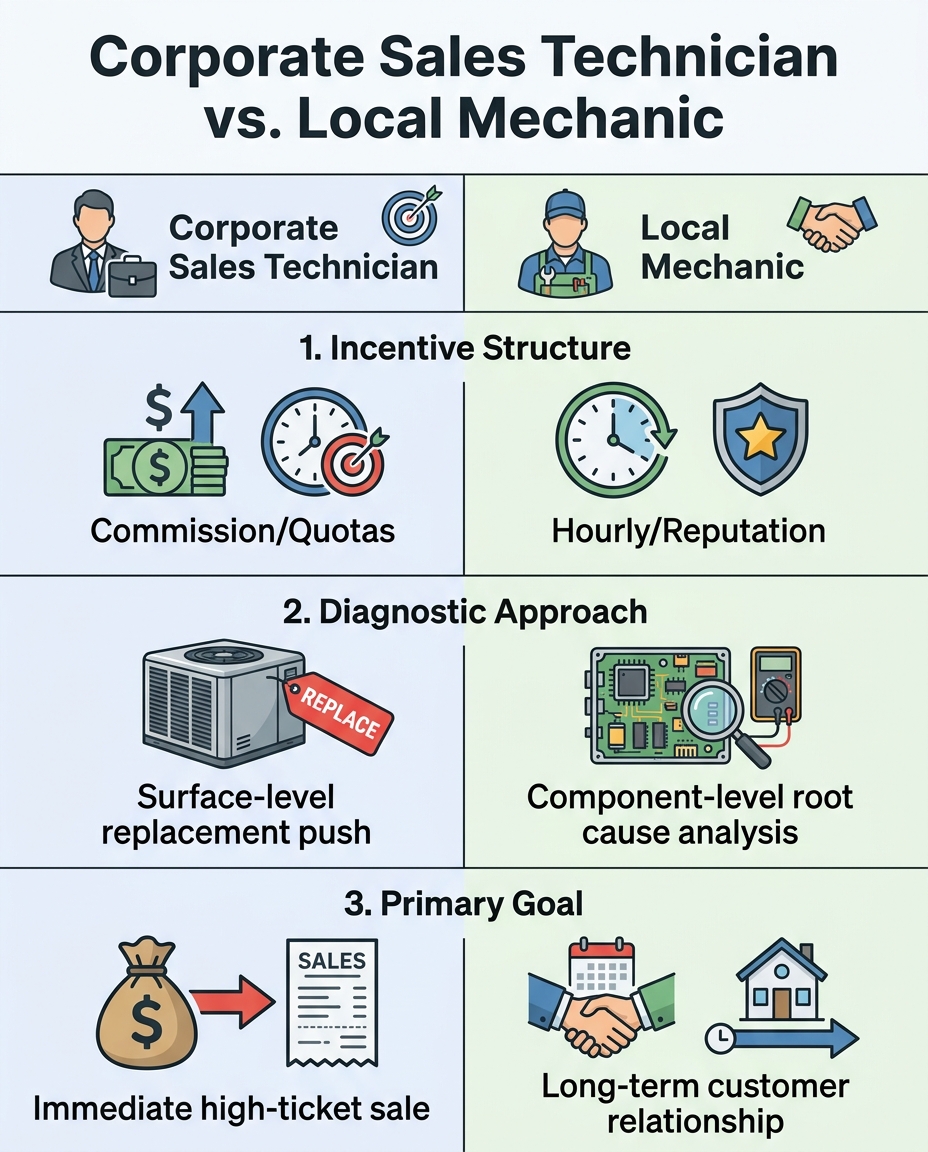
This corporate structure actively incentivizes technicians to push for full system replacements rather than performing repairs. In many of these organizations, employees are paid heavily on commission. They are trained extensively on sales scripts, objection handling, and closing techniques, often at the expense of deep diagnostic troubleshooting.
• Primary Incentive — Corporate-Backed Service: Commission on full system replacements and high-ticket sales. — Local Mechanic Shop: Hourly wages and building long-term customer trust.
• Training Emphasis — Corporate-Backed Service: Sales scripts, financing presentations, and overcoming objections. — Local Mechanic Shop: Wiring diagrams, root cause analysis, and mechanical repair.
• Typical Visit Outcome — Corporate-Backed Service: A tablet presentation outlining replacement options. — Local Mechanic Shop: A repaired system or a clear, targeted component fix.
• Customer Relationship — Corporate-Backed Service: Viewed as a one-time transaction to meet monthly revenue goals. — Local Mechanic Shop: Viewed as a long-term partnership for ongoing maintenance.
When an employee's livelihood depends on how many units they replace each month, every service call becomes a sales opportunity. The technician is no longer looking for the broken wire or the failing capacitor; they are looking for a reason to condemn the entire unit. This shift has fundamentally changed the nature of the service call, turning what used to be a technical trade into a high-pressure retail environment.
Weaponizing the Weather: False Urgency Before Winter
One of the most effective tactics used by corporate dispatchers and commissioned sales reps is weaponizing the weather. New Jersey's dramatic shift to freezing winter temperatures creates a high-stakes environment for heating reliability. Corporate sales representatives know that the thought of a furnace failing during a January blizzard is terrifying for any homeowner, and they use that fear as leverage during early fall appointments.
During a September pre-heating tune-up, a corporate technician might identify a minor issue but frame it as a ticking time bomb. They use high-pressure language, warning that your system "won't survive the first freeze" or that it is "unsafe to operate." By leveraging the impending cold weather, they create a false sense of urgency, pressuring you to sign a contract for a replacement "today" before their schedule fills up or prices increase.
Decoding the 'Condemned' System Diagnosis
It is crucial to understand the difference between a genuinely unsafe system and one that simply needs a targeted furnace repair. What does it actually mean when a system is labeled "condemned" by a technician?
• The Cracked Heat Exchanger: This is a common and serious issue that can leak carbon monoxide. However, some sales techs will point to normal surface rust or a minor scratch and claim the exchanger is cracked to force a replacement. A true mechanic will use a combustion analyzer or an inspection camera to prove the crack exists.
• The "Obsolete" Part: You may be told that a failed component is no longer manufactured and therefore the whole system must go. Often, a universal replacement part is readily available through local supply houses.
• The Age Argument: Just because a furnace is 12 or 15 years old does not mean it is automatically unsafe or requires immediate replacement. Well-maintained systems can operate safely for much longer.
A single failed component—like a bad inducer motor, a faulty control board, or a worn ignitor—should never automatically dictate a total system overhaul. Recognizing this high-pressure language is your first line of defense against unnecessary replacements.
What Makes a True 'Mechanic' Different?
The alternative to this corporate sales model is the traditional, genuine local mechanic. A true mechanic approaches a service call with a completely different mindset. Their primary goal is "turning wrenches"—methodically testing components, reading electrical schematics, and finding the exact root cause of a failure. Because they are structurally incentivized to fix problems and build lasting trust rather than hit a monthly replacement quota, you get an honest assessment of your equipment.
As a deeply rooted local business, our team at Climate Mechanics prioritizes this honest, accurate diagnostic approach over aggressive out-of-state corporate quotas. A deep diagnostic process often uncovers minor, easily fixable issues rather than catastrophic failures. For example, we recently had a homeowner reach out on a snowy day when their furnace stopped working completely. One of our technicians arrived within a few hours, opened the cabinet, and found a dirty flame sensor. Instead of using the freezing weather to condemn the system and push a new installation, our mechanic simply cleaned the sensor, got the heat back on, and showed the homeowner how to maintain it moving forward. That is the difference between a sales call and a service call.
Root Cause Troubleshooting vs. Surface-Level Condemnation
When you call us for AC repair in Cinnaminson or heating service, our mechanics take methodical steps to test both electrical and mechanical parts. We don't just look at the age of the unit and write it off.
1. Electrical Testing: We use multimeters to check the exact voltage and amperage running through contactors, capacitors, and motors, comparing the readings to the manufacturer's specifications.
2. Airflow Analysis: We check static pressure to ensure the ductwork is allowing the system to breathe properly, often solving performance issues without replacing any equipment.
3. Component Isolation: If a system isn't firing, we trace the sequence of operations step-by-step to isolate the exact switch or sensor that is failing to communicate.
Taking the time to clean a dirty sensor, clear a blocked condensate drain, or replace a small capacitor is the hallmark of a trustworthy contractor. Mechanics take pride in fixing what is broken, saving the homeowner from unnecessary upheaval.

The Power of a Second Opinion Before the Cold Hits
If you find yourself sitting at your dining room table listening to a high-pressure pitch during a September pre-heating tune-up, remember that you hold the power. Homeowners always have the right to pause a presentation, decline to sign any immediate paperwork, and seek another assessment. Corporate sales tactics rely on making you feel trapped and out of time, but unless your house is actively on fire, you always have time to get a second set of eyes on the problem.
Second opinions frequently reveal that a system can be safely and effectively repaired rather than replaced. Recently, our team at Climate Mechanics was called out by a local customer who needed a second look after another contractor caused an issue with their mini-split system and claimed it was irreparably damaged. One of our mechanics came out within two days, properly diagnosed the underlying problem, and repaired the unit quickly and efficiently without trying to sell them a whole new setup. The confidence gained from an independent evaluation is invaluable when comparing big box HVAC estimates vs local pricing.
Steps to Take When Handed a Massive Replacement Quote
If a technician tells you your system is condemned or unsafe, protect yourself by following these steps:
1. Do not sign anything under pressure: No reputable company will force you to make a major home improvement decision on the spot. If the deal is only good "for today," ask them to leave.
2. Ask for a written, itemized diagnostic report: Demand that the technician write down exactly which component failed, the specific measurements they took (like voltage or gas pressure), and why it cannot be repaired.
3. Turn off the system if advised, but verify: If they claim the system is leaking carbon monoxide and shut off your gas, leave it off for safety, but immediately call a local owner-operator for an independent evaluation.
4. Search organically for local experts: Look for "hvac companies near me" and filter for businesses that emphasize repairs, diagnostics, and long-standing community ties rather than massive regional advertising budgets.
Frequently Asked Questions About HVAC Diagnostics
Should I get a second opinion on HVAC replacement?
The short answer is yes. If a technician tells you that your entire system needs to be replaced, especially if the unit is under 15 years old, you should always seek a second opinion. A different contractor will often find that a single failed component, rather than the whole system, is the root cause of the issue, saving you from a massive unnecessary expense.
Why do HVAC companies push for replacement?
Many large HVAC companies operate under private equity ownership. These corporate structures incentivize technicians with commissions and strict quotas, meaning they make their living by selling new systems rather than fixing old ones. Pushing for a replacement is often a business decision dictated by management, rather than a technical necessity based on your equipment's actual condition.
Is a local HVAC contractor better than a large corporation?
Local owner-operators generally focus on long-term relationships over quick sales. Because a local mechanic relies heavily on community reputation and word-of-mouth, they are structurally incentivized to provide honest diagnostics and targeted repairs. Large corporations often view service calls merely as lead generation for full system replacements.
How can I tell if my HVAC technician is on commission?
Pay attention to how they spend their time in your home. If the technician spends 10 minutes looking at the equipment and 45 minutes walking you through a glossy presentation on a tablet with multiple financing options, they are likely a commissioned sales tech. A true mechanic will spend the majority of their time physically testing components with tools.
What should a thorough fall heating tune-up actually include?
A legitimate tune-up is a proactive mechanical inspection. It should include testing the ignition system, cleaning the flame sensor, inspecting the heat exchanger for physical damage, checking the blower motor's amp draw, and verifying that all safety limit switches are functioning correctly. It should end with a clean bill of health or a specific repair recommendation, not a high-pressure sales pitch.
Protect Your Home with Honest, Local Diagnostics
Navigating home maintenance doesn't have to feel like a battle against aggressive sales quotas. The peace of mind that comes from knowing the true, factual state of your equipment is invaluable, especially as the colder months approach. By understanding the difference between corporate sales technicians and genuine local mechanics, you can protect your home and your budget from unnecessary overhauls.
As you prepare your system for the changing seasons, prioritize finding a team that actually wants to turn wrenches and solve problems. Schedule your pre-season preparations with mechanics who value honest diagnostics, and rest easy knowing that your heating system is truly ready for whatever the winter brings.
