



The Reality of the First-Freeze Panic
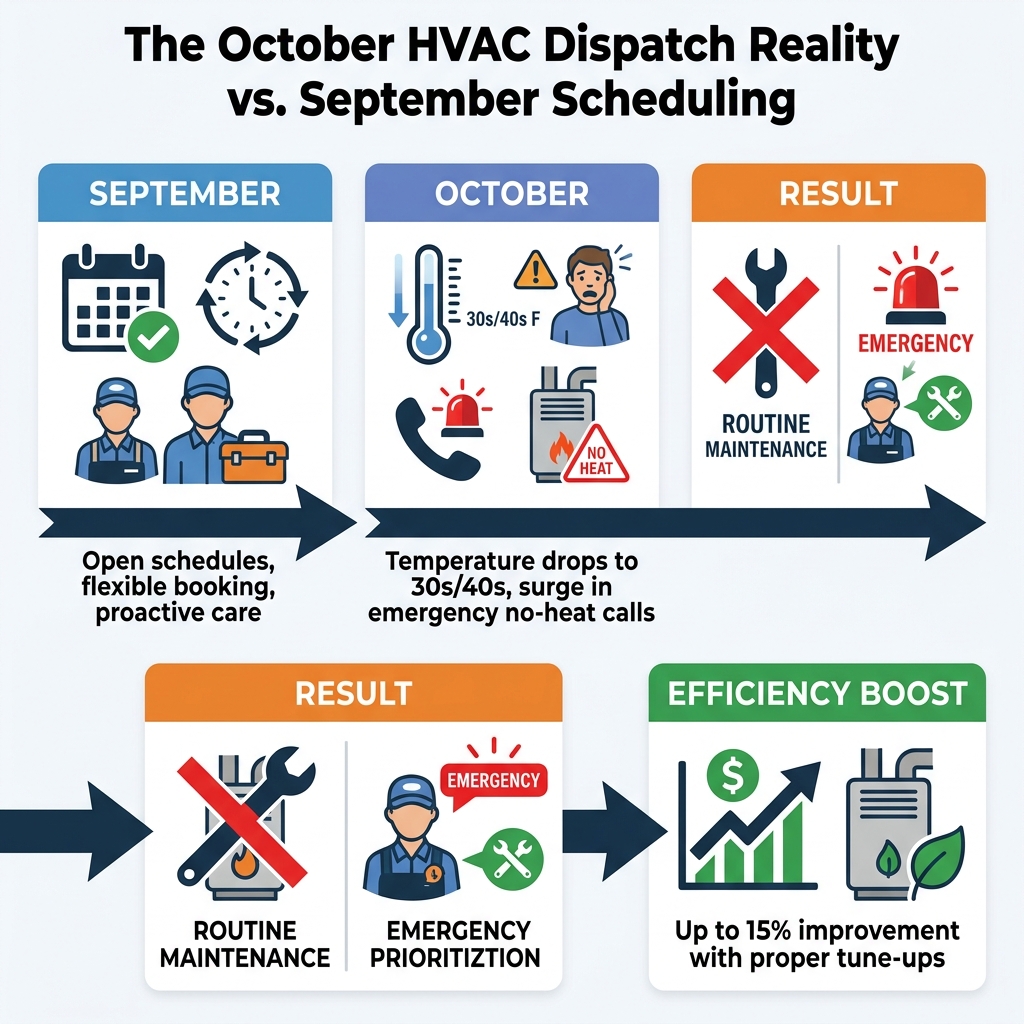
As the late summer heat finally begins to break, Pre-Booking Your Fall Heating Tune-Up Before the October Rush Hits is the smartest move you can make for your home's comfort and safety. Every autumn, homeowners face a quiet but critical decision: schedule preventative maintenance while technicians still have open availability, or wait until the thermostat drops and hope for the best. The problem with waiting is a phenomenon known in the HVAC industry as the "first-freeze panic." The moment overnight temperatures take their first real plunge, local heating dispatch boards fill up instantly with emergency no-heat calls. This sudden surge pushes routine tune-ups to the back of the line, leaving proactive homeowners waiting weeks for an appointment. Now is the time to secure your spot before that inevitable rush begins. If you need reliable heating services, scheduling your furnace maintenance early guarantees your system is ready for whatever winter brings.
Behind the scenes, the shift on an HVAC dispatch board is dramatic. One day, a dispatcher is looking at a steady, manageable schedule of routine maintenance calls and minor repairs. The next morning, after the first freezing night of the season, the phone lines light up. The dispatch screen transforms from green, open time slots to a solid wall of red emergency alerts. Hundreds of homeowners turn on their thermostats for the first time in months, only to discover their furnace is blowing cold air, making grinding noises, or failing to ignite entirely.
This is where the strategic advantage of early booking becomes clear. By acting during the September pre-heating window, you bypass the chaos entirely. You get to choose an appointment time that works for your schedule, rather than taking whatever canceled slot happens to open up on a Tuesday afternoon. More importantly, you secure the undivided attention of a technician who isn't rushing to get to five other freezing houses before dinner. Framing the decision is simple: you can either wait for the seasonal rush to dictate when your heater gets attention, or you can take control of your comfort now while schedules remain open and flexible.
What Happens When Temperatures Drop in the Delaware Valley
The transition from summer to fall in the South Jersey and Delaware Valley region is rarely a gentle slope. Instead, the area experiences a distinct, rapid climate shift. You might enjoy mild, 70-degree afternoons in late September, only to see average October nighttime temperatures drop rapidly into the 40s and 30s. This sharp decline is exactly what triggers the seasonal rush. When homes that have been perfectly comfortable suddenly turn frigid overnight, residents instinctively reach for the thermostat.
The problem: This sudden demand triggers what technicians call the "dormancy effect." Your heating system has been sitting completely idle in a dark, potentially damp basement or utility closet since last spring. During these months of inactivity, dust settles on sensitive electronic components, lubrication on moving parts dries out, and belts can become brittle.
The cause: When a dormant furnace or heat pump is suddenly forced to start up and run at full capacity to fight off a 35-degree night, those minor, unseen issues instantly become major mechanical failures. A dusty flame sensor causes the system to lock out. A dry blower motor seizes up. A weakened capacitor finally fails.
The solution: Addressing the dormancy effect before the system is under heavy load is the only way to prevent these sudden failures. For homeowners in the Cinnaminson NJ area, waiting until October to address these issues often means waiting days for an available technician, as the entire region experiences the exact same mechanical failures at the exact same time.
The Triage of HVAC Dispatching
When the first-freeze panic hits, dispatchers cannot simply operate on a "first come, first served" basis. They must legally and ethically prioritize families without heat. If a dispatcher receives a call from a household with an infant, an elderly resident, or a person with medical vulnerabilities whose furnace has completely failed, that call instantly goes to the top of the board.
This triage process is necessary for safety, but it means that preventative care is pushed to the back of the line during peak weeks. If you call in mid-October for a routine tune-up, you will likely be rescheduled multiple times as emergency no-heat calls continuously bump you down the priority list. Booking early is the only way to avoid becoming a victim of this necessary triage system.

Why the September Pre-Heating Window is Your Best Bet
The brief period between the end of the heavy cooling season and the beginning of the intense heating season is the sweet spot for home maintenance. The September pre-heating window offers logistical advantages that simply disappear once the leaves finish falling. Taking action during this specific timeframe puts you in complete control of your home's mechanical health.
Here is why booking during this transitional window is the most effective strategy:
1. Unrestricted Scheduling Flexibility: During the early fall, you can often pick the exact day and time that works for your family. You aren't forced to take time off work to accommodate the only two-hour arrival window available for the next three weeks.
2. Buffer Time for Replacement Parts: If a technician discovers a failing part during a routine check—such as a worn inducer motor or a weak igniter—you have time to order the replacement. Supply chains can be unpredictable. Finding a problem in September means the part arrives and is installed before you actually need the heater. Finding that same problem in November means shivering under blankets while waiting for a delivery.
3. Thorough, Unrushed Inspections: Technicians do their best work when they aren't racing the clock. When you book before the rush, your technician has the time to meticulously clean components, test electrical draws, and calibrate your thermostat without the pressure of five freezing households waiting on deck.
4. Managing Indoor Air Quality: The transition period is also critical for your home's air quality. As you seal up windows and doors for the cooler months, balancing indoor humidity as September weather swings becomes a priority. A comprehensive tune-up addresses filter changes and airflow issues that directly impact how healthy your indoor air feels.
By treating this window as a hard deadline for your home maintenance, you eliminate the stress of seasonal transitions and ensure your equipment is operating at peak performance.
Preventing the Inevitable: How Routine Care Stops Winter Breakdowns
The technical justification for a pre-season tune-up goes far beyond simply turning the unit on to see if it makes heat. According to data from the U.S. Department of Energy (DOE) and ENERGY STAR, routine maintenance can improve your HVAC system's efficiency by up to 15%. When a furnace operates with a clogged filter, a dirty blower wheel, or misaligned burners, it has to run longer and work harder to produce the same amount of warmth. This extended runtime wastes energy and accelerates mechanical wear.
Beyond efficiency, the safety checks performed during a tune-up are non-negotiable. For homes utilizing natural gas or propane furnaces, carbon monoxide (CO) testing is a critical part of the process. A technician will inspect the heat exchanger for hairline cracks. Even a microscopic fracture in this metal component can allow dangerous combustion gases to mix with the air circulating through your vents. Because carbon monoxide is colorless and odorless, a professional inspection is the only reliable way to confirm your system is venting safely outdoors.
Proactive care also catches the small, inexpensive problems before they cascade into major failures. A technician can easily spot a frayed blower belt or measure a capacitor that is dropping voltage. Replacing these minor components during a scheduled visit is highly affordable. Ignoring them until they snap or short out on a freezing night is exactly what leads to an emergency furnace repair.
The Cost of Neglect
The wear and tear of a long winter cycle in the Cinnaminson NJ area is brutal on mechanical equipment. Your furnace will cycle on and off thousands of times between November and March. If the system starts that marathon already handicapped by neglect, a breakdown is almost guaranteed.
Consider the flame sensor—a small metal rod that confirms the gas burners have successfully ignited. During the dormant summer months, a thin layer of dust or light oxidation can coat this sensor. When the furnace fires up, that microscopic layer of grime prevents the sensor from reading the flame. As a safety precaution, the furnace will immediately shut off the gas valve, resulting in a "lockout." Your house stays cold, and you have to call for service, all because of a component that takes two minutes to clean during a routine tune-up.
Transparent Local Scheduling vs. Reactive Dispatching
Who you choose to perform your maintenance is just as important as when you schedule it. There is a massive difference between working with a dedicated local team and relying on an impersonal, volume-based corporate service. Large, national call centers often treat fall maintenance as a numbers game, overbooking their technicians and relying on reactive dispatching to put out fires.
Established local mechanics take a different approach. They understand the specific climate challenges of the region and build their schedules to honor time commitments. By focusing on proactive care rather than reactive chaos, local teams prioritize accurate, on-time service.
• Scheduling Focus — Local Proactive Care: Honoring booked time slots and preventing breakdowns. — Corporate Reactive Dispatching: Volume-based booking, frequently rescheduling routine calls.
• Technician Mindset — Local Proactive Care: Thorough, unrushed inspections and detailed safety checks. — Corporate Reactive Dispatching: Rushing through checklists to get to the next emergency.
• Customer Priority — Local Proactive Care: Loyal customers and program members receive priority status. — Corporate Reactive Dispatching: You are treated as a ticket number in a regional queue.
• Communication — Local Proactive Care: Transparent arrival times and direct answers from local staff. — Corporate Reactive Dispatching: Automated messages and vague "sometime today" windows.
One repeat customer in the area reached out during a recent fall transition for general HVAC service needs. Because they worked with a dedicated local team, they received fast, on-time service, and the work was completed correctly and efficiently without the typical seasonal runaround. The best way to secure this level of service is by enrolling in a dedicated HVAC maintenance program. Being part of a structured program shields you from the seasonal rush, guaranteeing that your home remains a priority even when the rest of the dispatch board is overwhelmed.
Common Questions About Heating Season Prep
When is the best time to schedule a fall heating tune-up?
The ideal time to schedule your heating tune-up is during the September pre-heating window, before you actually need to turn the system on. Booking during this transitional month ensures you have your pick of appointment times. It also gives technicians ample time to thoroughly inspect the unit and order any necessary replacement parts before the freezing weather arrives.
Why is it hard to get an HVAC appointment in October?
October is when the first major temperature drops usually occur, triggering the "first-freeze panic." Thousands of homeowners turn on their heaters simultaneously, revealing all the mechanical issues that developed over the dormant summer months. Dispatchers must prioritize these emergency no-heat calls, which instantly pushes routine maintenance appointments to the back of the line.
What is included in a comprehensive heating tune-up?
A thorough tune-up involves a complete inspection, cleaning, and calibration of your heating system. Technicians will clean the burners and flame sensor, test the electrical components and amp draws, inspect the heat exchanger for dangerous cracks, and verify that the thermostat is communicating correctly. They also check the venting system to ensure carbon monoxide is safely directed out of your home.
Why do HVAC companies get so busy in the fall?
HVAC companies experience a massive surge in demand during the fall because the weather transition forces heating systems out of dormancy. Systems that have sat idle for months are suddenly put under heavy strain, leading to a high volume of immediate breakdowns. This sudden spike in emergency repair requests overwhelms standard dispatch schedules.
How often does a heating system actually need maintenance?
Industry standards and equipment manufacturers require professional maintenance at least once a year for heating systems. If you have a heat pump that provides both heating and cooling, it should be serviced twice a year (once in the spring and once in the fall). Skipping annual maintenance can void your manufacturer warranty and significantly reduce the lifespan of the equipment.
Does preventative maintenance really prevent winter breakdowns?
Yes, routine care is highly effective at stopping unexpected failures. Most winter heating emergencies are caused by minor issues—like a dirty sensor, a clogged filter, or a weak capacitor—that were ignored until they caused the entire system to shut down. Catching and correcting these small problems in the fall directly prevents major breakdowns in January.
Secure Your Spot Before the Cold Weather Arrives
Taking action now provides a level of comfort that goes beyond just warm air. Knowing that your furnace or heat pump has been professionally inspected, cleaned, and cleared for winter duty delivers real peace of mind. The September pre-heating window is rapidly closing, and once the overnight temperatures in the Cinnaminson NJ area begin to drop, the dispatch boards will lock up with emergency calls. Don't wait for the first-freeze panic to dictate your schedule. Reach out today to secure a flexible time slot, ensure your system is operating efficiently, and protect your home from unexpected cold-weather breakdowns.
