



What to Do When Your Circuit Breaker Trips the Moment Your AC Turns On in South Jersey
If you're dealing with a circuit breaker tripping when ac turns on what to do in a south jersey home is probably the first thing on your mind — especially during a sweltering July afternoon when you need cool air the most. Here's a quick answer before we dive deeper:
When your AC trips the breaker, follow these steps:
1. Turn off the AC at the thermostat — do not leave it calling for cooling.
2. Go to your electrical panel and flip the tripped breaker fully OFF, then back ON.
3. Wait 30 minutes before turning the AC back on — this lets the system reset.
4. Check your air filter — a clogged filter makes the blower motor work harder and draw more power.
5. Look at the outdoor unit — clear any debris blocking the condenser coils.
6. Do not reset the breaker more than once — if it trips again, stop and call a licensed professional.
This problem is more common in South Jersey homes than most people realize. Summer heat pushes AC systems hard, and when a unit draws more current than its circuit can handle — whether from a dirty filter, a failing capacitor, aging wiring, or an undersized breaker — the breaker does exactly what it's designed to do: it shuts things down to prevent a fire.
The frustrating part is that simply resetting the breaker doesn't fix the underlying cause. Overloaded circuits are one of the leading contributors to residential electrical fires, and a breaker that keeps tripping is your home's clearest warning sign that something needs attention.
Below, we walk through every likely cause, what you can safely check yourself, and when it's time to call a professional.
Discover more about circuit breaker tripping when ac turns on what to do in a south jersey home:
• ac keeps turning on and off in new jersey summer heat what is wrong
• why is my ac blowing warm air on a hot humid new jersey day
Understanding the Causes of a Circuit Breaker Tripping When AC Turns On: What to Do in a South Jersey Home
When your air conditioner kicks on, it requires a massive burst of electrical energy to get the heavy mechanical components—namely the compressor and the condenser fan motor—spinning. This initial burst is known as "inrush current" or startup amperage. If everything in your electrical and mechanical systems is operating correctly, this surge lasts only a fraction of a second, and the system quickly settles into its normal running amperage.
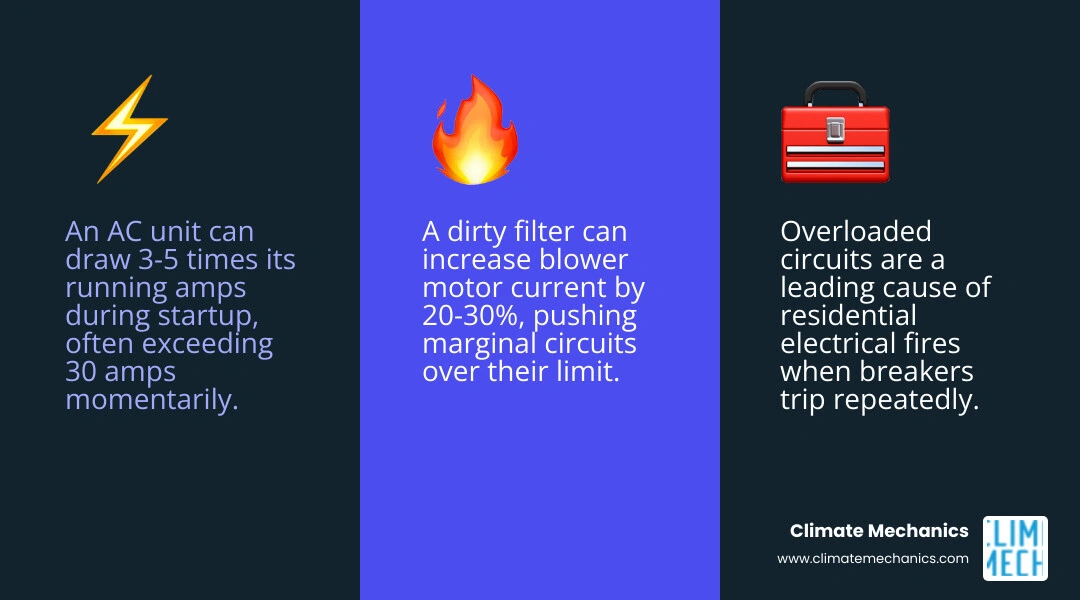
However, if there is a bottleneck, a mechanical failure, or an electrical fault, that startup current can spike to three to five times the running current. When the electrical draw exceeds the safety rating of your circuit breaker, the breaker trips to prevent the wiring inside your walls from overheating, melting, and potentially catching fire. This is why we treat an AC Circuit Breaker Keeps Tripping scenario as a critical warning sign rather than a minor annoyance.
Another common culprit is voltage drop. If your home is supplied with low voltage from the local utility company, or if there is a bottleneck in your home's wiring, your AC’s electric motor will naturally attempt to draw more current (amperage) to compensate for the lower voltage. This sudden spike in current will instantly trip the breaker.
Electrical Overloads and Your Circuit Breaker Tripping When AC Turns On: What to Do in a South Jersey Home
An electrical overload occurs when a single circuit is asked to carry more electrical current than it is rated to handle. In many older South Jersey homes, modern central air conditioning systems or large window units were retrofitted into electrical panels that were never designed for such heavy loads.
If your air conditioner is sharing a circuit with other high-wattage household appliances—like a microwave, a refrigerator, or even a hair dryer—the combined load will easily exceed the circuit's capacity. When the AC turns on, its high startup draw acts as the final straw, instantly tripping the breaker.
Furthermore, if your home's main electrical panel does not have sufficient overall capacity, you may find your AC Keeps Turning On and Off in New Jersey Summer Heat What Is Wrong because the panel is constantly struggling to balance the competing demands of your cooling system and your daily household activities.
Mechanical Strain: Dirty Filters, Dirty Coils, and Low Refrigerant
It might surprise you to learn that a simple maintenance issue can cause a major electrical problem. When your air conditioner's air filter is clogged with dust, pet dander, and pollen, it severely restricts airflow through the system. The indoor blower fan motor has to work twice as hard to pull air through the clogged filter, which significantly increases its electrical draw.
Similarly, if the outdoor condenser coils are coated in dirt, grass clippings, or pollen, they cannot effectively release heat. This forces the compressor to run at much higher temperatures and pressures to cool your home. The resulting mechanical strain causes the compressor to draw excessive current, eventually tripping the circuit breaker.
If your system is low on refrigerant due to a leak, the compressor has to run constantly and work under extreme stress. This can lead to overheating and a tripped breaker, leaving you wondering Why Is My AC Blowing Warm Air right before the entire system shuts down.
Compressor and Capacitor Failures
The compressor is the heart of your air conditioner, and the start capacitor is the "battery" that gives it the electrical boost needed to start running. Over time, heat and electrical wear can cause the capacitor to degrade. If the start capacitor is failing, it cannot deliver enough power to start the compressor quickly. The compressor will stall, hum, draw an enormous amount of current, and trip the breaker.
As a compressor ages, it can also begin "hard-starting." This means the internal mechanical parts are wearing out, creating high physical resistance that requires far more electrical power to overcome during startup.
In the worst-case scenario, a compressor can suffer from a "short-to-ground" or become "grounded." This occurs when the electrical windings inside the motor break down and touch the metal casing of the compressor. This creates a direct, low-resistance path to the ground, causing an immediate and violent electrical short that trips the breaker the exact millisecond the thermostat calls for cooling. If your compressor is failing, it can also lead to issues where your Why Does My AC Run All Day Without Stopping in a South Jersey Summer before it finally gives out and trips the electrical system.
Safe Troubleshooting Steps for South Jersey Homeowners
Before you pick up the phone to call a technician, there are several safe, basic troubleshooting steps you can perform. When your system is AC Running Constantly in New Jersey Summer Heat and suddenly trips the breaker, taking a systematic approach can help you pinpoint the issue without risking your safety.
• Check the Air Filter: Turn off the system and slide out your air filter. If you cannot see light through it, replace it immediately.
• Inspect the Outdoor Condenser: Walk outside and look at your outdoor unit. Ensure there are no weeds, shrubs, or lawn debris blocking the vents. If the coils look visibly dirty, they may need a professional cleaning.
• Verify Thermostat Settings: Make sure your thermostat is set to "Cool" and the fan is set to "Auto" rather than "On" to prevent unnecessary continuous electrical draw while you troubleshoot.
Step-by-Step Safe Reset Procedure
If your breaker has tripped, do not simply run to the panel and flip it back on while the AC is still trying to run. Doing so can cause a massive electrical arc that damages your equipment or the breaker itself. Follow this precise safety sequence:
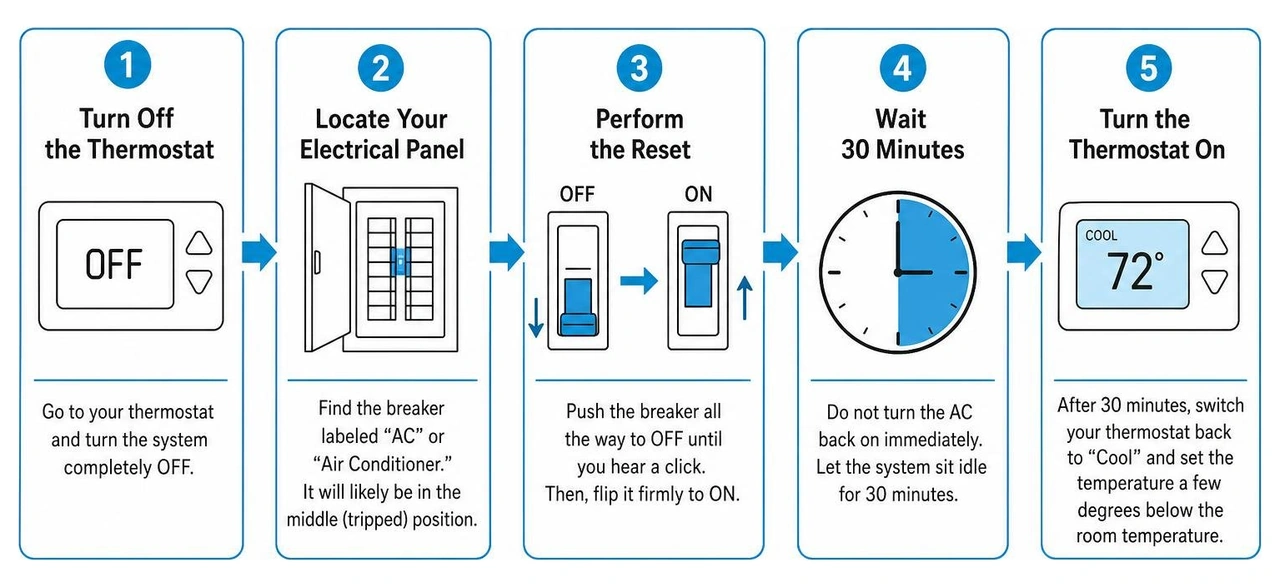
1. Turn Off the Thermostat: Go to your thermostat and turn the system completely "OFF." This stops the control board from sending a call for cooling to the outdoor unit.
2. Locate Your Electrical Panel: Find your main breaker box. Look for the breaker labeled "AC" or "Air Conditioner." It will likely be in the middle "tripped" position (neither fully ON nor fully OFF).
3. Perform the Reset: Firmly push the breaker switch all the way to the "OFF" position until you hear a distinct click. Then, flip it firmly to the "ON" position.
4. Wait 30 Minutes: Do not turn the AC back on immediately. Let the system sit idle for half an hour. This allows the internal pressure inside the compressor to equalize and gives any built-in delay timers a chance to reset.
5. Turn the Thermostat On: After 30 minutes, switch your thermostat back to "Cool" and set the temperature a few degrees below the room temperature. Listen closely as the system starts up.
The Risks of Repeatedly Resetting a Tripped Breaker
It can be incredibly tempting to keep resetting a breaker that trips repeatedly, especially when you are desperate to cool down your home on a humid July afternoon. However, doing this is highly dangerous.
A circuit breaker is a safety device. If it trips immediately or repeatedly, it is telling you that a hazardous electrical condition exists. Forcing a breaker to reset against a direct short-circuit or a grounded compressor can cause:
• Severe Fire Hazards: The electrical current passing through the wires can heat them to thousands of degrees, melting insulation and igniting surrounding wood or drywall.
• Compressor Burnout: Repeatedly forcing high-voltage current into a stalled motor will destroy the delicate electrical windings inside the compressor, turning a repairable issue into an expensive system replacement.
• Oil Ignition: The extreme heat generated by repeated hard starts can cause the oil inside the compressor to ignite, creating an internal fire that destroys the entire refrigerant system.
If the breaker trips a second time after you have followed the safe reset procedure, leave it off and call a professional immediately.
Electrical Challenges in Older South Jersey Homes
South Jersey is famous for its beautiful, historic communities. Towns like Haddonfield, Collingswood, and parts of Marlton are filled with gorgeous homes built in the early-to-mid 20th century. While these properties have incredible charm, their electrical systems were never designed to handle the massive power demands of modern high-efficiency central air conditioners.
Many of these older homes still utilize outdated electrical setups:
• Knob-and-Tube Wiring: This antique wiring method lacks a ground wire, making it highly susceptible to overheating and short circuits when paired with modern high-draw appliances.
• 100-Amp Electrical Panels: While a 100-amp panel was plenty of power in 1960, a modern home with multiple smart devices, electric appliances, and a central AC system typically requires a 200-amp service panel to operate safely.
• Outdated and Dangerous Panels: Brands like Federal Pacific Electric (FPE) and Zinsco are notorious for having breakers that fail to trip during an overload. If your home has one of these panels, a tripping breaker might actually be the least of your worries—the real danger is a breaker that fails to trip, leading to catastrophic electrical fires.
To ensure your air conditioner runs safely, it must be installed on a dedicated circuit. This means the wiring runs directly from the electrical panel to the AC unit without sharing power with any other outlets, lights, or appliances in your home.
Circuit Breaker Rating and Wire Sizing
In the electrical world, wire size and breaker rating must match perfectly. The National Electrical Code (NEC) sets strict guidelines to ensure safety.
A standard central air conditioner typically requires a dedicated 20-amp or 30-amp double-pole breaker.
• A 20-amp circuit must be wired with #12 gauge copper wire.
• A 30-amp circuit must be wired with #10 gauge copper wire.
If a previous homeowner or an unlicensed handyman installed a larger breaker (such as a 30-amp breaker) on thinner wire (like #14 gauge wire, which is only rated for 15 amps) to stop "nuisance tripping," they created a severe fire hazard. The wire will overheat and melt long before the breaker ever decides to trip. Always make sure your system's Minimum Circuit Ampacity (MCA) and Maximum Overcurrent Protection (MOP) ratings on the unit's nameplate match the breaker and wire size installed in your home.
How Hard-Start Kits and Soft Starters Prevent Trips
If your air conditioner is mechanically sound but is simply drawing too much inrush current on startup—common with older compressors in South Jersey summers—there are two highly effective solutions:
1. Hard-Start Kits: This device contains a start capacitor and a relay that delivers a massive, timed electrical boost to the compressor motor. This extra torque helps the compressor start up much faster, reducing the duration of the high-current draw and preventing the breaker from tripping.
2. Soft Starters: Unlike a hard-start kit, which shunts raw power into the motor, a soft starter uses advanced microelectronics to gradually ramp up the voltage supplied to the compressor. This can reduce startup inrush current by up to 75%. It not only prevents circuit breaker trips but also significantly reduces wear and tear on your compressor, extending its lifespan.
Professional HVAC and Electrical Solutions
When basic troubleshooting steps like changing the air filter and clearing debris do not resolve the issue, it is time to call in the experts. Dealing with high-voltage electricity and complex refrigerant systems requires specialized training, diagnostic tools, and licensing.
At Climate Mechanics, we often perform comprehensive diagnostic services to determine whether your tripping issue is an electrical problem or an HVAC mechanical problem:
• Electrical Panel Upgrades: If your home's main panel is outdated, overloaded, or showing signs of damage, we can coordinate or recommend a professional panel upgrade to a modern 200-amp service.
• Dedicated Circuit Installation: We can run a brand-new, dedicated line with properly sized wire directly from your panel to your AC disconnect box, ensuring your system has a clean, uninterrupted path of power.
• AC Repair and Component Replacement: If your system has a failing capacitor, a worn-out fan motor, or a hard-starting compressor, we can quickly replace those parts to restore reliable operation. If you live in the Marlton area, you can easily schedule professional AC Repair Marlton NJ to get your system running smoothly again.
When to Call a Professional for a Circuit Breaker Tripping When AC Turns On: What to Do in a South Jersey Home
Some warning signs point to a severe electrical emergency. If you notice any of the following symptoms in your home, turn off the breaker immediately and call for professional HVAC Repair Marlton NJ or a licensed electrician:
• Burning Smells: A distinct odor of burning plastic or ozone near your electrical panel, thermostat, or indoor unit indicates melting wire insulation.
• Buzzing Sounds: A buzzing, sizzling, or crackling noise coming from your breaker panel or the outdoor AC disconnect box indicates dangerous electrical arcing.
• Hot Breaker Panel: If the metal cover of your electrical panel or the circuit breaker itself feels physically hot to the touch.
• Flickering Lights: If the lights in your home dim significantly or flicker every single time your air conditioner kicks on, this indicates a massive voltage drop or an overloaded electrical service.
Frequently Asked Questions About Tripping AC Breakers
Can a power outage or surge cause my AC breaker to trip?
Yes. When power is suddenly restored after an outage, a massive voltage spike can surge through your home's electrical system, causing the AC breaker to trip to protect the unit's sensitive control boards. Additionally, if the utility grid experiences a temporary "brownout" (low voltage), your AC compressor will draw excess current to try to keep running, which will also trip the breaker. Installing a whole-home surge protector can help prevent these issues.
Is it safe to use a larger breaker to stop my AC from tripping?
Absolutely not. Never replace a circuit breaker with one of a higher amperage rating unless you are also replacing the entire run of wire with a thicker gauge. If you install a larger breaker on undersized wire, the wire will overheat, melt its insulation, and cause an electrical fire inside your walls before the breaker ever trips.
How often should I change my AC filter to prevent electrical strain?
During the peak cooling season in South Jersey, you should check your air filter once a month. If you have pets, allergies, or a dusty home, you may need to replace it every 30 to 60 days. Keeping a clean filter ensures maximum airflow, reducing the workload and electrical draw on your blower fan motor.
Conclusion
A circuit breaker tripping when ac turns on what to do in a south jersey home is a serious situation that requires immediate attention. Whether the issue is as simple as a clogged air filter or as complex as a grounded compressor, ignoring a tripping breaker can lead to catastrophic electrical hazards or costly system failures.
With over 38 years of NATE and NCI-certified expertise, our team at Climate Mechanics is ready to keep your home cool and safe all summer long. We proudly serve homeowners across South Jersey, including Marlton, Pennsauken, Haddonfield, and the surrounding areas.
If your air conditioner is struggling to stay on, don't risk your safety with repeated breaker resets. Schedule Service online, Contact our friendly team today, or explore our comprehensive Air Conditioning Services to restore peace of mind and reliable comfort to your home.
