



Why Is There a Burning Smell During My Initial Fall Heating Startup?
One of the most common homeowner questions answered during the mid-fall heating startup in October is whether a sudden burning smell from the vents is a dangerous emergency or a harmless seasonal quirk. Is your heater actually broken, or is that alarming odor completely normal? When the temperature finally drops and you switch your thermostat from cool to heat for the first chilly night of the season, an unmistakable burning scent often fills the house within minutes. For many homeowners, this is an immediate source of panic, prompting them to wonder if their equipment is overheating or if a fire is starting inside the ductwork.
Before you assume the worst and shut down your entire house, it helps to understand that some odors are an expected part of the seasonal transition. Heating equipment that has sat dormant for months will naturally produce a slight smell as it warms up. However, there is a strict dividing line between normal burn-off and a serious hazard that requires an immediate shutdown. Evaluating the situation calmly, knowing what specific smells to look out for, and prioritizing safety is the best approach. If you are ever in doubt about the condition of your equipment, reaching out for professional heating services is the smartest decision you can make to protect your home.
Understanding the Normal Dust Burn-Off Process
To understand why your heater smells like burning during a mid-fall heating startup in October, you have to look at what happens inside the unit during the off-season. When your heating system sits idle throughout the spring and summer, airborne particulates naturally settle on the internal components. Dust, pet dander, pollen, and microscopic debris coat the heat exchanger, the burners, and the surrounding metal surfaces. When the system ignites for the first time in months, these internal components rapidly heat up, and the accumulated organic matter is instantly incinerated.
This incineration process creates a distinct, dusty burning odor that is pushed through your ductwork and into your living spaces. While it smells alarming, it is a routine mechanical process. The U.S. Department of Energy (DOE) notes that this initial burn-off should be brief. To manage this process safely, follow these standard observation steps:
1. Note the time of ignition: Pay attention to exactly when the heating cycle starts. The clock begins ticking the moment the burners ignite.
2. Ventilate the space: Open a few windows and turn on ceiling fans to help clear the dusty odor from your rooms quickly.
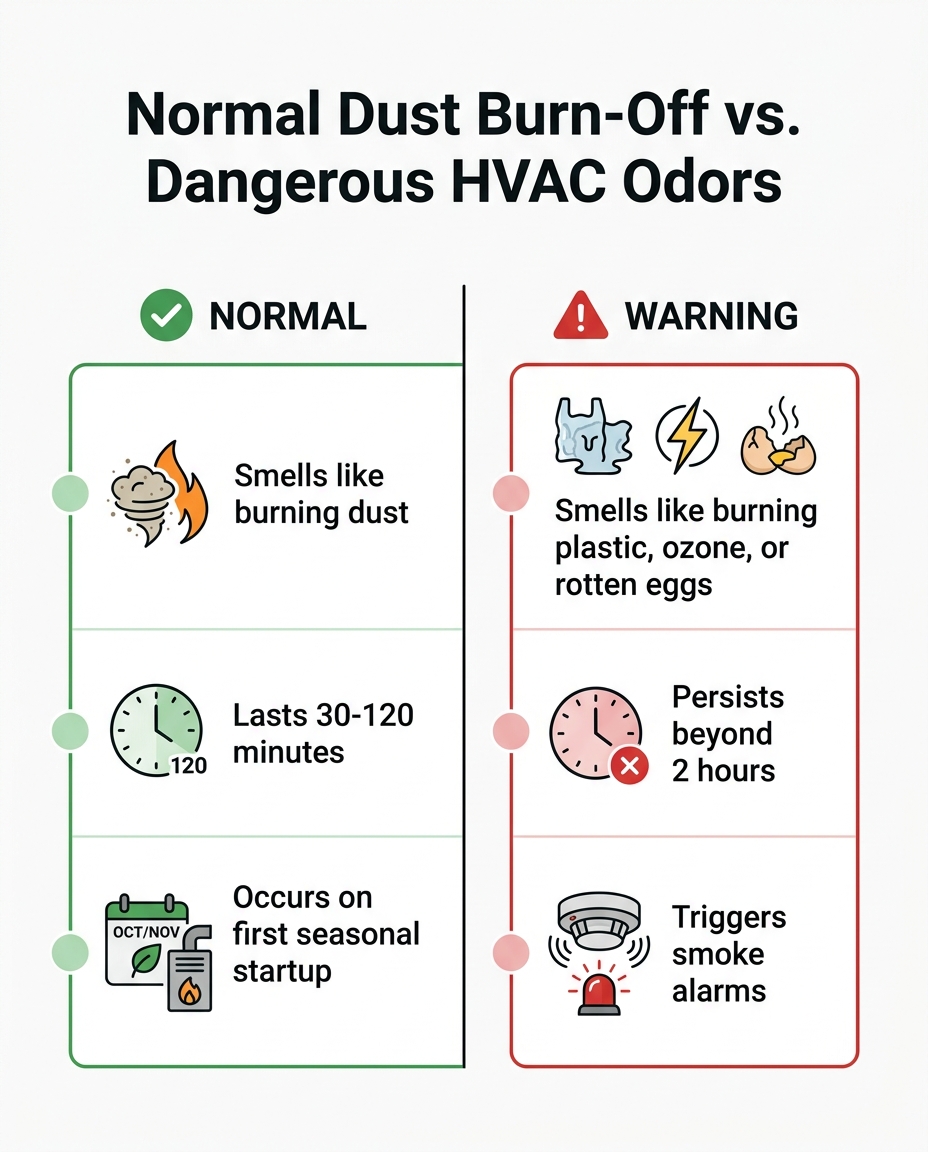
3. Monitor the duration: Normal dust burn-off should resolve within 30 to 120 minutes of continuous operation. The smell should steadily decrease in intensity during this window.
4. Check the air filter: Ensure your filter is clean. A heavily clogged filter can restrict airflow, causing the system to run hotter and prolonging the burn-off smell.
If the smell dissipates within that two-hour window, your system is likely functioning normally. However, if the odor persists, or if you are dealing with an older system that struggles to clear the debris, it might be time to evaluate your equipment's overall health. Upgrading your unit can eliminate these harsh startup odors, making a furnace replacement in Cinnaminson a wise consideration for aging systems.
How Humid Weather Amplifies Seasonal Startup Odors
The intensity of the burning smell you experience is heavily influenced by regional climate factors. New Jersey's humid summers contribute to heavier particulate accumulation on idle heating components, making the October burn-off smell more pronounced when the first cold snap hits. Humidity acts like an adhesive for airborne particles. Instead of dry dust simply resting on the heat exchanger, the moisture in the summer air causes dust, dander, and cooking oils to become sticky, forming a thicker, more stubborn layer of grime on the internal metal surfaces.
When the weather in Cinnaminson NJ shifts sharply in the fall, homeowners transition suddenly from heavy air conditioning use to heavy heating use. The sudden, intense heat applied to this sticky layer of accumulated grime results in a much stronger odor than you might expect from dry dust alone. Several household factors can further amplify this seasonal startup smell:
• Indoor pets: Homes with shedding dogs or cats will have a higher concentration of hair and dander resting on the heating elements.
• Recent home renovations: Drywall dust and sawdust from summer remodeling projects easily find their way into the ductwork and settle on the furnace.
• Poor indoor air quality: Homes that rely on low-quality fiberglass filters allow more particulates to bypass the filter and bake onto the heat exchanger.
• High-moisture areas: Units located in damp basements or unconditioned crawlspaces often accumulate a thicker layer of sticky dust during the summer months.
Understanding this climate connection helps explain why the first heating cycle of the year can smell so potent. The sticky residue simply takes a bit more thermal energy to fully incinerate and clear out of the system.
Red Flag Odors: When to Shut Down Your Heating System
While a dusty, organic burning smell is normal for a short period, certain odors are immediate red flags indicating a dangerous malfunction. If you detect any synthetic, chemical, or gas-like smells, you must bypass the normal waiting period and shut down your heating system immediately at the thermostat. Ignoring these warning signs during a mid-fall heating startup in October can lead to severe property damage or health hazards.
Electrical and Plastic Smells
If the air coming from your vents smells like melting plastic, burning rubber, or hot electrical wires, your system is experiencing a serious mechanical or electrical failure. This acrid, ozone-like scent often indicates that a blower motor is overheating, a capacitor is melting, or internal wiring has frayed and is actively short-circuiting. When a motor seizes or a wire shorts out, the protective plastic casings and rubber belts begin to melt under the extreme heat. If you smell burning plastic or electrical components, turn off the system immediately and disconnect the power at the main breaker panel to prevent an electrical fire.
Gas and Exhaust Odors
The smell of sulfur or rotten eggs is the most critical warning sign a homeowner can encounter. Natural gas is naturally odorless, but utility companies add a chemical called mercaptan to give it that distinct rotten egg smell so leaks can be easily detected. If you smell this when your heater turns on, you may have a cracked heat exchanger, a loose gas fitting, or a failing gas valve. A cracked heat exchanger not only leaks natural gas but can also allow deadly, odorless carbon monoxide to mix with your breathing air. If you detect a gas odor, evacuate the house immediately, leave the doors open, and call your utility company or emergency services from outside.
Quick Reference: Normal vs. Warning Odors
• Dusty, organic burning — Likely Cause: Normal dust burn-off on heat exchanger — Required Action: Monitor for 30-120 minutes; ventilate home.
• Melting plastic or rubber — Likely Cause: Overheating motor, melting capacitor, frayed belt — Required Action: Shut off at thermostat and breaker; call a pro.
• Acrid, ozone, electrical fire — Likely Cause: Short-circuiting wires, failing circuit board — Required Action: Shut off power immediately; do not operate.
• Sulfur or rotten eggs — Likely Cause: Natural gas leak, cracked heat exchanger — Required Action: Evacuate immediately and call emergency services.

Why DIY Diagnostics Are Dangerous for HVAC Systems
When faced with a persistent burning smell, the temptation to open up the furnace cabinet and investigate can be strong. However, attempting DIY diagnostics on modern heating equipment is highly dangerous. According to National Fire Protection Association (NFPA) data, heating equipment is a leading cause of home fires. Modern HVAC systems are complex networks of high-voltage electrical wiring, pressurized gas lines, and sensitive circuit boards. They are not designed for amateur troubleshooting.
Opening a sealed combustion chamber without the proper training and tools can disrupt the delicate fuel-to-air ratio, leading to improper combustion, soot buildup, and carbon monoxide leaks. Furthermore, tampering with the internal electrical panels or attempting to bypass safety switches can easily result in severe electrical shocks or catastrophic system failure. Most manufacturers explicitly state that unauthorized repairs will instantly void the equipment's warranty.
Instead of risking your safety, rely on certified technicians for any persistent odor issues. As dedicated local mechanics based in Cinnaminson, the team provides rapid, professional safety inspections to ensure systems are compliant and safe for the winter. A licensed professional has the diagnostic tools to safely test gas pressure, measure electrical draw, and inspect the heat exchanger for microscopic cracks that are invisible to the naked eye.
When a Burning Smell Means It's Time for a System Replacement
If your heating system consistently produces burning smells well beyond the initial startup, or if a technician discovers a cracked heat exchanger or failing blower motor, it may be time to transition from a repair mindset to a replacement mindset. Systems that are over 10 to 15 years old are particularly susceptible to catastrophic component failure. When the core components of an aging furnace begin to break down, pouring money into repeated repairs is rarely a wise investment.
Modern, sealed-combustion heating systems offer significant safety and efficiency benefits over older models. They draw fresh air directly from outside for combustion, completely isolating the burning process from your indoor air. This virtually eliminates the risk of carbon monoxide backdrafting and greatly reduces startup odors. Furthermore, homeowners often find it advantageous to coordinate their heating upgrades with their cooling upgrades to ensure seamless operation and matched efficiency year-round.
One homeowner in Cinnaminson NJ needed new HVAC systems installed quickly and efficiently during the spring season. The installation team replaced the aging units in a single afternoon and even handled a minor user-caused repair at no extra charge, leaving the property with a highly efficient, safely operating system. Upgrading an aging unit ensures that the entire system is properly sized for the home. Proper load calculations are essential when installing AC replacement services alongside new heating equipment. A correctly sized system will not overwork, reducing wear and tear on the motors and ensuring that your central air conditioning installation and heating setup provide reliable, odor-free comfort for years to come.
Understanding Municipal Requirements for System Upgrades
If a dangerous burning smell ultimately leads to a necessary system replacement, it is important to understand that installing new HVAC equipment is not a casual weekend project. Local townships in Cinnaminson NJ and the surrounding areas require specific documentation, permits, and inspections to ensure the new equipment meets current safety and energy codes. These municipal requirements are in place to protect homeowners from improper installations that could lead to gas leaks, electrical fires, or structural damage.
Navigating these regulations can seem daunting, but reputable contractors handle all the necessary paperwork, permit applications, and compliance checks on your behalf. They ensure that the electrical disconnects, gas piping, and exhaust venting all meet strict municipal standards. This compliance process is just as rigorous for winter heating systems as it is for summer cooling upgrades. If you are curious about the legal and regulatory aspects of upgrading your home's comfort systems, understanding do you need a permit to replace AC in New Jersey provides valuable insight into the comprehensive safety protocols required for any major HVAC installation.
Frequently Asked Questions
How long should a heater smell like burning when first turned on?
Normal dust burn-off typically lasts between 30 and 120 minutes. When you first start your heater for the season, the accumulated dust on the heat exchanger incinerates, creating a distinct odor. If the smell persists beyond two hours of continuous operation, or if it grows stronger instead of fading, you should shut the system down and contact a professional for an inspection.
Is it normal for a heater to smell like burning dust?
Yes, a burning dust smell is completely normal during the first seasonal startup. Airborne particulates, pet dander, and household dust settle on the internal components while the system sits idle during the summer. The initial ignition simply burns this debris away, and the resulting odor should dissipate quickly once the system cycles a few times.
What does an electrical fire in a heater smell like?
An electrical fire produces a sharp, acrid scent that often smells like melting plastic, burning rubber, or ozone. This synthetic odor is very different from the organic smell of burning dust. If you detect this smell coming from your vents, it usually indicates a failing motor or short-circuiting wires, requiring you to immediately turn off the power at the breaker.
Can a dirty air filter cause a burning smell?
Yes, a severely clogged air filter can cause your heating system to overheat and produce a burning smell. When airflow is restricted, the heat exchanger runs much hotter than intended, which can bake the trapped dust on the filter itself or cause the system's safety limits to trip. Replacing your filter before the first seasonal startup is the best way to prevent this issue.
When should I be worried about my heater smelling?
You should be worried if the odor smells like sulfur, rotten eggs, melting plastic, or electrical smoke. Additionally, any dusty burning smell that lasts longer than two hours or triggers your home's smoke alarms is a cause for concern. In these scenarios, prioritize safety by turning off the thermostat and calling a licensed technician to diagnose the problem.
Does a cracked heat exchanger produce a noticeable odor?
A cracked heat exchanger can sometimes produce a strong, unpleasant exhaust odor or a metallic burning smell. More importantly, it can allow odorless, dangerous carbon monoxide to enter your living space. Because you cannot always smell a cracked heat exchanger, having functional carbon monoxide detectors and scheduling annual professional inspections is vital for your safety.
Should I open my windows during the first fall heater startup?
Yes, opening your windows during the first startup is a highly recommended practice. Ventilating the house allows the initial wave of incinerated dust and odors to escape rather than lingering in your living spaces. Running ceiling fans alongside open windows will help clear the air rapidly, usually resolving the smell within the first hour of operation.
The bottom line: A brief dusty odor during your first seasonal startup is usually nothing to fear, but sharp electrical or gas smells demand immediate attention. Knowing the difference between normal burn-off and a serious hazard keeps your home safe and comfortable. If you detect warning signs or if the smell refuses to fade, reaching out for a professional inspection provides the immediate, direct answers and peace of mind you need to safely enjoy the winter season.
