



Navigating Your First Fall Heating Cycle and Unexpected Hazards
You adjust the thermostat during the first chilly night of the season, expecting a wave of warm air to fill the room. Instead, you are greeted by a strange burning odor and a series of unsettling clanks echoing from the basement. When searching for home maintenance tips and troubleshooting for the cold season, the very first heating cycle often brings the most anxiety. After sitting idle for months, your furnace or heat pump has to wake up and perform perfectly. For many homeowners in Cinnaminson NJ, that initial October heating-startup is a moment of truth.
The primary challenge right now is figuring out if the symptoms you notice are normal seasonal behaviors or signs of a serious mechanical failure. Every heating system undergoes a transition period when it first kicks on. A little dust burning off or a few pops from the ductwork are standard. However, persistent odors, loud bangs, or continuous electrical smells point to real hazards that require professional attention.
If a severe failure means your aging unit needs to be retired, local regulations and municipal permits become an immediate factor in getting your home warm again. Navigating this transition requires a safety-first approach. You need to observe the symptoms safely, know exactly when to shut the system down, and understand the legal requirements if a replacement is necessary. Whether you need basic repairs or comprehensive heating services, knowing what to look for keeps your home safe and compliant.
Distinguishing Normal Dust Burn-Off from Dangerous Odors
The problem: Within minutes of turning your heater on for the first time this fall, a distinct, slightly acrid burning smell spreads through your air vents. This odor often causes immediate panic, leading homeowners to shut off the system and worry about an electrical fire.
The cause: In almost all cases, this is a simple matter of physics and seasonal timing. During the long, humid summers we experience in the region, excess moisture and airborne particles settle inside your idle ductwork and directly onto your furnace's heat exchanger. When the burners finally ignite in the fall, the metal heat exchanger gets extremely hot. The accumulated dust, pet dander, and lint instantly toast and burn off, sending that unmistakable smell through your vents.
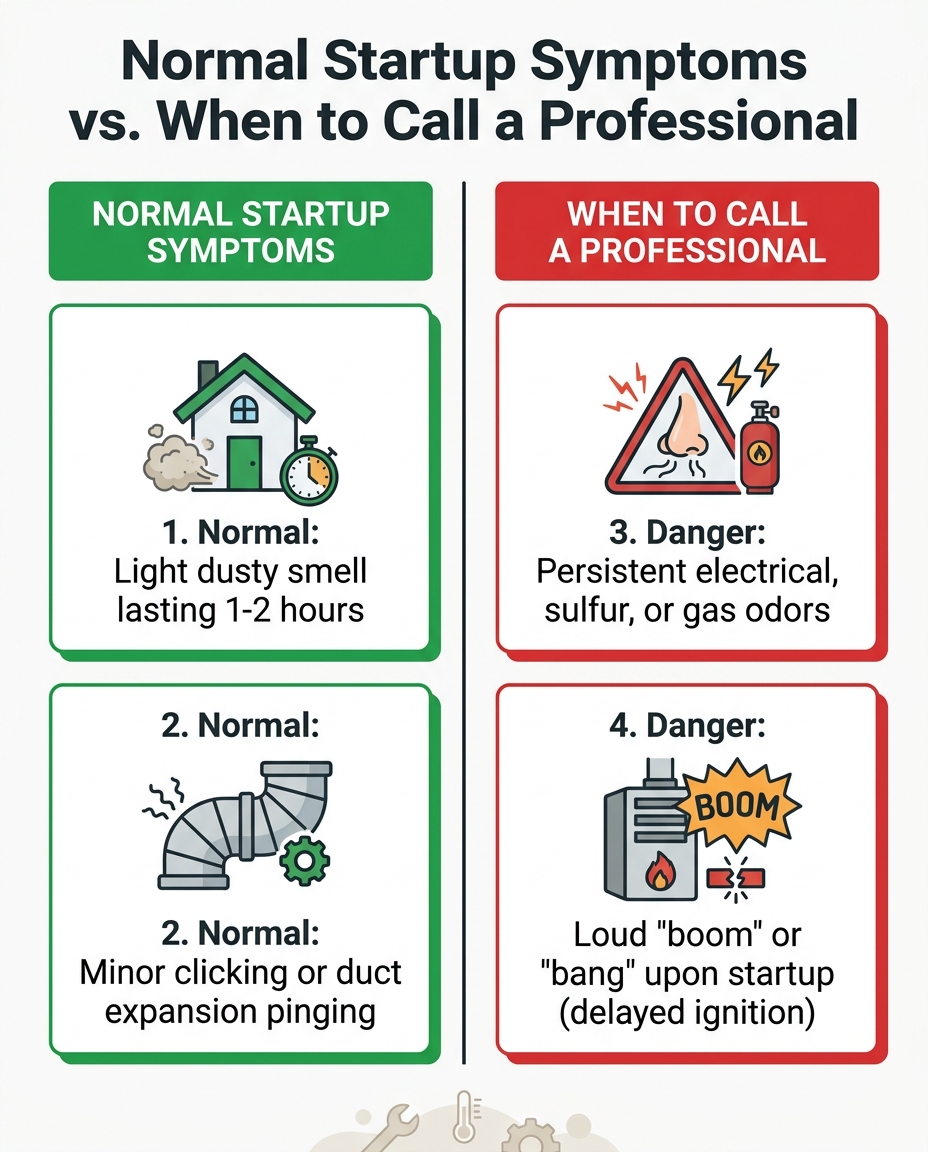
The solution: Keep the system running for a short observation period while monitoring the air. A normal dust burn-off smell is temporary. It typically peaks within the first fifteen minutes and completely dissipates after one to two hours of continuous operation. You can open a few windows to help clear the air faster. However, if the smell persists beyond that window, or if it changes in character, you must shut the system down at the thermostat.
When to Wait and When to Worry
While burning dust is normal, other odors indicate severe safety hazards. Never attempt dangerous DIY internal troubleshooting if you detect any of the hazardous smells listed below. Opening a gas furnace to investigate a sulfur smell violates safety codes and puts your home at extreme risk.
• Light, dusty burning — Likely Cause: Dust accumulation on the heat exchanger over the summer. — Required Action: Wait 1 to 2 hours. Open windows to ventilate.
• Musty or damp gym socks — Likely Cause: Moisture and bacterial growth on the indoor coil or in the ductwork. — Required Action: Schedule a professional cleaning and check your air filter.
• Acrid electrical or melting plastic — Likely Cause: Overheating blower motor, failing capacitor, or melting wire insulation. — Required Action: Shut system off immediately. Call a licensed professional.
• Sulfur or rotten eggs — Likely Cause: A natural gas leak near the furnace or gas valve. — Required Action: Evacuate the house, call the gas company, and request emergency service.
Monitoring your indoor air quality during the first October cold snap is an essential part of seasonal maintenance. If you notice a musty smell rather than a burning one, your system might be blowing air over a dirty, damp evaporator coil. Changing your air filter is the only recommended DIY step here. For anything involving the internal components, gas lines, or electrical relays, you must bring in a certified technician.

Startup Noises: Why Delayed Ignition Requires Immediate Attention
Heating systems are not silent. As hot air pushes through cold metal ductwork, the metal expands. This expansion creates a series of popping, pinging, or ticking sounds that echo through your walls. This is entirely normal and harmless. However, there is one specific mechanical noise that you should never ignore: a loud, forceful "boom" or "bang" that happens a few seconds after the thermostat calls for heat.
This sound is a symptom of a highly dangerous condition called delayed ignition. Inside a healthy gas furnace, the gas valve opens and the igniter sparks simultaneously, creating a smooth, controlled flame. When delayed ignition occurs, the burners struggle to light immediately. The gas valve opens, allowing highly combustible natural gas to pool inside the combustion chamber. When the spark finally catches a few seconds later, it ignites a much larger volume of gas all at once. The resulting mini-explosion causes that terrifying boom.
The Risks of Ignoring Mechanical Bangs
Allowing a furnace to operate with delayed ignition is incredibly risky. The repeated concussive force of those small explosions puts immense stress on the heat exchanger. Over a short period, this stress causes the metal to crack.
• Cracked heat exchangers: Once the heat exchanger cracks, the barrier between the combustion gases and your breathing air is broken.
• Carbon monoxide leaks: A cracked heat exchanger allows deadly, odorless carbon monoxide to mix with the warm air blowing into your living room.
• Fire hazards: The excess flames from the delayed ignition can roll out of the front of the furnace, potentially melting wires or starting a fire.
Because of the severe risks involving gas and carbon monoxide, professional diagnostics are both legally and functionally required. A licensed technician must test the gas pressure, clean the burners, and inspect the heat exchanger for hairline fractures. When a system repeatedly suffers from delayed ignition, the structural damage often forces a full replacement.
We see this pattern frequently when older units finally give out. In one instance, a customer required a quote for a full house HVAC install with mini splits after their existing system proved too compromised to repair. Our team delivered a prompt quote and shared professional installation ideas, providing an experienced consultation for a complicated installation to get their home safe and comfortable again. Upgrading an unsafe system is always the smartest route, and handling a furnace replacement in Cinnaminson correctly ensures your home stays warm without the underlying safety risks.
Do You Need a Permit for HVAC Replacement?
If your fall heating startup reveals a cracked heat exchanger or a condemned furnace, you will quickly find yourself facing a system replacement. Homeowners often ask if they really need to pull a local municipal permit to install a new HVAC system. The short answer is an absolute yes. Replacing a major HVAC component requires a local permit, inspections, and strict adherence to building codes.
Permits are not just a bureaucratic hurdle or a municipal tax. They exist as a vital third-party safety check. A modern heating system is a complex piece of heavy machinery that ties directly into your home's electrical grid, natural gas supply, and structural ventilation. If any of these connections are made improperly, the results can be catastrophic. Municipal inspectors verify that the new gas lines are leak-free, the electrical loads match your breaker panel's capacity, and the exhaust venting safely carries carbon monoxide out of your home.
Repairs vs. Replacements: The Legal Line
Understanding where local municipalities draw the line between a minor repair and a major mechanical project helps clarify why permits are necessary.
• Minor Repairs (No Permit Usually Required): Swapping out a faulty run capacitor, replacing a blower motor, changing a thermostat, or installing a new igniter. These are basic component replacements that do not alter the system's core infrastructure.
• Major Replacements (Permit Required): Changing out the entire furnace, installing a new boiler, replacing the outdoor AC condenser, or heavily modifying the ductwork. These projects change the structural and mechanical footprint of the home.
Attempting an unpermitted DIY replacement is incredibly dangerous. Watching a video tutorial cannot replace the rigorous safety training required to handle high-voltage electrical whips and pressurized gas valves. If you are also considering upgrading your cooling system at the same time, you must follow the specific permit requirements for AC replacement in New Jersey. The general process involves your licensed contractor filing the paperwork, performing the installation to code, and then scheduling a municipal inspector to visit your home and sign off on the safety of the work.
How Local Code Compliance Protects Your Home and Warranty
Bypassing the permit process might seem like a way to save a few dollars or speed up a weekend project, but the long-term consequences are severe. Proper permitting and local code compliance protect your financial investment just as much as they protect your physical safety.
First, consider your manufacturer warranty. Modern HVAC equipment comes with extensive warranties, often covering major parts for up to ten years. However, every major manufacturer includes a strict clause in their warranty terms: the equipment must be installed by a licensed professional according to all local codes. If you install a furnace yourself, or hire an unlicensed handyman who skips the permit, the manufacturer will void the warranty instantly. If the blower motor fails six months later, you will pay out of pocket for the replacement.
Second, unpermitted work carries massive implications for your homeowner's insurance. If a fire breaks out due to improper electrical wiring on an unpermitted furnace, or if a gas leak causes property damage, the insurance adjuster will investigate. When they discover the system was installed illegally without a permit, they have the legal right to deny your claim entirely, leaving you financially responsible for the total loss of your home.
Finally, unpermitted work severely complicates future real estate transactions. When you go to sell your house, the buyer's home inspector will check the HVAC system. If the serial numbers show the unit is three years old, but there are no permits on file with the town, the buyer can demand that you rip the system out or pay heavy concessions to fix the legal liability.
Our team emphasizes deep local expertise in Burlington County codes. We ensure fast, fully compliant installations and handle all the necessary municipal paperwork for you, cutting through the corporate red tape. This standard of compliance applies to everything we do, from standard residential changeouts to large-scale commercial HVAC installations. Doing it by the book is the only way to do it right.
Managing Emergency Heating Upgrades Before Winter Hits
Discovering that your heating system is unsafe to operate during the critical fall transition is stressful. The weather is changing rapidly. Extreme temperature drops in late fall make pre-winter HVAC troubleshooting and rapid, compliant replacements an urgent priority. You cannot afford to wait weeks for a safe heating solution when the nighttime temperatures are plunging into the 40s.
Working with a licensed local contractor is the fastest way to expedite this process. A professional team knows exactly how to navigate the municipal permitting office efficiently. They can secure the necessary approvals, source the correct equipment, and schedule the installation without the delays that typically plague unorganized or unlicensed attempts.
While addressing an emergency heating replacement, many homeowners take the opportunity to evaluate their cooling system simultaneously. If your furnace is fifteen years old and failing, your air conditioner is likely in a similar state of decline. Replacing both systems at the same time often saves on labor costs and ensures that the entire HVAC infrastructure is perfectly matched for maximum energy efficiency. Upgrading to a new, fully permitted AC replacement alongside your heater prepares your home for every season.
A professional team can complete complex, fully permitted installations efficiently. They handle the heavy lifting, the electrical routing, the gas piping, and the final safety tests, restoring your home's comfort quickly and legally.
Frequently Asked Questions About Fall Heating and Permits
Is it normal for my heater to smell when I first turn it on?
Yes, a light burning smell is completely normal during the first heating cycle of the season. This happens because dust and lint settle on the heat exchanger over the summer months. When the burners ignite, that dust burns off, creating a temporary odor. The smell should dissipate entirely within one to two hours of continuous operation.
What does delayed ignition sound like in a furnace?
Delayed ignition sounds like a loud, forceful "boom" or "bang" coming from your furnace shortly after it tries to turn on. This noise is caused by a dangerous buildup of unburned natural gas inside the combustion chamber that suddenly ignites all at once. If you hear this concussive sound, you should turn the system off immediately and call a professional.
How do I troubleshoot poor indoor air quality in the fall?
The best first step for troubleshooting indoor air quality is checking and replacing your HVAC air filter. Over the summer, filters trap massive amounts of pollen, dust, and pet dander. Starting the fall season with a fresh, high-quality pleated filter ensures better airflow and captures airborne particles before they circulate through your living spaces.
Why do I need a local permit to replace my HVAC system?
Local permits are required to ensure that your new HVAC system meets strict safety and building codes. A replacement involves critical connections to your home's electrical wiring, natural gas lines, and exhaust ventilation. Municipal inspectors use the permit process to verify that these connections are safe, preventing fire hazards and carbon monoxide leaks.
Can I replace my own furnace if I buy the equipment online?
No, attempting to replace your own furnace is incredibly dangerous and violates local building codes. Handling high-voltage electricity, pressurized natural gas, and carbon monoxide venting requires specialized training and active licensing. Furthermore, installing the equipment yourself will instantly void the manufacturer's warranty and could lead to your homeowner's insurance denying future claims.
How long does a permitted HVAC replacement take to complete?
A standard permitted HVAC replacement typically takes a professional team one full day to complete. The timeline includes removing the old equipment, installing the new unit, connecting the ductwork, testing the gas and electrical lines, and calibrating the thermostat. The municipal safety inspection usually takes place a few days or weeks after the physical installation is finished.
Ensure a Safe, Compliant Heating Season
The transition into the colder months should bring comfort, not anxiety. Monitoring your first October heating-startup for abnormal smells or sounds is the smartest way to catch minor issues before they become major safety hazards. Remember that while a brief dusty smell is normal, loud bangs and persistent odors require immediate professional intervention.
If your troubleshooting reveals that a system replacement is necessary, handling the project legally with the proper permits is non-negotiable. Code compliance protects your family from gas leaks, shields your financial investment by keeping warranties intact, and preserves the value of your home. Do not let strange noises or bad odors compromise your winter comfort. Schedule a professional inspection today to evaluate any troubling startup symptoms safely and ensure your heating system is ready for the freezing months ahead.
