


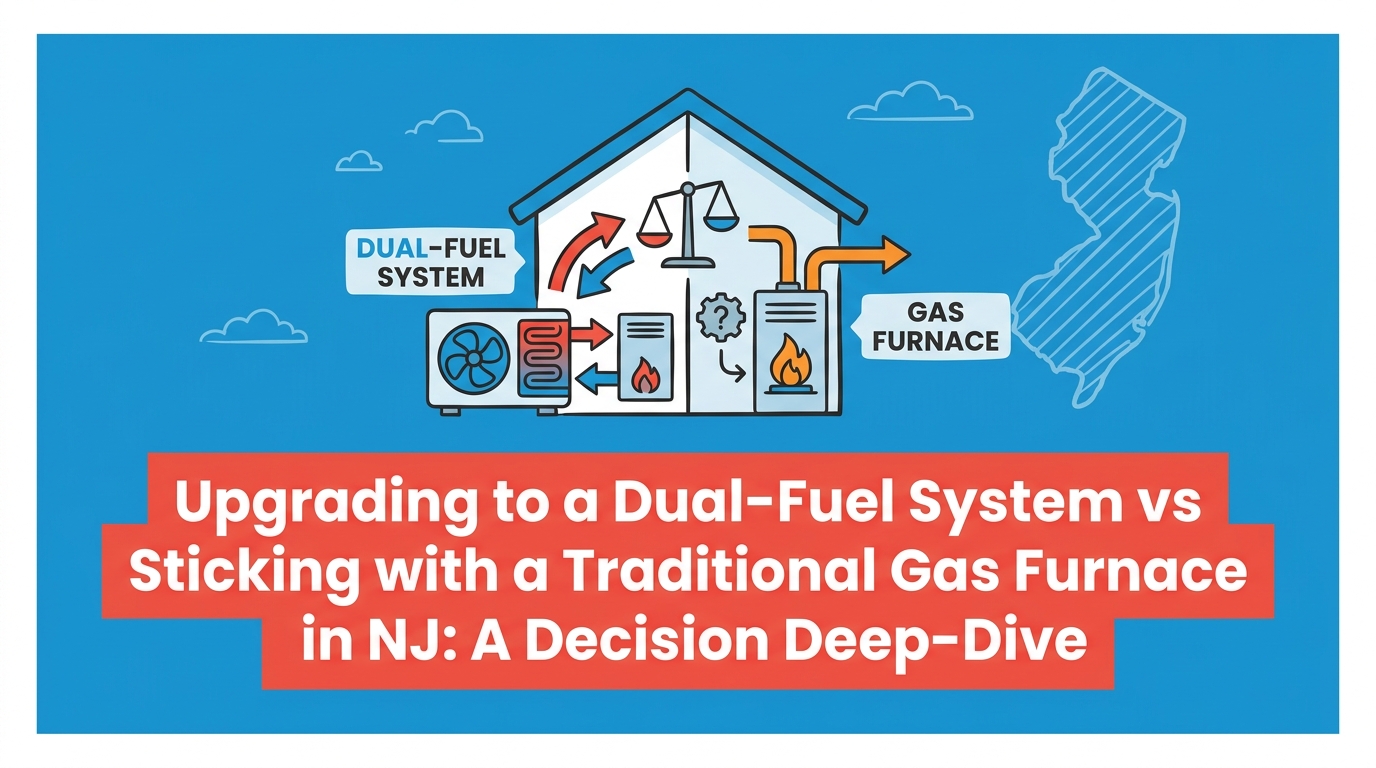

Navigating the Pre-Winter Heating Dilemma
The idea that modern electric heating cannot survive a freezing northern winter is a stubborn myth we frequently dispel for our customers. If you are weighing the options of upgrading to a Dual-Fuel System vs Sticking with a Traditional Gas Furnace in NJ, the choice ultimately comes down to maximizing efficiency without sacrificing reliable warmth. For decades, homeowners in the Northeast assumed that a powerful gas burner was the only way to keep a house comfortable from October through March. Today, advanced hybrid systems are completely transforming how we approach northern climate comfort. Whether you want to explore advanced heat pump technology or you need to schedule a furnace replacement in Cinnaminson, finding the right fit for your home is the first step toward lasting winter comfort.
Right now, during the critical September pre-heating-season transition, our technicians see many homeowners staring at an aging heating system and wondering if it will survive another year. Waiting until the first freezing night to find out is a gamble that often results in emergency service calls. This pre-winter window is the exact right time to have our team evaluate your existing equipment and decide whether a single-source replacement makes sense, or if it is time to step into the future of home heating.
What exactly is a dual-fuel system?
At its core, a dual-fuel system (often called a hybrid heating system) is a strategic pairing of two distinct technologies: an advanced electric air-source heat pump and a reliable gas furnace backup. Instead of relying on a single piece of equipment to handle every temperature fluctuation from a mild autumn afternoon to a sub-zero January blizzard, a dual-fuel setup uses a smart thermostat to alternate between the two sources automatically. The heat pump handles the mild weather with incredible efficiency, while the gas furnace takes over when extreme cold demands maximum heating power.
Why New Jersey's 40-to-60-Degree Autumns Favor a Hybrid Approach
To understand the true value of a hybrid system, you have to look closely at the specific weather patterns we experience in the mid-Atlantic region. In our years serving South Jersey, we know the area is known for a long, mild fall transition. Throughout October and November, temperatures frequently hover in the 40-to-60-degree range. This specific temperature band is where the traditional approach to heating begins to show its flaws.
The Problem with Gas in Mild Weather:
When you rely solely on traditional gas furnaces, you are using a system designed to combat freezing temperatures. A standard gas furnace produces maximum heat output regardless of whether it is 10 degrees outside or 55 degrees outside. When the weather is mild, the furnace turns on, blasts the house with intense heat, satisfies the thermostat almost immediately, and shuts off. This rapid on-and-off cycle is known as short-cycling. It's a pattern we see often that wastes a tremendous amount of energy, causes uneven temperature spikes throughout the house, and puts unnecessary wear and tear on the system's mechanical components.
The Heat Pump Solution:
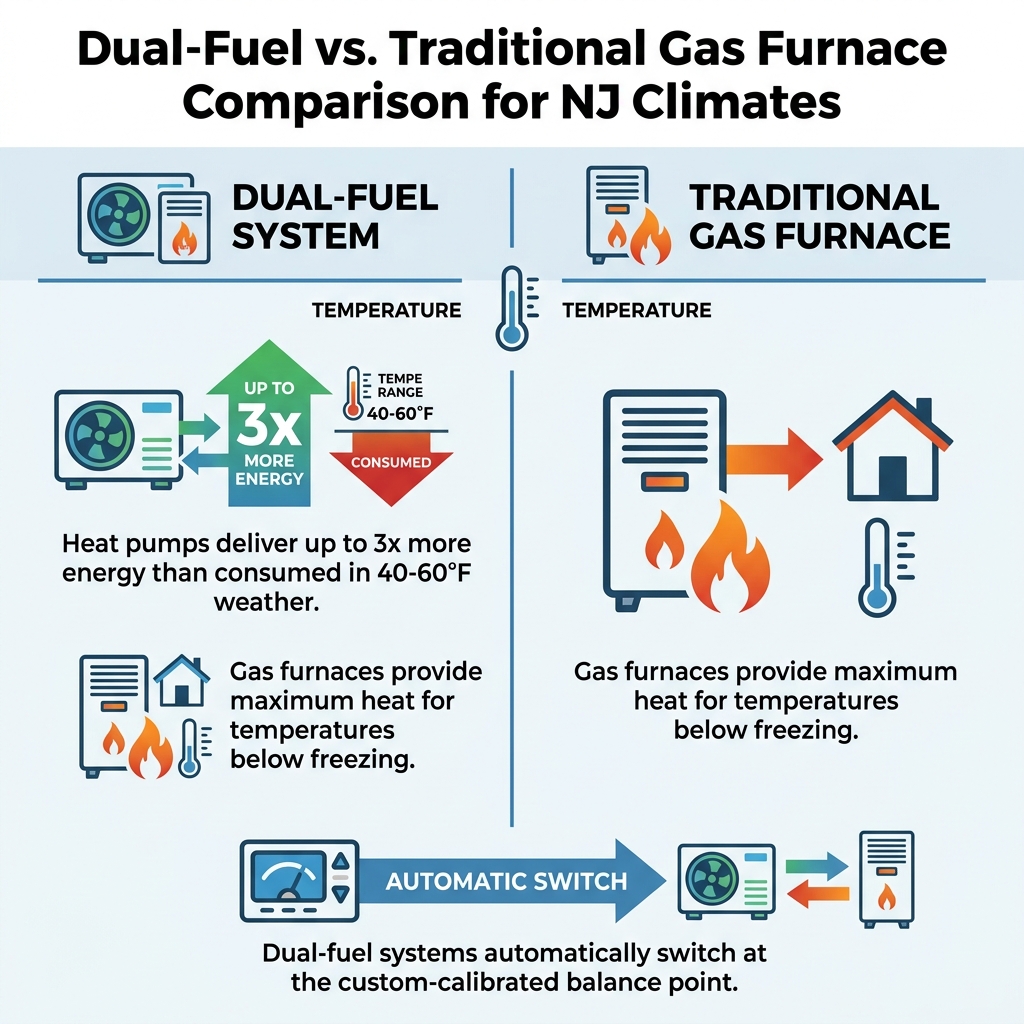
This is precisely where air-source heat pumps outshine traditional burners. Heat pumps do not burn fuel to create heat; they use refrigerant to absorb ambient thermal energy from the outside air and transfer it inside. Even when it is 45 degrees outside in Cinnaminson NJ, there is still plenty of heat energy in the air. In this mild temperature range, a modern heat pump can deliver up to three times more heat energy to your home than the electrical energy it consumes to operate. It runs longer, gentler cycles, providing a steady, even flow of warm air that eliminates the hot and cold spots associated with a short-cycling furnace.
By relying on the heat pump during the long autumn shoulder season, you dramatically optimize your energy use. You save the heavy-duty gas combustion for the days when you actually need it, reducing your overall fossil fuel consumption before deep winter even arrives.
The Science of the Balance Point: Seamlessly Switching Between Heat Sources
The magic of a dual-fuel system lies in its ability to adapt to changing weather conditions without any manual intervention from the homeowner. This automated switchover is governed by a critical metric known as the thermal balance point.
Understanding the Switchover Process:
1. Mild Weather Operation: When the outdoor temperature is above the balance point (typically between 35 and 40 degrees Fahrenheit), the smart thermostat locks out the gas furnace. The heat pump operates exclusively, extracting ambient heat from the outdoor air and efficiently warming your home.
2. Approaching the Threshold: As the outdoor temperature drops, the heat pump has to work harder to extract thermal energy. Its efficiency gradually decreases.
3. Crossing the Balance Point: Once the outdoor temperature dips below the specific balance point setting, the system recognizes that the heat pump is no longer the most efficient or effective way to warm the house.
4. Automated Handoff: The smart thermostat automatically shuts down the heat pump compressor and ignites the gas furnace. The furnace takes over completely, utilizing its powerful combustion capabilities to combat the freezing temperatures.
The Importance of Custom Calibration:
One of the biggest mistakes we see made during hybrid system installations is relying on factory default switchover settings. A generic setting designed for a home in North Carolina will not perform optimally for a home in Cinnaminson NJ. The balance point must be carefully calculated based on your home's specific thermal envelope—including insulation levels, window quality, and square footage—as well as the distinct micro-climates of South Jersey.
At Climate Mechanics, our specific expertise lies in calibrating this thermal balance point based on distinct local weather patterns we've tracked for years. We do not believe in one-size-fits-all installations. By ensuring your system is custom-tailored to your property's exact heat loss calculation, our installation team guarantees that your dual-fuel system operates at peak efficiency, switching to gas only when it is mathematically and practically necessary.
The Case for Keeping a Traditional Gas Furnace
While hybrid systems offer incredible efficiency during the autumn months, our team still sees highly valid reasons why some homeowners choose to stick with a single-source heating system. We believe providing an objective look at both sides is essential for making an informed decision about your property.
Pros of a Single-Source Gas Furnace:
• Unmatched Deep Winter Power: When a severe snowstorm hits and temperatures plummet into the single digits, the harsh reality of snowy, freezing winter days demands reliable, high-heat output. A modern gas furnace delivers intense, immediate warmth that cannot be matched by electric resistance heating.
• Infrastructure Compatibility: If your home currently relies on an older gas unit, your existing ductwork, venting, and electrical panel capacity are already optimized for that specific setup. Moving to a new furnace installation is often a more straightforward, swap-out process that our crews can complete quickly.
• Lower Initial Complexity: A single-source system involves fewer moving parts and less complex control wiring than a dual-fuel setup. For homeowners prioritizing a lower upfront installation scope over long-term seasonal flexibility, a straight gas replacement is highly appealing.
Cons of a Single-Source Gas Furnace:
• Mild Weather Inefficiency: As discussed, running a high-capacity burner on a 55-degree day leads to short-cycling and wasted energy.
• Higher Carbon Footprint: Relying on fossil fuels for 100% of your heating needs, even when the weather is mild, increases your home's overall carbon emissions.
• Single Point of Failure: If the furnace goes down, you have no backup heating source until a repair is completed.
Regardless of which system you choose, professional maintenance remains non-negotiable. One local homeowner recently called us to schedule comprehensive maintenance and checks on their existing AC and furnace right before a fast-approaching end-of-month home sale. By having our professionals meticulously tune the equipment and explain all the work performed, they ensured everything was operating safely and efficiently, preventing any last-minute surprises during the home inspection. Whether you keep a traditional furnace or upgrade to a hybrid, proactive care is the key to longevity.
Side-by-Side Comparison: Dual-Fuel vs. Single-Source Heating
To help synthesize these technical details, here is a clear breakdown of how our technicians compare the two approaches across the most critical categories for homeowners in Cinnaminson NJ.
• Mild Weather Efficiency (40-60°F) — Dual-Fuel (Hybrid) System: Excellent. Heat pump provides highly efficient, steady warmth without short-cycling. — Traditional Gas Furnace: Poor. Furnace often short-cycles, wasting energy and creating temperature spikes.
• Extreme Cold Reliability (Below 32°F) — Dual-Fuel (Hybrid) System: Excellent. Automatically switches to the robust gas furnace for maximum heating power. — Traditional Gas Furnace: Excellent. Designed specifically to handle extreme, freezing temperatures effectively.
• Carbon Footprint Impact — Dual-Fuel (Hybrid) System: Significantly reduced. Uses electricity for a large portion of the heating season. — Traditional Gas Furnace: Higher. Relies entirely on fossil fuel combustion for all heating needs.
• Equipment Wear-and-Tear — Dual-Fuel (Hybrid) System: Distributed. Sharing the workload extends the lifespan of both the heat pump and the furnace. — Traditional Gas Furnace: Concentrated. The single unit bears the entire workload from October through April.
• Installation Complexity — Dual-Fuel (Hybrid) System: Higher. Requires integrating two distinct systems and calibrating smart controls. — Traditional Gas Furnace: Lower. Typically a straightforward replacement utilizing existing home infrastructure.
Mild Autumn Efficiency
The clear winner during the shoulder season is the dual-fuel system. Heat pumps excel in 40-to-60-degree weather, providing a gentle, continuous flow of warm air. Because they are moving heat rather than generating it, their operational costs during the fall are exceptionally low. Conversely, gas furnaces often waste energy short-cycling in these mild temperatures, burning fuel rapidly only to shut down minutes later.
Deep Winter Reliability
When the deep freeze arrives, both systems are on equal footing because they both rely on gas combustion. A dual-fuel setup ensures you never sacrifice comfort during a blizzard. The moment the temperature drops below your custom-calibrated balance point, the system acknowledges that the heat pump can no longer keep up, and the gas furnace takes the reins.

Efficiency Gains and Generic Incentive Opportunities
Upgrading your home's HVAC infrastructure is a significant investment, but we consistently find that modern efficiency standards offer substantial returns over the lifespan of the equipment. By reducing your reliance on fossil fuels during the mild fall months, a dual-fuel system significantly lowers a home's overall carbon footprint. You are effectively utilizing cleaner electrical energy for a large portion of the heating season, which aligns with broader environmental goals and energy conservation efforts.
Because high-efficiency hybrid systems are recognized for their ability to reduce energy consumption, they are frequently supported by various financial incentives. Qualifying high-efficiency heat pump installations may be eligible for generic federal tax credits designed to encourage energy-conscious upgrades. Additionally, local utility incentive programs frequently reward homeowners who make the transition to energy-efficient hybrid systems.
While these programs can significantly offset the initial cost of installation, their availability and specific requirements change frequently. Our staff at Climate Mechanics always advises customers to consult with our installation professionals and a qualified tax advisor to verify current program eligibility and ensure all necessary documentation is properly filed. If you are still weighing the broader differences between the core technologies, comparing heat pumps and furnaces in South Jersey can provide further clarity on how efficiency ratings translate to everyday comfort.
Why Early Fall is the Ideal Time for a System Upgrade
Timing is everything when it comes to HVAC replacements. We always tell our Cinnaminson customers that the September pre-heating-season transition is the absolute best time to evaluate your equipment. Waiting until the first freezing night of the year to test an aging furnace often results in a total system failure. When a furnace breaks down in the middle of a November cold snap, it becomes an emergency, no-heat situation.
Once winter weather arrives, our dispatch board fills up rapidly with emergency repair calls. Booking an installation for a complex dual-fuel system becomes much more difficult when our technicians are triaging frozen pipes and failed burners across the county. Taking action in the early fall gives you the luxury of time. You can carefully review your options, ensure proper load calculations are performed, and schedule the installation at your convenience.
Proactive replacement also provides immense relief. For example, one local homeowner recently called us needing a completely new central air unit, heater, and water heater installed all at once. Despite their initial concerns about managing such a large project, our technicians showed up on time and completed the entire multi-system installation sooner than expected, leaving the family extremely pleased with the results. Completing a full system replacement ahead of schedule guarantees that when the first major winter storm hits, you are already prepared.
Frequently Asked Questions About Dual-Fuel Upgrades in NJ
Is a dual fuel system worth it in NJ?
Yes, in our experience, a dual-fuel system is highly beneficial for New Jersey's specific climate. Because the region experiences long stretches of mild 40-to-60-degree weather in the fall and spring, the heat pump can operate at peak efficiency for months. This drastically reduces your reliance on fossil fuels during the shoulder seasons, while the gas furnace ensures you remain perfectly warm during severe winter snowstorms.
At what temperature does a dual fuel heat pump switch to gas?
The switchover happens at the system's thermal balance point, which is typically calibrated between 35 and 40 degrees Fahrenheit. However, this is not a one-size-fits-all number. A qualified Climate Mechanics technician will calculate the exact switchover temperature based on your specific home's insulation, square footage, and the local micro-climate in Cinnaminson NJ to ensure optimal efficiency.
What is the downside to a dual fuel heat pump?
The primary downside we discuss with homeowners is the higher initial installation complexity and upfront investment compared to a single-source furnace. Because you are essentially installing two distinct heating technologies and integrating them with advanced smart controls, the setup requires more labor and specialized knowledge. Additionally, if your home does not already have the proper electrical panel capacity to support a heat pump, upgrades may be required.
Can a heat pump heat a house in a NJ winter?
A high-performance heat pump can effectively heat a home during a mild New Jersey winter, but its efficiency drops significantly as temperatures approach freezing. That is exactly why our team recommends the dual-fuel approach for this region. Instead of forcing the heat pump to struggle through a sub-zero blizzard, the system automatically hands the workload over to the gas furnace when extreme cold strikes.
Is a hybrid heating system better than a traditional gas furnace?
For homeowners looking to maximize energy efficiency and reduce their carbon footprint, a hybrid system is generally superior. It prevents the energy waste associated with a gas furnace short-cycling on mild autumn days. However, if your primary concern is maintaining lower upfront installation costs and utilizing existing older infrastructure, we often find a traditional gas furnace remains a highly reliable choice.
Secure Your Comfort for the Changing Seasons
Deciding between a hybrid upgrade and a standard replacement does not have to be an overwhelming process when you have the right local experts guiding you. The right choice ultimately depends on a thorough evaluation of your home's existing infrastructure, your long-term efficiency goals, and the specific climate patterns of Cinnaminson NJ. A dual-fuel system offers the incredible advantage of a heating solution that automatically adapts to the weather, providing a clear, climate-specific solution that handles both mild falls and freezing winters seamlessly.
Do not wait for an unexpected breakdown to force your hand. Use this September pre-heating-season window to evaluate your options proactively. Schedule a professional assessment with Climate Mechanics today to determine the best heating replacement strategy for your property, and ensure your home is ready for whatever the changing seasons bring.
