



Troubleshooting Heating Problems: How to Fix Furnace, Boiler, Thermostat, and Heater Issues

Unexpected heating failures are stressful and can be dangerous in cold weather. This guide walks homeowners through common heating problems, how systems fail, and safe, practical steps to restore heat. We’ll cover furnace ignition faults, boiler pressure issues, thermostat and airflow troubleshooting, and noisy-system diagnosis — with straightforward DIY checks and clear signs for when you should call a technician. Each section explains the issue, how it happens, and concrete examples, plus quick checklists and decision pointers to speed diagnosis and avoid unnecessary service calls. Along the way we use common terms like common heating problems, furnace troubleshooting, boiler troubleshooting, thermostat blank screen, radiator cold spots, and heating system short cycling causes — all tied to real steps that help you get heat back and make smarter service choices.
Why Is My Furnace Not Heating? Common Causes and Quick Fixes
If the furnace runs but your home stays cold, the problem usually lives in one of three areas: controls, airflow, or fuel/ignition. Controls include thermostat settings, limit switches, and safety interlocks that stop the burner if a fault is detected. Airflow problems — clogged filters or a stalled blower — reduce heat transfer and can cause short cycling or only cold air at the registers. Fuel and ignition faults (pilot light outages, failed ignitors, or gas-supply interruptions) prevent combustion and often need a professional. Start with simple, safe electrical and control checks before attempting anything that involves combustion.
Immediate checks to run now:
• Make sure the thermostat is set to HEAT and the setpoint is above current room temperature.
• Check the furnace switch and the home’s breaker panel for a tripped breaker or off switch.
• Replace the air filter if it’s visibly dirty, and confirm all supply vents are open.
• On older furnaces, verify the pilot light is lit; on newer units, look for normal ignitor activity.
These fast checks resolve many common heating problems and help you decide whether the issue is a simple homeowner fix or something that needs a deeper mechanical or fuel-supply inspection. If controls and filters don’t restore heat, follow the component checks below.
How Do I Check and Adjust My Thermostat Settings?
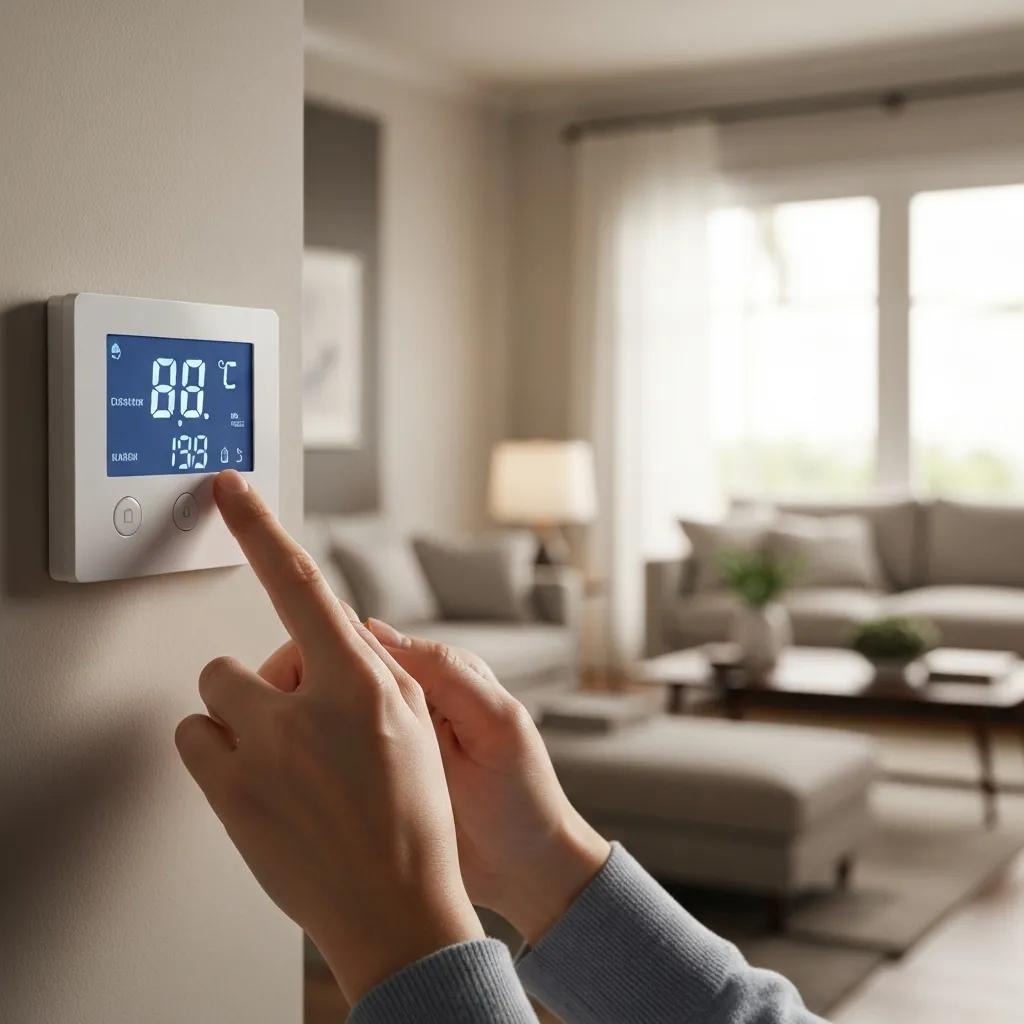
A thermostat issue can look like a furnace failure, so rule it out first. Confirm the thermostat is in HEAT mode and the setpoint is higher than the room temperature. Check the fan setting isn’t accidentally stuck on ON. For battery-powered or smart thermostats, swap batteries and inspect the display for dimming or a blank screen; for 24V wired systems, make sure the furnace control board has power. If the thermostat still seems unresponsive after these checks, try a soft reset or consult the manual for calibration steps. That isolates control problems from furnace hardware and prevents unnecessary parts swaps.
When Should I Replace or Clean My Furnace Air Filter?
Filters control airflow and heat transfer. A clogged filter lowers output, can cause short cycling, and increases wear on the blower. Find the filter at the return plenum or inside the furnace cabinet, inspect it, and replace disposable filters or clean reusable ones per the manufacturer’s instructions. How often depends on pets and indoor air quality, but checking monthly during heavy use is a good rule. Higher-MERV filters trap more particles but may need more frequent checks to avoid restricting airflow. Regular filter care protects the blower and avoids false “no-heat” diagnoses caused by restricted airflow.
Intro to symptom table and quick-match actions before deeper component checks.
• Furnace runs but rooms stay cold — Likely Cause(s): Clogged filter, closed vents, weak blower — Quick DIY Check / Next Step: Replace/clean filter, open vents, listen for blower operation
• Furnace cycles on/off rapidly (short cycling) — Likely Cause(s): Limit trips, dirty heat exchanger, oversized unit — Quick DIY Check / Next Step: Check filter, reset thermostat, schedule professional inspection
• Furnace blower runs but burners won't ignite — Likely Cause(s): Ignitor or pilot failure, gas valve, control-board fault — Quick DIY Check / Next Step: Visually check pilot/ignitor status, confirm power and breakers
• No power or blank thermostat display — Likely Cause(s): Tripped breaker, blown fuse, dead thermostat batteries — Quick DIY Check / Next Step: Check breaker, replace batteries, verify furnace switch
Use this quick reference to match symptoms with probable causes and decide whether a safe DIY check is appropriate or if you need a professional diagnosis. These steps reduce time-to-resolution while keeping the system safe.
What To Do When Your Boiler Is Not Turning On? Troubleshooting Steps for Boilers
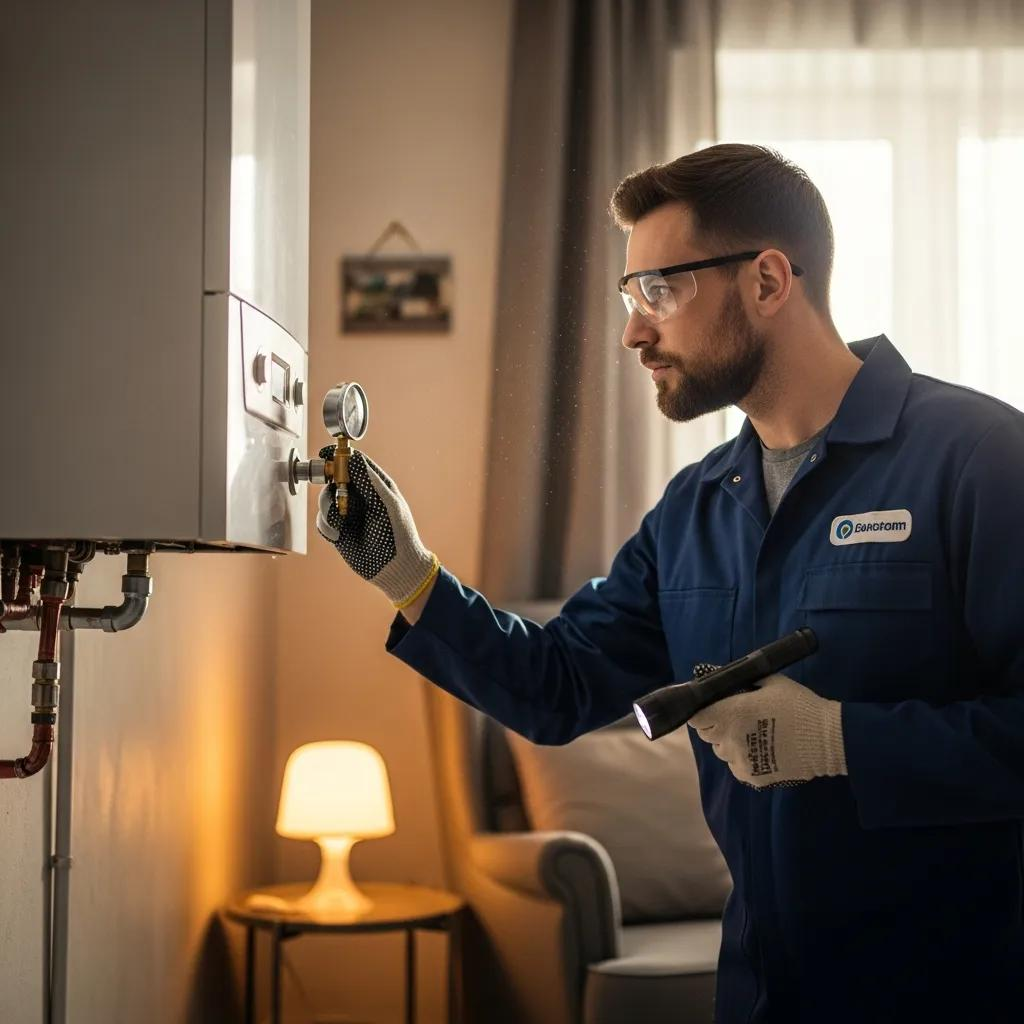
A boiler that won’t start usually points to low system pressure, ignition controls, or an electrical supply issue. Safe diagnostics focus on checking pressure and control resets before opening gas or water circuits. Boilers need a certain pressure range to circulate water; low pressure from leaks or a closed auto-fill valve will prevent burners from firing. Ignition faults — pilot outages on older boilers or failed ignitors on modern units — are common and should be reset only per the manufacturer’s instructions. Electrical causes like tripped breakers, faulty timers, or failed zone valves and circulator pumps also stop boilers from heating, so follow a methodical check sequence to reduce repair time and avoid swapping parts unnecessarily.
How to quickly assess boiler pressure and controls:
• Read the pressure gauge when the system is cold; many residential systems target about 12–15 psi.
• If pressure is low, inspect visible pipes and radiator valves for leaks before attempting to re-pressurize.
• If the boiler shows lockouts or error codes, follow the manual’s safe reset steps or put the unit in OFF and call a technician.
These checks help you narrow mechanical, hydraulic, and control causes so you can decide whether a safe repressurization is appropriate or if a trained technician is needed. When in doubt about gas or leaks, evacuate and get professional help.
How Can I Diagnose Low Boiler Pressure and What Are the Solutions?
Low pressure usually comes from leaks, a failed auto-fill valve, or a bad expansion tank. Start by reading the pressure gauge and visually inspecting exposed piping, radiators, and the boiler base for water, corrosion, or damp spots. If you find nothing obvious, the pressure-reducing valve (auto-fill) might be closed or faulty — follow the manufacturer’s instructions to use the filling loop and bring pressure into the recommended range. If pressure drops again after repressurizing, you likely have a leak or a failing expansion tank and should call a technician to avoid repeated shutdowns and corrosion.
Why Is My Boiler Making Strange Noises and How Can I Fix Them?
Noises like kettling, gurgling, or banging usually come from scale, trapped air, or circulation problems — and many have safe first-aid fixes. Kettling (a boiling sound) often means limescale on the heat exchanger; professionals typically need to flush or descale the unit. Gurgling points to trapped air — bleeding radiators often helps. Banging or knocking can mean a failing circulator pump or water hammer from rapid valve closure; if bleeding and pump-speed checks don’t clear it, schedule pro service to prevent damage and test for sludge that needs chemical or mechanical cleaning.
Intro to the diagnostic comparison table for boiler issues.
• Low pressure — Diagnostic Attribute: Gauge reads below recommended range — Professional Fix / Temporary Workaround: Re-pressurize via filling loop; locate and fix leaks
• No ignition — Diagnostic Attribute: Lockout codes or unlit pilot — Professional Fix / Temporary Workaround: Reset per manual; inspect ignition or pilot; call a technician
• Loud kettling — Diagnostic Attribute: Boiling sound, poor heat transfer — Professional Fix / Temporary Workaround: Powerflush or descale heat exchanger; consider water treatment
• Gurgling or uneven radiators — Diagnostic Attribute: Air in system, uneven heat — Professional Fix / Temporary Workaround: Bleed radiators; check circulator pump operation
This table helps you compare common boiler problems and immediate steps so you can choose temporary workarounds or the right time to call a pro. Keeping proper pressure and clear circulation prevents progressive damage and keeps heat reliable.
Why Is My Heater Blowing Cold Air? Identifying and Solving Heating Airflow Issues
When a heater blows cold air, the cause is usually an airflow restriction, an ignition or fuel-supply problem, or a distribution issue in ducts and registers. Work through checks in sequence from the thermostat to the vents. First confirm the thermostat is calling for heat and the system has power. Then look at airflow components — filter, blower motor, and vents — which can stop warm air from reaching rooms even when the furnace runs. If airflow is normal but the air is cold, inspect ignition and gas components; combustion issues must be handled carefully to avoid hazards.
Common airflow and combustion checks:
• Replace the air filter and confirm the blower runs when the thermostat calls for heat.
• Look for closed or blocked registers and any obvious obstructions in ducts.
• On gas furnaces, check burner flames for a steady blue color; yellow or irregular flames point to combustion or venting problems.
These checks separate distribution faults from combustion faults and help you prioritize safe actions. The EAV table below maps components to effects and urgency.
• Air filter — Fault Mode: Clogged or too restrictive (high-MERV) — Effect on Performance: Lower airflow, reduced heat delivery, possible short cycling
• Blower motor — Fault Mode: Worn bearings or electrical failure — Effect on Performance: Weak or no airflow despite burner running
• Pilot/ignitor — Fault Mode: Unlit pilot or failed ignitor — Effect on Performance: No combustion — heater blows cold air
• Ductwork/registers — Fault Mode: Closed, crushed, or disconnected — Effect on Performance: Uneven heating and cold spots in rooms
Mapping components this way clarifies how faults show up in performance and helps you decide what to fix now and what needs a pro. Restoring proper airflow often fixes apparent cold-air problems and avoids unnecessary combustion work.
Could a Pilot Light or Gas Supply Problem Cause Cold Air?
Yes. A pilot outage or interrupted gas supply will stop burners from producing heat, so the blower can still run while the air stays cold. Safe relighting procedures depend on the system. For older pilot-lit units, make sure there’s no gas smell and follow the manufacturer’s relight steps — only relight the pilot if you’re confident and there’s no odor. For modern electronic ignitions, repeated lockouts usually point to an ignition module or gas-valve issue that requires professional tools and certification. If you suspect a gas leak or notice a sulfur-like odor, evacuate and call emergency services rather than attempting any relight.
How Does a Dirty Air Filter or Blower Motor Affect Heater Performance?
A clogged filter raises static pressure and reduces airflow, forcing the furnace to run longer without delivering enough heat while putting extra strain on the blower motor. Signs include weak supply airflow, uneven heating, frequent cycling, and higher energy bills — which affect comfort and equipment life. To check blower health, listen for unusual noises and, where safe, look for stalled rotation. Excessive noise or a seized motor needs professional attention. Regular filter changes and blower maintenance lower the chance of cold-air complaints and extend system life.
How Do I Troubleshoot Thermostat Problems? Smart and Traditional Thermostat Fixes
Thermostat problems usually show as a blank screen, wrong temperature reading, or failure to send a heat call. Troubleshooting separates power and connectivity faults from wiring or control-board issues. Identify the thermostat type (battery, 24V wired, or smart Wi‑Fi) and run the right checks: replace batteries and check the display for battery units; confirm 24V power for wired units; verify app and Wi‑Fi connection for smart models. Calibration drift and loose wiring can cause false readings that lead to short cycling or no heat, so place sensors away from direct sun or drafts. Accurate thermostat diagnosis often prevents unnecessary furnace or boiler work.
Quick checklist to isolate thermostat faults:
• Confirm the display is on and the correct mode is selected.
• Replace batteries and perform a soft reset for smart devices.
• For unresponsive wired thermostats, verify 24V at the thermostat terminals or check for a blown fuse at the furnace control board.
Fixing thermostat issues usually restores normal operation. If wiring faults or control-board problems persist, a technician can safely test circuits and recommend replacing older thermostats with modern, calibrated units.
What Are the Signs of a Thermostat Not Working Properly?
Watch for a blank or flickering display, inconsistent temperature control, frequent short cycling, or delayed system response after changing the setpoint. Causes include dead batteries, poor Wi‑Fi, sensor drift, or loose wiring. To confirm the thermostat is the issue, you can manually force the system to run at the equipment by shorting R to W on 24V systems — only if you’re comfortable and it’s safe to do so. If the furnace responds, the thermostat is likely at fault. Fixing the thermostat restores control accuracy and often clears perceived heating failures without further mechanical repairs.
How Do I Replace Thermostat Batteries or Reset the Device?
Replacing batteries is a quick fix for many thermostat issues. Remove the cover, install fresh alkaline batteries of the correct size, and confirm the display and controls respond. For smart thermostats, try a soft reboot before doing a factory reset, which erases schedules and Wi‑Fi settings. Reconp the device after a factory reset. If battery swaps and resets don’t help, inspect wiring for corrosion or loose terminals and label the wires before making changes — that saves time if a technician needs to finish the job.
What Causes Heating Systems to Make Noise? Diagnosing and Fixing Common Sounds
When Should I Call a Professional for Heating System Noise Issues?
Call a technician when noises are persistent, come with odors, reduce performance, show visible flame abnormalities, or cause repeated shutdowns — these are red flags of developing failures or safety hazards. Combustion-related noises, electrical burning smells, visible leaks, or carbon monoxide alarm activation require immediate professional attention. For mechanical noises without safety signs, schedule maintenance to replace worn bearings, belts, or a failing blower before secondary damage occurs. Timely service preserves equipment life and keeps your system running safely and efficiently.
What Are the Warning Signs That Require Expert Furnace or Boiler Repair?
Warning signs that need expert attention include gas odors, carbon monoxide detection, frequent ignition lockouts, dramatic pressure swings on boilers, visible cracks or heavy corrosion on heat-exchanger parts, and repeated unexplained short cycling after basic checks. Any of these can signal failures that compromise safety or lead to costly replacements if ignored. In cold New Jersey winters, prompt repair prevents long outages and lowers the risk of frozen pipes. When you see these signs, shut down the affected system per the manufacturer’s instructions and contact a qualified technician for a safe, fast fix.
Why Choose Climate Mechanics LLC for Heating Repair Services in South Jersey?
We provide practical HVAC information and local service options so homeowners can make confident choices and request estimates when DIY checks point to professional help.
Climate Mechanics LLC connects homeowners across South Jersey — including Cherry Hill and Cinnaminson — with trusted heating repair and maintenance. Our promise is straightforward pricing without upsells, a family-owned, people-first approach, and maintenance plans called the Ultimate Savings Club that include priority service and extended warranties. We offer financing to spread larger repairs or replacements over time. We hold a Master HVAC Contractor license Our local knowledge makes it easy to get timely help when DIY checks indicate professional intervention.
• Local service area: Serving South Jersey with experience in local winter loads and common system types.
• Service features: Priority maintenance plans, honest pricing, and financing to make repairs and replacements manageable.
• Contact pathway: Clear ways to request service so you get a faster response when professional diagnostics are needed.
This business information helps homeowners connect to local professional services after completing the safe DIY checks outlined above.
Conclusion
Fixing heating problems quickly restores comfort and safety. Understanding common faults and following straightforward troubleshooting steps often lets homeowners solve simple issues without a service call. But knowing when to call a certified technician is critical for safety and long-term equipment health. If you want expert help or plan preventive maintenance, reach out to our team — we’re here to get your heat back reliably. Contact us.
