



The Late-Summer Allergen Trap: When Cooling Meets Contamination
As late-summer August in NJ brings sweltering heat, managing back-to-school indoor allergens when your AC has been running non-stop is a priority for every homeowner. Since early June, your air conditioning system has been working overtime to keep your living space cool and comfortable. But while it lowers the temperature, your HVAC system also acts as your home's respiratory system. Every hour it runs, it pulls in microscopic airborne particles, trapping them inside your ductwork and internal components.
By the time the back-to-school season arrives, your system is often overloaded with months of accumulated dust, pet dander, and moisture. This creates a hidden trap right inside your home. If you want to protect your family's indoor air quality, you need a proactive plan. Resetting your system before the busy fall schedule begins is the best way to ensure your home stays healthy, comfortable, and free of compounding seasonal allergens.
In our daily service calls across Cinnaminson, our technicians find that many homeowners assume as long as cold air is blowing out of the vents, the system is perfectly fine. However, cooling performance is only half the equation. The air you breathe is constantly being filtered, conditioned, and recirculated. When that internal machinery becomes bogged down with summer grime, it stops filtering effectively and starts acting as a delivery system for the exact pollutants you are trying to avoid.
How Damp Coils and High Humidity Create an Indoor Air Crisis
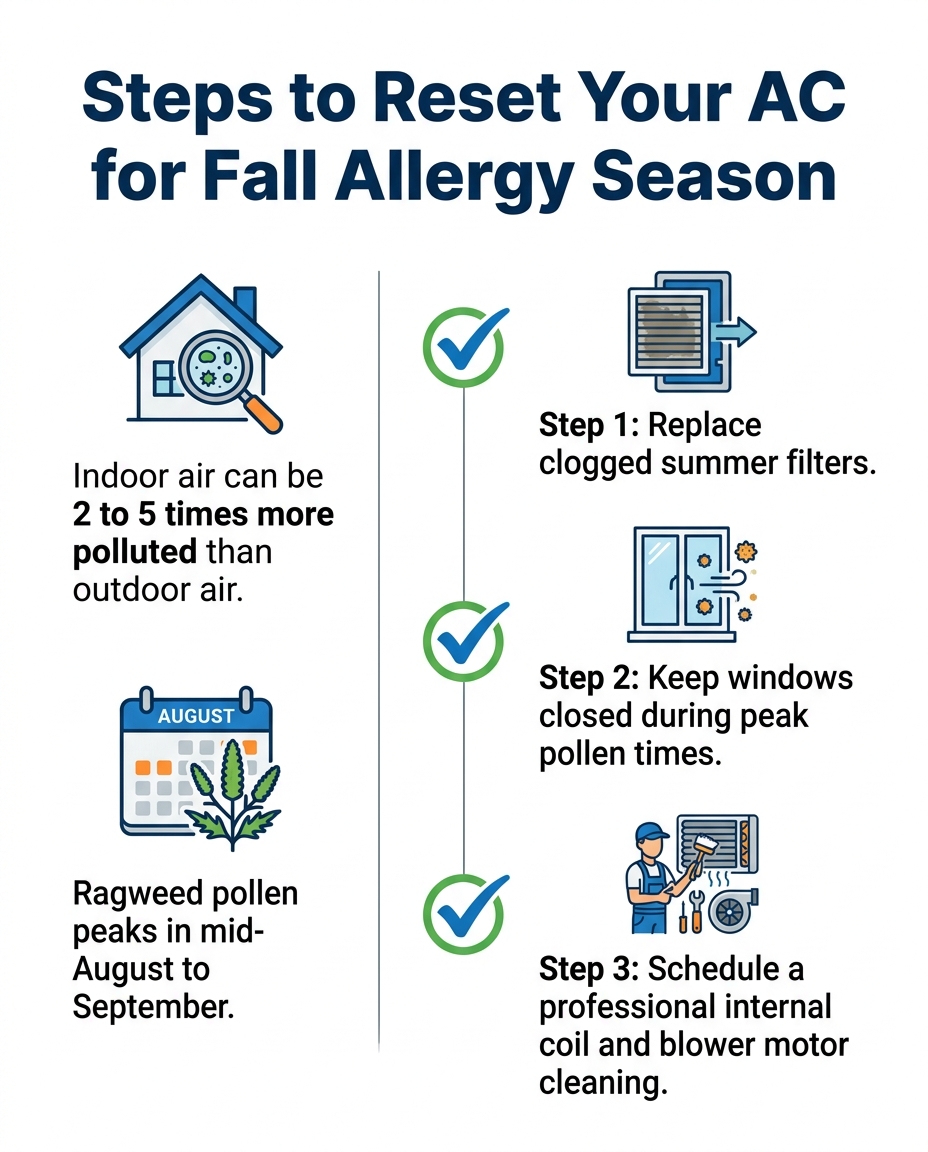
According to the EPA, the air inside your home can be two to five times more polluted than the air outside. Based on what we see in the field, this problem predictably peaks in late summer. New Jersey's late-summer humidity levels often exceed 70%, creating a sticky, uncomfortable environment outdoors and a demanding workload for your AC indoors. To cool your home, your air conditioner pulls warm, humid air over a freezing-cold evaporator coil. This process naturally creates condensation, much like a cold glass of water sweating on a hot afternoon.
While this condensation is normal, it becomes a problem when combined with the heavy dust load of late summer. As summer dust and pet dander get pulled into the system, they stick to these damp internal components. Over time, this wet, nutrient-rich environment becomes the perfect breeding ground for microbial growth and dust mites right inside your Cinnaminson home.
• Pet Dander & Hair — Summer Source: Pets shedding their summer coats indoors — Impact on Your HVAC System: Clogs air filters rapidly, restricting airflow to the blower motor.
• Dust Mites — Summer Source: Thrive in high-humidity environments (>50%) — Impact on Your HVAC System: Settle into damp ductwork and recirculate through the vents.
• Microbial Growth — Summer Source: Condensation on evaporator coils — Impact on Your HVAC System: Creates stale, musty odors whenever the AC cycles on.
The Compounding Effect of Fall Ragweed
The situation escalates as August turns into September, marking the peak of ragweed season. Ragweed pollen is incredibly fine and travels for miles on the wind. As kids head back to school, they bring these microscopic pollen grains—along with new classroom germs—into the house on their clothes, shoes, and backpacks.
When this incoming wave of fall pollen meets a damp, dust-clogged AC system, the allergens compound. The system can no longer filter out the new irritants because it is already choked with summer debris. Instead of catching the ragweed, the AC simply blows it back into your living room, bedrooms, and kitchen, triggering sneezing, itchy eyes, and respiratory discomfort.
Recognizing 'Filter Fatigue' After Months of Constant Cooling
One of the most common issues our Climate Mechanics team sees during a late-summer August in NJ is "filter fatigue." When your AC runs continuously, your air filter catches an enormous volume of particles. As the filter fills up, it loses efficiency exponentially. A clogged filter acts like a wall, choking off the air supply to your blower motor.
When the blower motor struggles to pull air through a dirty filter, it works harder, runs hotter, and consumes more electricity. Worse, air will always find the path of least resistance. If the filter is blocked, the system will start pulling unfiltered air through tiny gaps around the filter frame, dragging raw dust and allergens directly into the sensitive mechanical parts of your AC.
Signs your system is suffering from filter fatigue:
1. Longer cooling cycles: The system struggles to reach the temperature set on your thermostat, running for hours without stopping.
2. Weak airflow: You barely feel any air coming out of the vents, even when the fan is running at full speed.
3. Stale or dusty odors: A distinct musty smell fills the room right when the AC kicks on.
4. Uneven temperatures: Some rooms feel freezing cold while others remain stubbornly warm and stuffy.
5. Increased allergy symptoms: You wake up with a stuffy nose or scratchy throat despite keeping the windows closed.
Ignoring these signs can lead to sudden breakdowns right when you need cooling the most. Just recently, a local property manager reached out to our dispatchers during a hot summer stretch when their commercial air conditioning system required immediate repairs. They were seeking a second opinion on a system that was struggling to keep up with the heat. After a thorough evaluation, our technician completed the necessary repairs promptly, restoring proper airflow and performance before the heat caused further damage. If you have an AC running constantly in New Jersey summer heat, staying ahead of filter fatigue is your first line of defense.
Step 1: Safe DIY Actions to Refresh Your Home's Air for Back-to-School
Taking control of your indoor air quality starts with a few simple, safe steps you can perform yourself. Homeowners in Cinnaminson can significantly reduce the allergen load in their homes by following a basic back-to-school preparation routine.
• Upgrade your air filter: Remove the cheap fiberglass filter and replace it with a high-quality pleated filter. Look for one designed specifically to capture allergens like pollen, pet dander, and dust mites. Ensure it is the correct size so it fits snugly in the track.
• Manage your ventilation strategically: While fresh air is great, keeping your windows closed during peak pollen times (usually mid-morning to early afternoon) is essential. Use your kitchen and bathroom exhaust fans to pull localized moisture out of the house.
• Increase your vacuuming routine: Vacuum high-traffic areas, rugs, and upholstery twice a week using a vacuum equipped with a HEPA filter. This stops settled dust from being kicked back into the air where your AC will suck it up.
• Use standalone air purifiers: Place a standalone HEPA air purifier in the rooms where your family spends the most time, such as the living room or children's bedrooms, to capture floating particles before they reach the main HVAC return vents.
The limits of DIY maintenance: While changing the filter is a homeowner's job, you should never attempt to open the air handler cabinet or clean the internal evaporator coils yourself. These components contain high-voltage electricity, delicate aluminum fins that bend easily, and pressurized refrigerant lines. Cleaning them requires specialized training, chemical coil cleaners, and proper safety equipment.
Step 2: Why a Professional System Reset is Essential for Allergy Relief
While a fresh filter is a great start, it cannot undo the buildup that has already bypassed the filter during a long late-summer August in NJ. To truly prepare your home for the fall, you need a comprehensive professional system reset.
After years of diagnosing allergy-aggravating airflow issues, our team at Climate Mechanics positions our tune-up as a necessary system reset rather than just a quick mechanical check. When a technician performs professional AC service, they focus on safely cleaning the internal components where allergens actually hide. Over the summer, the blades of your blower wheel can become caked in a thick layer of dust. Just a fraction of an inch of dust on these blades can reduce your system's airflow by up to 30%.
During a system reset, a professional technician will safely access the blower motor, clean the heavily soiled evaporator coils, and clear out the condensate drain line where mold and algae love to grow. This deep cleaning restores proper airflow, vastly improves the system's ability to pull humidity out of the air, and stops the continuous recirculation of trapped summer allergens into your living space.

Evaluating Aging AC Units: When Poor Air Quality Signals a Bigger Problem
Sometimes, chronic indoor air quality issues in Cinnaminson are a symptom of a much larger problem: an aging, failing air conditioning system. Over our years of replacing aging units in the area, we've noticed that older AC units naturally lose their ability to effectively remove humidity from the air as their coils degrade and their compressors lose power. When a system can no longer dehumidify the house, the indoor air feels damp, heavy, and sticky—creating the ultimate breeding ground for dust mites and mold spores.
Furthermore, aging ductwork or a failing, weak blower motor will struggle to push conditioned air evenly throughout the house. This leaves certain rooms stagnant, allowing allergens to settle deeply into carpets and furniture. If your system is over 10 to 15 years old and you are constantly battling poor air quality, a simple cleaning may no longer be enough.
Upgrading to a modern, high-efficiency system provides advanced filtration capabilities and superior humidity control. Multi-stage or variable-speed air conditioners run at lower speeds for longer periods, which pulls significantly more moisture out of the air and constantly filters out microscopic particles.
For example, our installation crew recently visited a local family who had moved into a new home and reached out during a hot and humid summer because their existing central air unit was old and simply not keeping up with the heat. After explaining their options in detail, we installed a new, high-efficiency central air unit, and they were thrilled with the quick, professional service that restored their comfort and air quality. If you are considering an upgrade, federal tax credits and local utility energy rebates may apply to qualifying high-efficiency installations, making it a smart time to invest in your home's health. For ongoing care of any system, reliable Moorestown AC maintenance ensures your equipment stays in peak condition year after year.
Frequently Asked Questions About Late-Summer AC and Allergies
Why does my AC make my allergies worse in late summer?
The AC itself does not create allergens, but a dirty system acts as a delivery mechanism. Over a long late-summer August in NJ, the unit traps dust, pet dander, and mold inside its damp coils and clogged filters. When the system turns on, it simply recirculates those trapped pollutants right back into your living space, triggering allergy symptoms.
How do I clean my AC to reduce indoor allergens?
You can safely perform basic DIY steps like changing your air filter, gently wiping down your exterior supply vents, and keeping the area around your outdoor unit clear of debris. However, internal cleaning of the blower motor and evaporator coils requires specialized tools and safety knowledge, meaning it must be handled by a licensed professional.
Can air conditioning make allergies worse?
Yes, if the system is poorly maintained, it can definitely make allergies worse. A neglected air conditioner becomes a breeding ground for dust mites and microbial growth due to the dark, damp environment inside the air handler. Running a dirty system constantly blows these irritants into the air you breathe.
Does running the AC help with pollen?
Running the AC can actually help reduce indoor pollen levels, provided the system has a clean, high-quality filter installed. By running the AC, you can keep your windows and doors securely closed, which prevents outdoor ragweed and tree pollen from blowing into your home during peak allergy seasons.
How often should I change my AC filter during the summer?
During periods of non-stop use in the summer, you should check your filter at least once a month. Depending on the filter type, the number of pets in the home, and local dust levels, you should plan to replace it every 30 to 90 days to maintain healthy airflow and protect your indoor air quality.
Schedule Your Back-to-School AC Reset Today
As the back-to-school season approaches, don't let a dirty HVAC system compromise your family's health and comfort. Resetting your home's respiratory system now is the smartest way to clear out the summer pollutants and prepare for incoming fall allergens in Cinnaminson. A professional tune-up is a safe, highly effective way to restore your system's performance and ensure the air you breathe is clean and fresh. Don't wait for filter fatigue to cause a breakdown—schedule your AC maintenance in Cinnaminson today to secure a healthy, comfortable transition into the fall season.
