



When the Afternoon Sun Pushes Your AC Past Its Limits
If you are searching for how we fixed an AC system that kept tripping the breaker only during afternoon sun, you are dealing with a frustrating—and specific—cooling problem that our team at Climate Mechanics sees all the time. Your air conditioner likely runs perfectly all morning, keeping your home crisp and comfortable. But right around 3:00 p.m., when the August afternoon peak heat sets in, the house gets quiet, the vents stop blowing, and you find yourself staring at a tripped switch in your electrical panel yet again. This pattern is not a coincidence, and it is not a random electrical glitch. It is a highly specific reaction to extreme environmental stress.
When a breaker trips repeatedly during the hottest part of the day, it is doing exactly what it was designed to do: protecting your home from an electrical fire. The root cause is a phenomenon known as thermal overload. Diagnosing this issue requires looking closely at the intersection of ambient temperature, direct solar radiation, and the electrical draw of your compressor. As experts in air conditioning services, we do not just flip the breaker back on and hope for the best. We focus on finding the underlying mechanical or electrical failure that is forcing your system to overwork. Whether you need an adjustment or comprehensive AC repair in Cinnaminson, understanding why the afternoon sun is pushing your system past its limits is the first step toward a permanent solution.
The Physics of Thermal Overload in Peak Summer Heat
To understand why your system shuts down when the sun hits it, we have to look at the environmental factors that create maximum stress on your outdoor condenser unit. Thermal overload occurs when the internal temperature of the compressor—the heavy lifting engine of your AC—exceeds its safe operating limit. When this happens, internal safety switches or your home's electrical panel will cut the power to prevent a catastrophic meltdown.
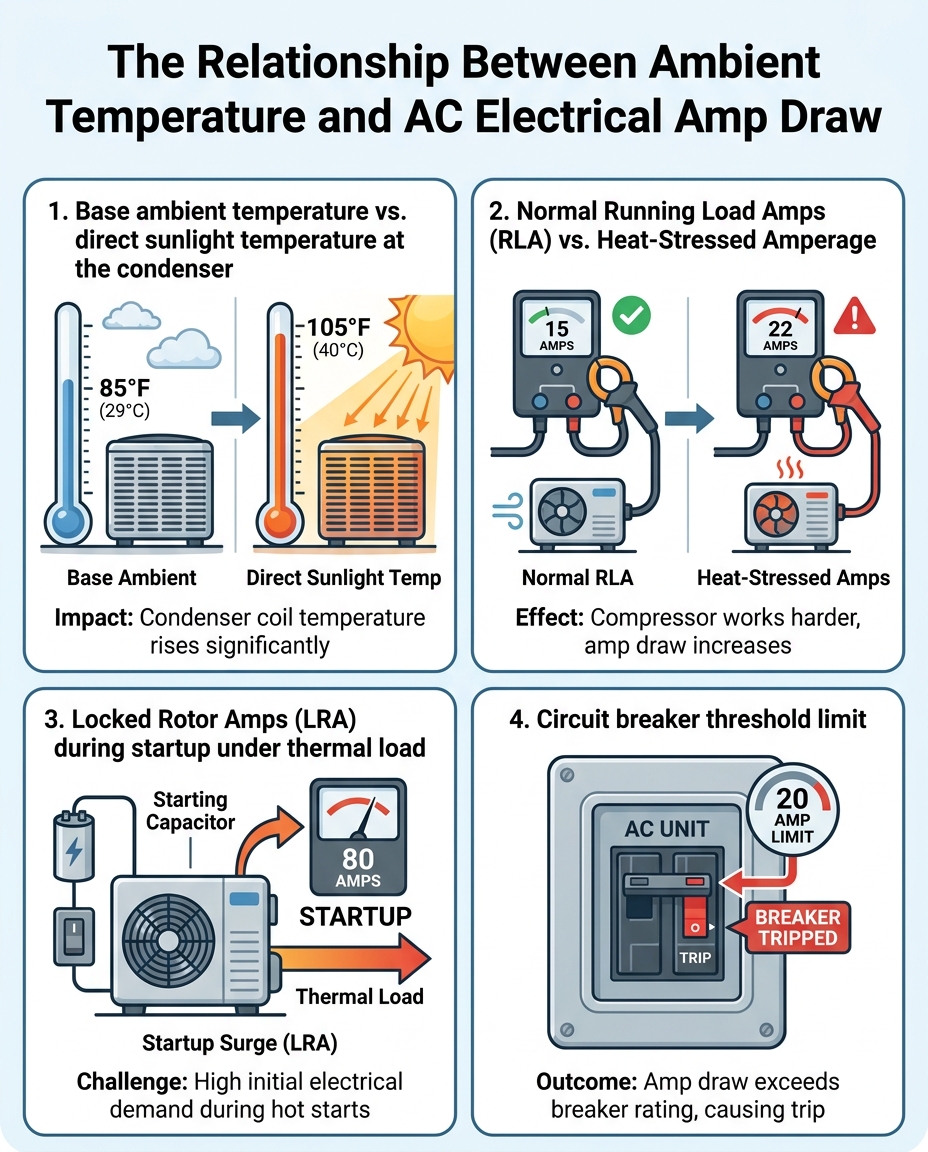
The reported weather station highs only tell a fraction of the story. If the local news says it is 92 degrees outside, the actual temperature immediately surrounding your condenser unit could be substantially higher. Direct solar radiation drastically increases the localized ambient temperature. The metal casing of the condenser absorbs the sun's rays, often pushing the operating environment well above 120 degrees. At these temperatures, the condenser coil struggles to dissipate heat because the outside air is already superheated.
Key factors that compound thermal overload include:
• Direct Solar Radiation: Sun beating down on the metal cabinet prevents the system from efficiently releasing the heat it pulled from your home.
• High Humidity: Intense, humid summer heat forces the compressor to work continuously. The system must expend massive amounts of energy to extract heavy moisture from the indoor air before it can effectively lower the temperature, increasing the sustained workload.
• Poor Airflow: If the unit is crowded by bushes or fences, the superheated air gets trapped, creating a localized oven around the compressor.
When the outside air is too hot to absorb the heat your AC is trying to expel, the compressor runs longer, hotter, and harder, compounding the thermal load until the system simply cannot take it anymore.
Why High Temperatures Spike Electrical Amp Draw
The relationship between intense heat and electrical failure comes down to basic physics. To understand why your breaker trips, we have to look at how electrical resistance changes as ambient temperatures rise. As the wiring and the copper motor windings inside your compressor heat up, their natural resistance to electrical current increases. Because of this increased resistance, the compressor must draw more amperage from your electrical panel just to perform the same amount of mechanical work.
Understanding Amperage Ratings:
• RLA (Running Load Amps): This is the normal amount of electrical current your compressor uses while running continuously under standard conditions.
• LRA (Locked Rotor Amps): This is the massive surge of power required to jump-start the compressor from a dead stop. LRA is typically three to five times higher than RLA.
When the afternoon sun bakes the condenser, the increased electrical resistance forces the RLA to climb dangerously close to the circuit breaker's maximum limit. If the system cycles off and tries to turn back on during this superheated period, the resulting LRA spike can easily exceed the panel's capacity. The circuit breaker is doing exactly what it should: cutting the power when the elevated amp draw crosses a dangerous threshold. If you are dealing with a circuit breaker tripping when AC turns on, it is a clear signal that the electrical draw has spiked beyond safe parameters.

Cumulative Late-Summer Wear: The August Breaking Point
In our years serving Cinnaminson NJ and the surrounding areas, homeowners often ask our technicians why their air conditioner survived the heatwaves of June and July, only to start tripping the breaker in late August. As families start transitioning into back-to-school routines, the answer lies in the cumulative toll of continuous cycling over the preceding summer months. An AC unit does not just reset its wear and tear every morning; the stress builds up over time.
Components like capacitors, contactors, and motor windings degrade slowly under sustained heat and heavy use. In early summer, an aging system might operate just barely below the breaker's threshold. It runs hot, but not quite hot enough to trigger a shutdown. However, as the season progresses, that constant exposure to peak temperatures takes a toll. By the time late summer arrives, that cumulative degradation pushes the system over the edge.
In our local South Jersey climate, the specific late-summer weather plays a massive role. The upper 80s temperatures combined with high relative humidity create maximum thermal and dehumidification loads on aging units. The system is forced into long, grueling cycles right when its components are at their weakest.
• Early Summer (June) — Component Condition: Fresh from spring maintenance, components are cool and efficient. — Electrical Draw: Normal RLA, manageable LRA on startup. — Breaker Risk: Low. System handles heat spikes well.
• Mid Summer (July) — Component Condition: Continuous cycling begins to wear down capacitors and trap dirt in coils. — Electrical Draw: Elevated RLA during peak afternoon sun. — Breaker Risk: Moderate. System runs hot but stays below trip threshold.
• Late Summer (August) — Component Condition: Cumulative fatigue. Capacitors are weak, coils are dirty, windings are stressed. — Electrical Draw: RLA spikes dangerously high; LRA surges aggressively. — Breaker Risk: High. Afternoon sun pushes the system into thermal overload.
Afternoon-only trips in late summer are a glaring warning sign of component fatigue. Ignoring this symptom usually leads to a complete system failure right when you need end-of-season cooling the most.
The Hidden Dangers of Repeatedly Resetting Your Breaker
When the AC shuts off on a sweltering afternoon, the most common instinct is to march out to the garage, flip the breaker back on, and get back to your day. While doing this once to see if it was a fluke is understandable, our team strongly advises against repeatedly forcing a thermally overloaded compressor to restart, as it is incredibly dangerous.
The quick fix is often a fatal flaw: Resetting the breaker forces electrical current back into a motor that is already overheated and struggling. When you bypass this safety mechanism, you risk causing permanent, catastrophic damage to the compressor's motor windings. A compressor replacement is one of the most extensive and complex repairs in the HVAC industry. What might have been a simple capacitor replacement can quickly escalate into a total system failure if the breaker is continuously reset.
Beyond mechanical damage, there are serious electrical fire risks associated with ignoring a safety mechanism. The breaker trips because the wires are carrying more electricity than they are rated to handle, which generates intense heat. Continually resetting the switch degrades the breaker itself and overheats the wiring inside your walls. Diagnosing electrical faults under a heavy thermal load requires specialized tools, extensive training, and a licensed professional. It is never a DIY project.
Our Professional Diagnostic Methodology: Testing Under Load
When the Climate Mechanics team gets a call about a system that only fails in the afternoon, we do not just guess at the problem. We follow a strict, professional diagnostic methodology. When one local homeowner faced this exact issue recently, our technician assessed the problem and explained a logical path forward before touching a single wire. This approach ensures we find the root cause of the thermal overload during peak sun, rather than just blindly replacing parts.
Here is how our professionals evaluate an afternoon-only breaker trip:
1. Testing Under Actual Load: We prioritize testing the system during the afternoon when the thermal load is actually present. Testing a heat-sensitive issue in the cool morning air often results in false negative readings, as the components are not under the stress that causes the failure.
2. Measuring Amp Draw: Technicians use specialized multimeters to measure the exact amp draw of the compressor and the condenser fan motor while they are running. We then compare these real-time numbers against the manufacturer's data plate ratings to see exactly how much the system is overdrawing.
3. Evaluating the Dual-Run Capacitor: The capacitor provides the initial jolt of energy (torque) needed to start the compressor. We test its microfarad rating under load to see if it is failing to provide that necessary starting power, which would cause an LRA spike.
4. Checking Breaker Integrity: Circuit breakers weaken over time, especially if they have been tripped repeatedly or are housed in a hot exterior panel. We check the integrity of the breaker itself to ensure it isn't tripping prematurely below its rated capacity.
This methodical process is why homeowners trust us for AC repair in Moorestown and the surrounding areas. We rely on hard data, not guesswork, to restore your comfort safely.
Common Culprits Behind Afternoon-Only Breaker Trips
When we run our diagnostic tests, the resulting data usually points to a few specific mechanical or electrical failures. Each of these culprits directly connects back to the compounding effect of the afternoon sun that we see so often in late summer.
Failing Capacitors Under Heat Stress
Capacitors are highly sensitive to extreme heat. Over a long summer, the internal fluids of a capacitor can degrade, causing it to lose its ability to store and release energy. A weak capacitor forces the compressor to draw excessive Locked Rotor Amps (LRA) to start. When the afternoon sun heats up the unit, a degraded capacitor often fails completely, causing an immediate breaker trip when the thermostat calls for cooling.
Dirty Condenser Coils Restricting Heat Transfer
Your outdoor unit features a series of delicate metal fins called the condenser coil. Its sole job is to release heat into the outside air. Over the summer, a blanket of dirt, pollen, grass clippings, and debris can coat these coils. This dirt acts like an insulating blanket, trapping heat inside the unit. When the direct sun hits a dirty condenser, it accelerates thermal overload dramatically because the system has absolutely no way to cool itself down.
Grounded or Failing Compressors
As compressors age, the insulation around the internal electrical windings can break down. Extreme heat causes metal components to expand. Sometimes, an internal electrical short (a "grounded" compressor) only manifests when the unit expands under the extreme heat of the afternoon sun. When the bare wire touches the metal casing, it causes an immediate, massive electrical short that trips the breaker instantly.
Weakened Circuit Breakers
Sometimes the air conditioner is operating within safe limits, but the safety switch itself has failed. The breaker may have degraded from previous trips, age, or ambient heat if your electrical panel is located in a hot garage or on an exterior wall facing the sun. A weakened breaker will trip well below its rated capacity, turning a normal afternoon cooling cycle into a frustrating shutdown.
Long-Term Solutions to Protect Condensers from Solar Radiation
Protecting your air conditioner from afternoon thermal overload involves a mix of strategic environmental changes and proactive care. While you cannot control the weather, you can control how your system handles it. If an aging unit does require replacement due to severe thermal damage, keep in mind that generic federal tax credits or utility incentive programs may apply to qualifying high-efficiency installations; we always advise readers to verify current programs with their utility or a tax professional.
One effective long-term strategy is adding strategic shade to the condenser area. Installing an awning or planting shade trees can block direct solar radiation from baking the metal cabinet. However, this must be done with strict adherence to airflow requirements. Condensers need several feet of clear space above and around them to vent hot air. If you build a tight enclosure or plant bushes too close, you will trap the exhaust heat and make the thermal overload much worse.
The most critical preventative measure we recommend is keeping the condenser coils meticulously clean to maximize heat dissipation. This is where professional care shines. We see the value of this urgency often; for instance, when one customer's AC stopped working on a sweltering Sunday evening right before the kids went back to school, they called our main number. A technician arrived within an hour, and the unit was up and running shortly after because we identified and resolved a heat-stressed component before it caused permanent damage. End-of-season or early-season routine AC maintenance catches weakening electrical components, like failing capacitors and dirty coils, long before they cause afternoon shutdowns. A properly maintained system is designed to handle the afternoon sun without ever tripping the breaker.
Restoring Safe, Reliable Cooling When You Need It Most
At Climate Mechanics, we know that an afternoon-only breaker trip is never a random event; it is a highly specific intersection of environmental heat, increased electrical resistance, and mechanical wear. When the sun beats down on an aging, stressed condenser, the resulting thermal overload forces the electrical draw past safe limits.
The good news is that this is a completely solvable problem with the right diagnostic approach. By testing the system under actual load, measuring the precise amp draw, and evaluating the health of the capacitors and coils, experts can pinpoint exactly why your system is struggling. If you find yourself repeatedly staring at a tripped breaker at 3:00 p.m., leave the switch alone and seek a professional evaluation. Addressing the root cause now will protect your compressor, ensure your home's electrical safety, and restore reliable cooling when you need it most.
Frequently Asked Questions
Why does my AC only trip the breaker during the day?
During the day, direct sunlight and peak ambient temperatures create a massive thermal load on your outdoor unit. This intense heat increases electrical resistance inside the compressor, forcing it to draw more amperage than it does during the cooler night, which ultimately trips the safety breaker.
Can hot weather cause a breaker to trip?
Yes, extreme hot weather is a primary catalyst for breaker trips. High temperatures cause the electrical wiring and motors to heat up, which increases resistance and forces the system to pull more electrical current to operate, occasionally exceeding the breaker's limit.
What to do if your AC trips the breaker?
We advise our customers that if your AC trips the breaker, you can safely reset it exactly one time to see if it was a temporary power fluctuation. If it trips a second time, leave it off immediately and call a licensed professional, as repeatedly resetting it can cause an electrical fire or destroy the compressor.
How long should I wait to reset a tripped AC breaker?
You should wait at least 30 minutes before attempting to reset a tripped AC breaker. This allows the internal components of the compressor to cool down and the refrigerant pressures to equalize, reducing the massive surge of power needed to restart the system.
Can direct sunlight cause an AC to overheat?
Direct sunlight absolutely causes an AC to overheat by baking the metal cabinet and raising the immediate ambient temperature around the coils. This makes it incredibly difficult for the system to release the heat it absorbed from your home, leading to thermal overload.
Is it normal for an AC to draw more power in the afternoon?
It is entirely normal for an AC to draw slightly more power in the afternoon due to the increased heat load on the home and the higher outdoor temperatures. However, it is never normal for that power draw to spike high enough to trip your circuit breaker.
