



The Late-Summer Airflow Crisis Suffocating Your AC
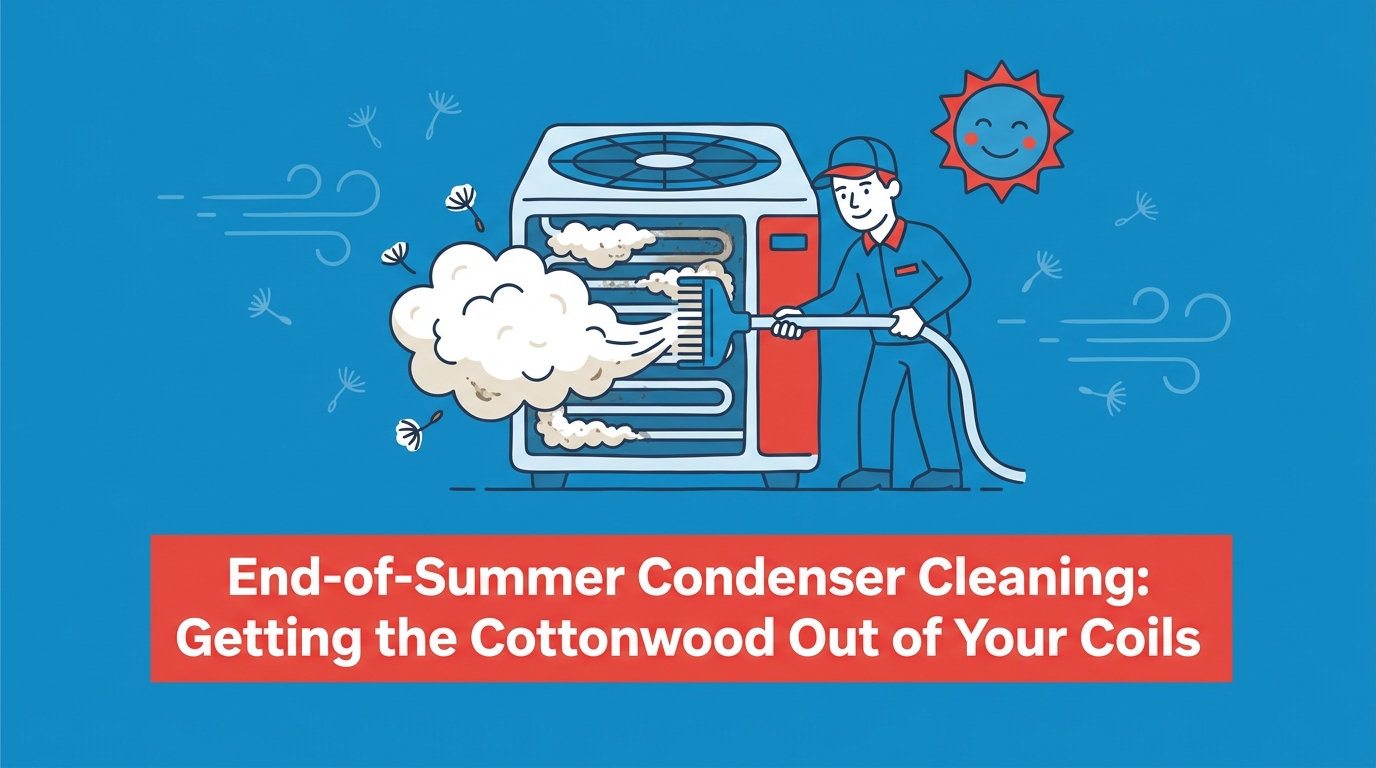
Here at Climate Mechanics, we know that by the time late August rolls around, your cooling equipment has been running hard for months, and you might be facing a critical need for end-of-summer condenser cleaning: getting the cottonwood out of your coils. You walk outside and notice a thick, grey, fuzzy sweater wrapping entirely around the metal fins of your unit. Your first instinct is probably to grab a garden hose and blast the debris away. But before you turn on the water, you need to understand that this matted layer of early-summer seeds and late-summer yard dirt is suffocating your system. Rinsing it from the outside often makes the blockage worse, forcing you to decide between a dangerous DIY wash and professional back-washing to safely restore airflow.
Proper airflow is the absolute lifeblood of efficient cooling. Without it, your equipment simply cannot transfer heat out of your home. As the season drags on, your system begins to struggle against the mounting physical barrier on its exterior. What started as a few harmless white fluffs floating through the air has compounded into a dense, restrictive blanket that forces the compressor to work twice as hard just to maintain your thermostat setting.
The Symptoms of a Suffocating System
When the outdoor unit is choked by debris, the signs usually show up inside your home first. You might notice the air coming from your vents feels lukewarm rather than crisp and cold. The system may run in endless cycles, rarely shutting off, as it desperately tries to reach the target temperature. This constant operation not only drives up your monthly utility bills but also places immense mechanical strain on the internal components of your air conditioning systems.
Many homeowners assume their system is low on refrigerant or suffering from a major mechanical failure when these symptoms appear. While those issues are possible, a visual inspection of the outdoor condenser often reveals the true culprit: a solid wall of matted organic matter blocking the very fins designed to let the system breathe.
The Anatomy of a Cottonwood Sweater: From June Fluff to August Mat
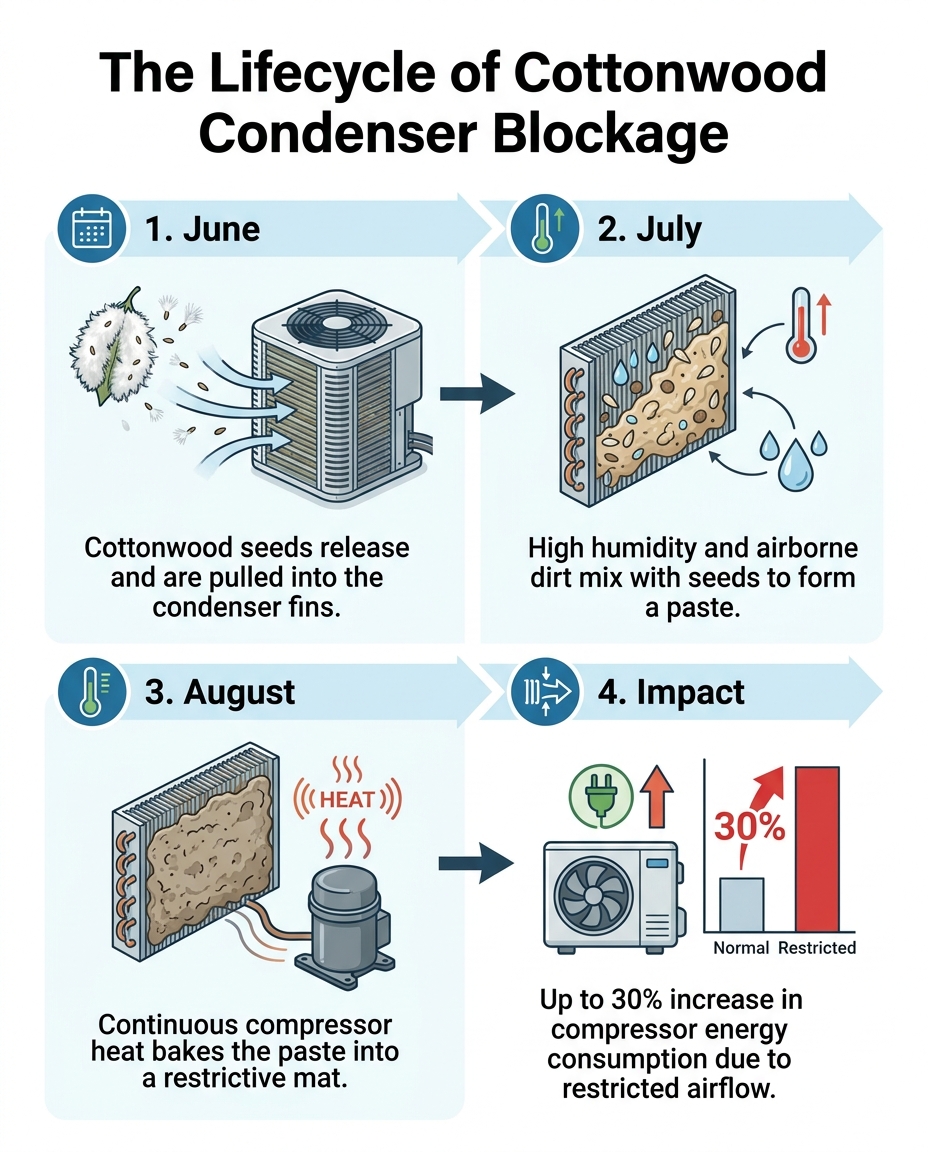
To understand why this debris is so destructive, you have to look at how it forms over the course of the season. The transformation from harmless spring seeds into a dense, restrictive barrier is a gradual process fueled by local weather conditions. Eastern Cottonwood trees release prolific amounts of seed fluff in June, perfectly timed with the start of heavy cooling demands—a pattern our technicians see wreaking havoc on local units every single year.
If you live in Cinnaminson NJ or the surrounding Delaware Valley, you know that our specific summer climate plays a huge role in this progression. It is not just dry dust blowing around; it is a combination of botanical debris and intense regional weather patterns that create the perfect storm for your HVAC equipment.
The Seasonal Progression of Coil Blockage
• June (Early Summer) — Environmental Action: Eastern Cottonwood trees release massive volumes of white seed fluff into the air. — Impact on the Condenser: Dry fluff is drawn toward the unit and lightly coats the exterior aluminum fins.
• July (Mid-Summer) — Environmental Action: South Jersey's high summer humidity rolls in, bringing airborne moisture and yard dust. — Impact on the Condenser: Moisture mixes with the dry fluff and dirt, turning the accumulation into a sticky paste that clings to the metal.
• August (Late Summer) — Environmental Action: Weeks of continuous high heat and hot exhaust air blowing from the compressor fan. — Impact on the Condenser: The sticky paste is literally baked onto the fins, creating a solid, felt-like mat that blocks almost all airflow.
This timeline highlights exactly why high summer humidity is the catalyst that turns a minor nuisance into a major operational hazard. The moisture in the air acts as a binding agent. When you combine that sticky paste with the intense heat exhausting from the system, it cures into a tough, fibrous blanket. By the time the peak heat waves hit, you might find your AC running constantly in the summer heat simply because it cannot push air through that baked-on sweater.

Why Your AC Acts Like a Giant Yard Vacuum
You might wonder why all this debris ends up plastered to your equipment rather than just blowing past it. The answer lies in the fundamental physical mechanism of how your outdoor condenser unit operates. The large fan sitting at the top of the unit has a very specific job: it pulls massive volumes of ambient air through the tight aluminum fins on the sides to disperse the heat collected from inside your home.
Because the fan pulls air inward through the sides and exhausts it out the top, the entire exterior of the unit acts like a giant vacuum cleaner. Anything floating in the yard—grass clippings, dust, pollen, and especially cottonwood seeds—gets sucked directly against the metal fins.
The Physics of Fin Spacing
Standard residential units are designed with very tight fin spacing to maximize the surface area for heat exchange. Unfortunately, these tiny gaps perfectly match the size of cottonwood seeds. Once a layer of seeds gets trapped, it creates a net that catches even finer particles of dirt and dust.
Our team at Climate Mechanics sees the effects of this vacuum action frequently. In one recent case here in Cinnaminson, a family realized their older central air unit was simply not sufficient for our hot and humid summer. After they opted to install a new, high-efficiency system—which may qualify for generic utility rebates or federal tax credits depending on current programs—our team explained the details of how the new unit operates. A key part of that conversation was emphasizing that keeping the outdoor condenser unit clear of vacuumed-up debris is absolutely required to maintain that new-system performance.
The energy impact of this debris is staggering. According to data from the Department of Energy, a dirty coil can increase compressor energy consumption by up to 30 percent. Furthermore, there is a compounding effect: as airflow restricts, the fan has to pull harder to move the same amount of air, which ends up embedding the debris even deeper into the coils.
The Hidden Dangers of the Quick Hose Rinse
Every August, our dispatch board fills up with calls from homeowners who tried a quick fix. When you walk out in late August and see a thick, grey blanket covering your equipment, the temptation to blast it off with a garden hose is incredibly strong. It seems like the fastest, easiest solution. However, spraying the unit from the outside is one of the most actively harmful things you can do to your system.
The geometry of the condenser fins dictates how debris moves. The fins are delicate, tightly packed aluminum sheets. When you apply water pressure from the exterior, you are not washing the debris away; you are forcing the matted cottonwood and dirt deeper into the center of the coil structure where you can no longer see it.
The Compaction Effect Explained
• Expansion: When dry or semi-dry organic fluff gets wet, it instantly swells and expands.
• Deep Penetration: The water pressure pushes this swollen mass past the outer edge of the fins and into the deep, inaccessible interior gaps.
• Hardening: Once the system turns back on, the heat bakes this deep, wet mass into an even denser blockage, completely choking off heat exchange from the inside.
Beyond the compaction effect, there is the physical danger of water pressure. Using a high-pressure nozzle or, worse, a power washer, will easily bend and flatten the delicate aluminum fins. Once those fins are crushed flat against each other, airflow is permanently ruined, and the entire coil assembly often needs to be replaced. What started as a simple desire to clean the unit can quickly turn into a catastrophic failure right when you need cooling the most.
Inside-Out: The Science of Professional Back-Washing
If surface rinsing from the outside pushes debris further in, how do you actually remove it? The answer is a professional technique known as back-washing. This process involves cleaning the coils from the inside out, using water and specialized solutions to push the debris back out the exact same way it came in.
Back-washing requires safely dismantling the outer housing and fan assembly to gain access to the interior chamber of the outdoor condenser unit. This is not a DIY weekend project. It involves navigating high-voltage electrical components, handling the heavy fan motor, and protecting delicate internal wiring.
The Professional Approach to Coil Restoration
When our Climate Mechanics experts arrive to clear a heavily matted system, we do more than just spray water. We utilize specialized, non-corrosive coil cleaners designed specifically for HVAC equipment. These foaming agents actively break down the baked-on organic matter and sticky paste without causing any chemical damage to the bare aluminum or copper.
We believe in clear communication during these technical processes. For example, when a homeowner called us regarding an air conditioner issue earlier this spring, our technician thoroughly assessed the problem and outlined a logical path forward. By explaining the science behind the blockage, the customer fully understood the problem and the proposed solution before any tools were lifted.
As local experts, Climate Mechanics understands exactly how our specific environmental wear-and-tear damages units. Our technicians do not just clean the metal; they also assess the system for hidden strain. Running a system with restricted airflow for months causes the compressor to run hot and the electrical components to draw excessive amperage. We diagnose these hidden strains during your AC maintenance in Cinnaminson to ensure the system hasn't suffered permanent damage.
Clearing the Coils Before the Fall Heating Transition
As families prep for the back-to-school transition, addressing a suffocated condenser in late summer is not just about finishing out the cooling season comfortably. It is a critical step in preparing your entire HVAC system for the upcoming seasonal shift. Ignoring the problem now leaves your equipment highly strained right as it shuts down for the winter.
Your heating and cooling systems are deeply interconnected. Restricted airflow on the outdoor unit forces the indoor blower motor to work harder, which can mask or exacerbate mechanical issues that will haunt you when the temperatures drop. A strained blower motor in August often becomes a failed blower motor in December.
Seasonal Steps for Long-Term Protection
1. Assess the Cooling Damage: Have a professional clear the baked-on summer debris to restore baseline airflow and allow the compressor to cool down properly before its winter hibernation.
2. Check the Electrical Draw: Ensure that months of overworking haven't degraded the capacitors or contactors, which could fail unexpectedly.
3. Transition the Indoor Unit: Inspect the indoor air handler and blower motor for signs of overheating caused by the outdoor restriction.
4. Prepare for Heating: Bundle the end-of-summer coil cleaning with your pre-season furnace maintenance to ensure the entire system is balanced, clean, and ready for the cold weather in Cinnaminson NJ.
Framing your maintenance with this dual-approach is the smartest way to protect your home comfort investments. By clearing the summer damage and prepping the winter hardware in one comprehensive visit, you ensure smooth, efficient operation year-round.
Breaking the Cycle: Proactive Protection for Next Year
Cottonwood season is a biological inevitability in our region, but a system-killing mat on your air conditioner is entirely preventable. In our years of maintaining HVAC systems throughout the Delaware Valley, we have found that the key is shifting from urgent, late-summer reactive fixes to a strategy of long-term preventative care.
Routine check-ups catch the initial fluff accumulation in early summer before the heavy August heat bakes it into an immovable paste. When a professional monitors your system's baseline performance across different seasons, they can intervene before a minor restriction turns into a major energy drain.
Your Proactive Homeowner Checklist
• Monitor the Perimeter: Keep vegetation, shrubs, and tall grass trimmed at least two feet away from the unit to reduce the amount of organic material the fan can pull in.
• Watch for the Fluff: In late June, visually inspect the unit weekly. If you see a light coating of dry seeds starting to form, note it before the July humidity hits.
• Listen to the System: Pay attention to how long the unit runs. If cycles are getting longer, airflow restriction is likely beginning.
• Schedule Professional Oversight: Enroll in a routine maintenance program to ensure a technician clears the coils from the inside out before the late August heat waves arrive.
Taking these proactive steps provides immense peace of mind. You will sleep easier knowing your equipment is optimized for peak efficiency, drawing less power, and avoiding the hidden electrical strain that leads to premature failure.
Frequently Asked Questions
Why is my outdoor AC unit covered in white fuzz?
That white fuzz is likely seed fluff from Eastern Cottonwood trees, which release massive amounts of seeds in early summer. Because your outdoor AC unit pulls in large volumes of air to cool the refrigerant, it acts like a vacuum, trapping the floating seeds against the tight metal fins. Over time, this fluff mixes with dirt and humidity to form a thick, grey blanket.
Can I wash cottonwood off my AC condenser with a hose?
No, you should never spray a matted condenser from the outside with a hose. The water pressure forces the wet, swollen debris deeper into the delicate aluminum fins, where it dries and hardens into an even denser blockage. This compaction effect severely limits airflow and often requires professional disassembly to fix.
Does a dirty condenser actually affect AC cooling power?
Yes, a dirty condenser drastically reduces your system's ability to cool your home. The dirt and debris act as an insulator, trapping heat inside the coils instead of letting it disperse into the outside air. According to energy experts, this restriction can increase your compressor's energy consumption by up to 30 percent while leaving your home feeling warm.
What happens to the compressor if my AC condenser is completely dirty?
If the condenser is completely blocked, the compressor has to work continuously to try and reach your thermostat setting. This constant operation causes the compressor to overheat, draws excessive electrical current, and places massive wear on the internal motors. Eventually, this strain can lead to a complete, catastrophic compressor failure.
How do professionals clean an AC unit with cottonwood stuck in it?
Professionals use a technique called back-washing to clean the unit from the inside out. They safely dismantle the top fan assembly, apply specialized non-corrosive foaming cleaners to break down the baked-on organic paste, and flush the debris backward out of the fins. This restores airflow without pushing dirt deeper into the system.
Why does South Jersey humidity make cottonwood accumulation worse for air conditioners?
High humidity introduces heavy moisture into the air, which mixes with the dry cottonwood seeds and yard dust trapped on your unit. This combination creates a sticky, wet paste that clings stubbornly to the metal fins. When the intense summer heat hits, that paste bakes into a hard, felt-like mat that is nearly impossible to remove without professional chemicals and back-washing.
Protect Your Comfort Before the Season Ends
Do not let a baked-on blanket of summer debris force your system into an early breakdown. Now is the time to restore your airflow and protect your equipment before the final heat waves pass. Schedule your end-of-summer AC maintenance in Cinnaminson today to ensure your home stays perfectly comfortable, your energy bills stay manageable, and your system transitions safely into the fall.
