


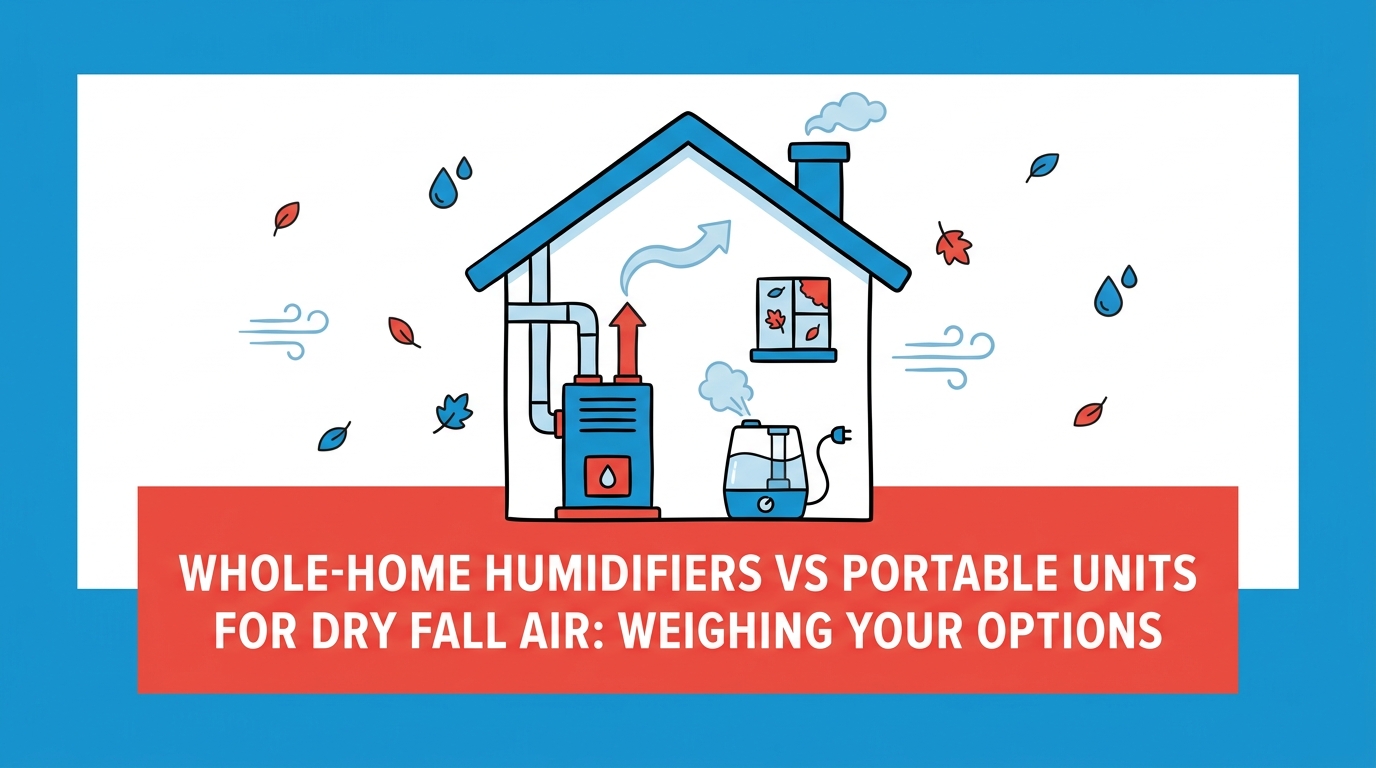

Tired of the Daily Refill Routine This Fall?
Are you dreading another season of dragging heavy water jugs from room to room just to keep your indoor air breathable? Deciding between whole-home humidifiers vs portable units for dry fall air is a choice many homeowners face as the September pre-heating season arrives. Here at Climate Mechanics, we help Cinnaminson homeowners navigate this exact dilemma every autumn. The air outside gets crisp, the thermostat ticks up, and suddenly your indoor environment feels like a desert. You start noticing static shocks on the doorknobs, dry skin, and waking up with a scratchy throat every morning. Right now, you stand at a crucial decision point: do you endure another winter of manual upkeep, constantly refilling and scrubbing small room units, or do you upgrade to a seamless whole-home solution before the bitter cold sets in? Both approaches aim to manage dry indoor air, but they demand vastly different levels of your time, energy, and ongoing attention.
If you are looking to upgrade your comfort, exploring comprehensive indoor air quality solutions and modern furnace systems can completely change how your home feels this winter.
The Sudden Shift: Why Fall Air Dries Out Your Home
Understanding why your house suddenly feels so dry requires a quick look at how temperature and moisture interact. Warm air has a high capacity to hold moisture, which is why summers feel so sticky. Cold air, on the other hand, holds very little water vapor. As the outdoor temperatures drop across Cinnaminson NJ, the atmospheric moisture drops right along with them. In our years of keeping South Jersey homes comfortable, our team has seen how this stark environmental shift creates a jarring contrast for your body and your home's infrastructure.
When that cold, dry outdoor air infiltrates your home through tiny gaps around windows and doors, it brings its low moisture content with it. But the real drop in indoor humidity happens the moment your heating system kicks into gear.
The Impact of First-Run Heating
Your heating equipment is designed to raise the temperature of the air, but it does absolutely nothing to add moisture. In fact, the combustion process and heat exchange actively bake the air, lowering its relative humidity even further. Relative humidity is the percentage of moisture in the air compared to the maximum amount it could hold at that specific temperature. When you take cold, dry air from outside and heat it up to 70 degrees inside, its capacity to hold water expands, but the actual amount of water remains the same.
The result is a plummeting relative humidity level. Initial furnace cycles can drop indoor relative humidity below 30% almost immediately. This aggressive drying effect pulls moisture from wherever it can find it: your hardwood floors, your wooden furniture, your houseplants, and your own skin and respiratory tract. Wood floors begin to shrink and creak, door frames shift, and the physical discomfort of dry air sets in rapidly.
Portable Humidifiers: The Hidden Costs of Room-by-Room Units
Faced with dry air, many homeowners rush to the store to buy a few portable humidifiers. While these standalone units provide a quick, localized fix, relying on them as a primary strategy introduces a significant amount of manual labor and hidden risks.
The most immediate drawback is the uneven comfort they provide. A portable unit might make the bedroom feel perfectly balanced, but the moment you walk out into the hallway or the living room, you are hit with a wall of dry air. Trying to humidify an entire house this way requires purchasing, running, and maintaining multiple units simultaneously, which quickly turns into a part-time job.
The Daily Maintenance Burden
The psychological fatigue and physical time cost of the "daily refill and clean" routine cannot be overstated. Managing portable units requires a strict, ongoing schedule:
1. Daily Refilling: Water weighs roughly eight pounds per gallon. Carrying multiple gallons of water from the sink to various bedrooms every single night becomes a tedious, heavy chore.
2. Constant Monitoring: You have to manually adjust the output dials based on how the room feels, often guessing at the actual humidity levels.
3. Weekly Disinfecting: The Consumer Product Safety Commission (CPSC) strongly warns that portable humidifiers require frequent, rigorous cleaning. Stagnant water in the reservoir is a breeding ground for microorganisms.
4. Filter and Cartridge Replacements: Evaporative portables require frequent wick filter changes, while ultrasonic models often need demineralization cartridges to prevent them from blowing white mineral dust all over your furniture.
If this maintenance schedule slips, the risks increase. Improperly maintained portable units can disperse mold spores and bacteria directly into the air you breathe, turning a comfort device into a respiratory hazard.
How an Integrated Bypass Humidifier Transforms Your Space
For homeowners exhausted by the daily upkeep of portable units, an integrated bypass humidifier offers a set-and-forget alternative that treats the entire house simultaneously. Unlike standalone units that sit on a nightstand, an integrated system is installed directly onto your existing HVAC ductwork, working in tandem with your climate control system.
A bypass humidifier utilizes a dedicated duct that connects the warm air supply plenum to the cold air return plenum. Inside the humidifier is a water-soaked evaporator pad (often called a water panel). Because the supply duct is under higher pressure than the return duct, the furnace blower naturally forces warm air through the humidifier, across the wet pad, and back into the air stream. The water evaporates instantly, and this newly moistened air is distributed evenly through every single vent in your home.
Seamless Operation with Your Heating Cycle
The true advantage of an integrated system is its automation. There are no tanks to fill and no stagnant pools of water to harbor bacteria. Fresh water flows directly from your home's plumbing line onto the evaporator pad, and any excess water simply drains away into your floor drain or condensate pump.
Furthermore, the system is controlled by a central humidistat, much like your thermostat controls temperature. You set your desired humidity level once, and the system takes over. It monitors the air continuously and only activates the water flow when the heating cycle is running and the air requires more moisture. This eliminates the manual monitoring, the water hauling, and the uneven pockets of dry air that plague portable setups.

Side-by-Side Comparison: Efficiency, Maintenance, and Coverage
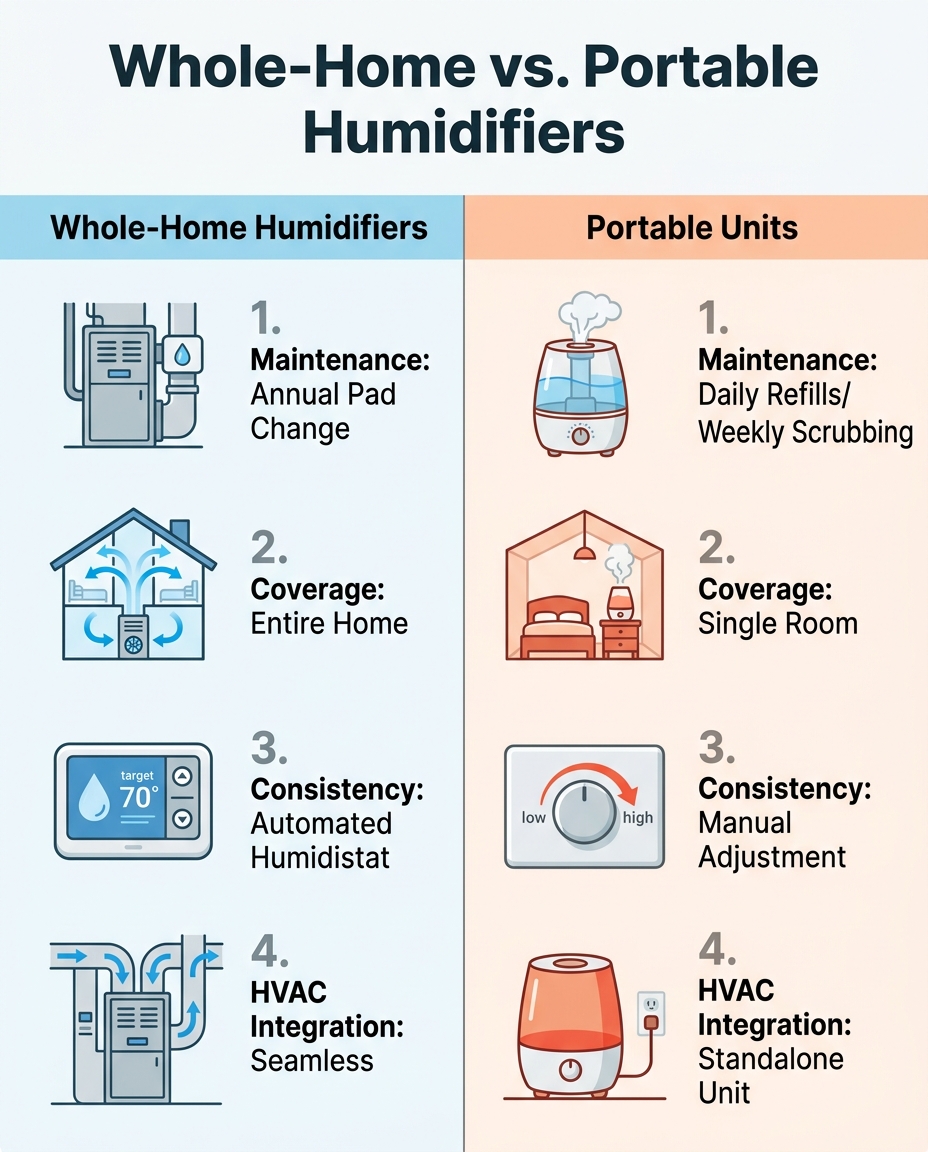
To make the best decision for your home's comfort and your own peace of mind, it helps to look at the facts directly. The table below breaks down the core differences between relying on standalone room units versus installing a centralized, integrated system.
• Initial Setup — Portable Room Humidifiers: Plug-and-play; requires no installation. — Integrated Bypass Humidifier: Requires professional installation into HVAC ductwork and plumbing.
• Daily Maintenance — Portable Room Humidifiers: High; requires daily refilling and frequent monitoring of output. — Integrated Bypass Humidifier: None; automated water supply and humidistat control.
• Annual Maintenance — Portable Room Humidifiers: High; weekly scrubbing, descaling, and frequent filter replacements. — Integrated Bypass Humidifier: Low; typically requires only one evaporator pad replacement per year.
• Coverage Area — Portable Room Humidifiers: Limited to a single room or small open area. — Integrated Bypass Humidifier: Comprehensive; covers the entire square footage of the home evenly.
• Water Management — Portable Room Humidifiers: Uses a stagnant reservoir tank that must be manually cleaned. — Integrated Bypass Humidifier: Uses a flow-through design with continuous drainage; no stagnant water.
• Consistency — Portable Room Humidifiers: Uneven; creates isolated pockets of moisture. — Integrated Bypass Humidifier: Highly consistent; distributes balanced moisture through every air vent.
While portable units offer a fast, temporary fix with no initial installation barrier, they demand a heavy toll in ongoing labor. The integrated system requires a professional setup upfront but repays that effort by giving you your time back and providing superior, balanced comfort throughout the entire season.
Why Professional HVAC Integration Matters
When upgrading to a whole-home system, professional sizing and installation are absolutely critical. An integrated humidifier is not a DIY project. It requires modifying your sheet metal ductwork, tapping into your home's water supply, ensuring proper drainage, and wiring the humidistat into your furnace's control board.
More importantly, the system must be sized correctly for your specific home. An undersized unit will fail to keep up with the dry air, leaving you uncomfortable. An oversized unit, or one that is improperly calibrated, can push too much moisture into the air. Excess humidity can lead to condensation building up on the inside of your windows, which eventually drips down and rots the window frames. In severe cases, improper humidification can force moisture into wall cavities, creating hidden mold problems.
Working with local HVAC professionals ensures that the equipment matches your home's square footage and ductwork design. Proper integration also means that both your heating and humidification systems are evaluated together. Recently, our team at Climate Mechanics helped a local homeowner prepare their house for the fall season. They wanted comprehensive maintenance across their heating system to ensure everything was ready for winter. Our technicians performed thorough maintenance, explained the process, and confirmed their existing equipment was perfectly suited for a bypass humidifier integration. This level of professional oversight guarantees that adding a new component won't negatively impact the airflow or efficiency of your existing furnace. If you are preparing your system for the season, scheduling professional furnace maintenance is the perfect time to evaluate your ductwork for a humidifier addition.
Protecting Your Home and Health
The Environmental Protection Agency (EPA) recommends maintaining indoor relative humidity between 30% and 50%. Staying within this sweet spot is vital for both your health and your property. Professionally installed bypass systems are highly accurate at maintaining these levels.
Properly regulated humidity protects expensive hardwood floors, wooden cabinetry, and musical instruments from shrinking, warping, and cracking. It also preserves your HVAC equipment warranties, as professional installation ensures all manufacturer specifications for airflow and drainage are strictly followed.
Timing Your Upgrade Before Peak Winter
The transition into the heating season happens fast. Early fall is the absolute best time to evaluate your indoor air quality strategy and upgrade your HVAC accessories. Waiting until the dead of winter means you will already be suffering through the physical discomfort of dry air, and you may face longer wait times for installation appointments.
South Jersey is known for its rapid weather swings during the autumn months. You might experience a mild, damp 65-degree day followed immediately by a freezing, bone-dry 30-degree night. Your home needs an automated system that can adjust to these sudden temperature drops without requiring you to run around the house twisting dials on multiple portable units.
By acting early, you ensure that your system is fully operational and dialed in before the first major freeze hits. You can start monitoring your baseline humidity now, paying attention to how the air feels during those first few furnace cycles, and reading more about balancing indoor humidity during fall weather swings to understand exactly what your home needs.
Frequently Asked Questions About Home Humidification
Is a whole house humidifier better than portable?
Yes, for whole-home consistency and drastically reduced daily maintenance, an integrated system is superior. While portables are fine for a single room, a whole-house system treats every square foot of your home evenly through the existing ductwork. It completely eliminates the heavy lifting of daily water refills and the constant scrubbing required to keep standalone units safe.
How hard is it to maintain a whole house humidifier?
It requires minimal effort compared to portable units. Because bypass humidifiers use a flow-through design, there are no stagnant tanks of water to scrub or disinfect weekly. Maintenance typically involves just a single annual water panel (evaporator pad) replacement and a basic inspection, which our technicians can easily handle during your routine fall HVAC tune-up.
Do whole home humidifiers cause mold?
When professionally sized and maintained, they actually help prevent mold by regulating humidity strictly within the safe 30% to 50% range. Portable units can easily over-saturate a single room, creating localized dampness that encourages mold growth. A whole-home system distributes moisture evenly and shuts off automatically when the central humidistat detects the target level has been reached.
Do whole house humidifiers run with the furnace?
Yes, bypass humidifiers utilize the furnace blower to distribute moisture while the heating cycle is active. The humidistat communicates with the furnace, ensuring that water only flows over the evaporator pad when the blower is actively pushing warm air through the ductwork, maximizing evaporation and efficiency.
Can I install a whole-home humidifier myself?
Our team at Climate Mechanics highly recommends using a licensed professional for this installation. The process requires cutting precise holes into your sheet metal ductwork, tapping into your home's active plumbing lines for the water supply, routing a proper drainage line, and safely wiring the humidistat into the furnace's high-voltage control board.
Make an Informed Decision for Your Home's Comfort
The shift into the heating season doesn't have to mean a shift into discomfort. The side-by-side facts clearly show that while portable units offer a quick bandage for dry air, they demand a heavy toll in constant cleaning, heavy lifting, and uneven results. An integrated bypass humidifier provides a highly effective, low-maintenance solution that protects your home's interior and keeps your family comfortable automatically.
You do not have to endure another winter of manual humidifier maintenance. By consulting with an HVAC expert to evaluate your existing ductwork and furnace compatibility, you get a clear, side-by-side evaluation of your options, providing the facts needed to make an informed upgrade decision before the coldest days arrive.
