


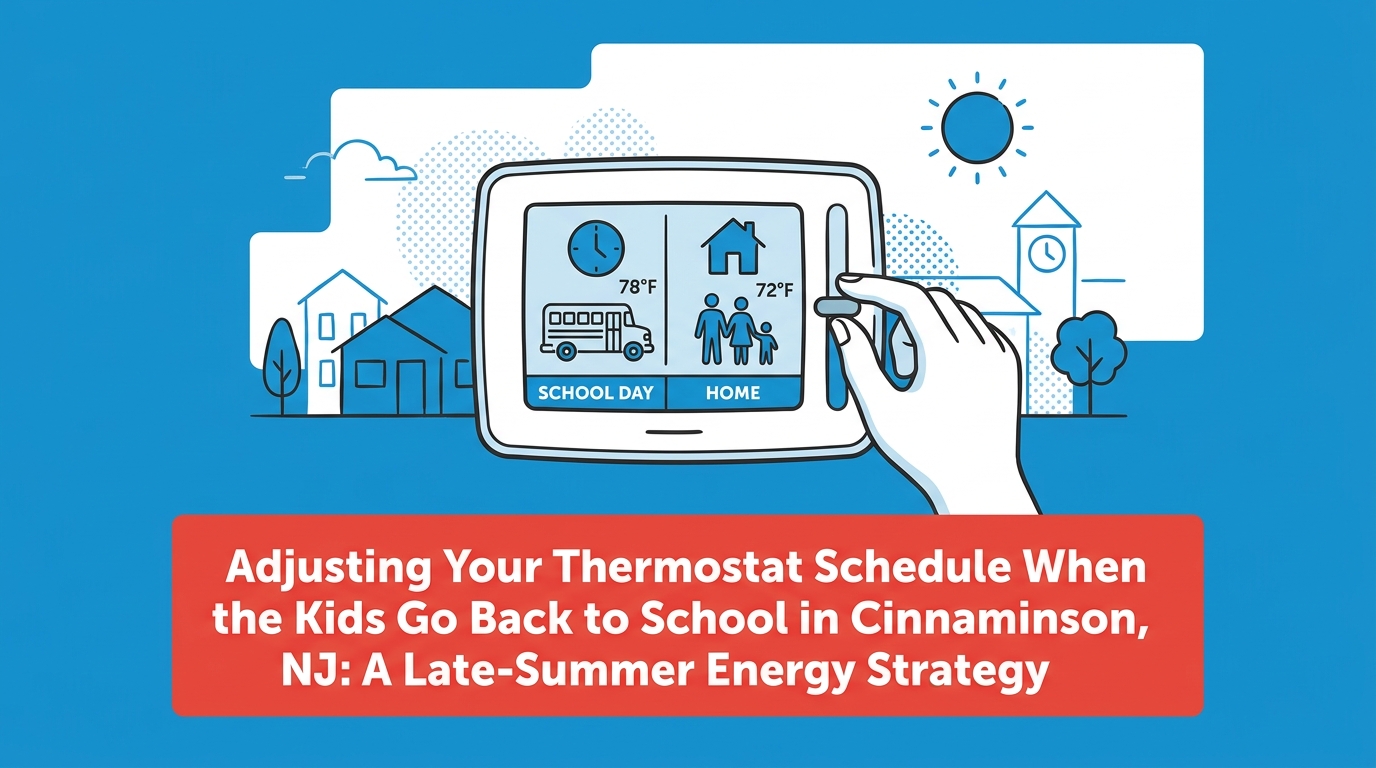

Transitioning Your Home's Climate for the Cinnaminson School Year
Late August is right around the corner, and adjusting your thermostat schedule when the kids go back to school in Cinnaminson is one of the smartest moves you can make for your home's comfort and efficiency. Here at Climate Mechanics, we know that for the past two months, your home has likely been a hub of constant activity. With kids running in and out, doors constantly opening, and the family home during the hottest parts of the day, your cooling system has been working overtime to maintain a steady temperature. But as the late August back-to-school season arrives, your household routine undergoes a massive shift. Suddenly, the house sits empty for seven to eight hours a day.
This sudden change creates a concrete problem for many homeowners. Continuing to cool an empty house at your normal summer settings wastes a significant amount of energy. On the flip side, shutting the system down entirely means your family will return to a stuffy, uncomfortable home after a long day of classes and extracurriculars. The decision point comes down to properly reprogramming your smart thermostat to bridge the gap between summer break habits and the new school day routine. By optimizing your air conditioning systems, you can keep energy usage in check while ensuring a welcoming environment when the school bus pulls up.
Keep in mind that late August in Cinnaminson still brings daytime highs well into the 80s, and sometimes higher. This means you cannot simply switch your system off and open the windows just yet. A targeted, late-summer strategy is essential to manage both the lingering heat and the shifting daily schedule of your household.
The South Jersey Humidity Factor: Why Turning the AC Off is a Mistake
In our years of serving the local community, one of the most common misconceptions our technicians see is the belief that turning the air conditioning completely off while the house is empty will yield the highest energy savings. While this might work in dry, arid climates, it is a massive mistake in our region. South Jersey experiences incredibly high relative humidity in late summer, often exceeding 70 percent. When you turn your cooling system completely off, you are not just letting the temperature rise—you are allowing moisture to flood into your living spaces.
The hidden cost of moisture: When indoor humidity spikes, moisture settles into your carpets, furniture, and drywall. This makes the house feel sticky and significantly warmer than the actual temperature reading on the wall. When your system finally turns back on at 3:00 PM, it has to work twice as hard. It must first extract all that absorbed moisture (latent heat) before it can even begin to lower the actual air temperature (sensible heat). This forces your equipment to run at maximum capacity during the hottest part of the day, which consumes excessive energy and puts tremendous wear and tear on the components.
We see what happens when systems are pushed too hard to catch up against heavy moisture loads. During one particularly humid summer stretch, our Climate Mechanics team was called to handle repairs on a large commercial air conditioning system that had failed under the strain. We scheduled and completed the repairs efficiently, restoring the customer's confidence in their building's cooling capacity. However, that situation serves as a powerful reminder of how much strain high humidity puts on cooling equipment, whether in a massive commercial facility or your own Cinnaminson home.
Instead of a complete shutdown, our local experts recommend a moderate setback of 3 to 5 degrees. This allows your AC service in Cinnaminson to operate just frequently enough to pull humidity out of the air, protecting your home and keeping the environment manageable.
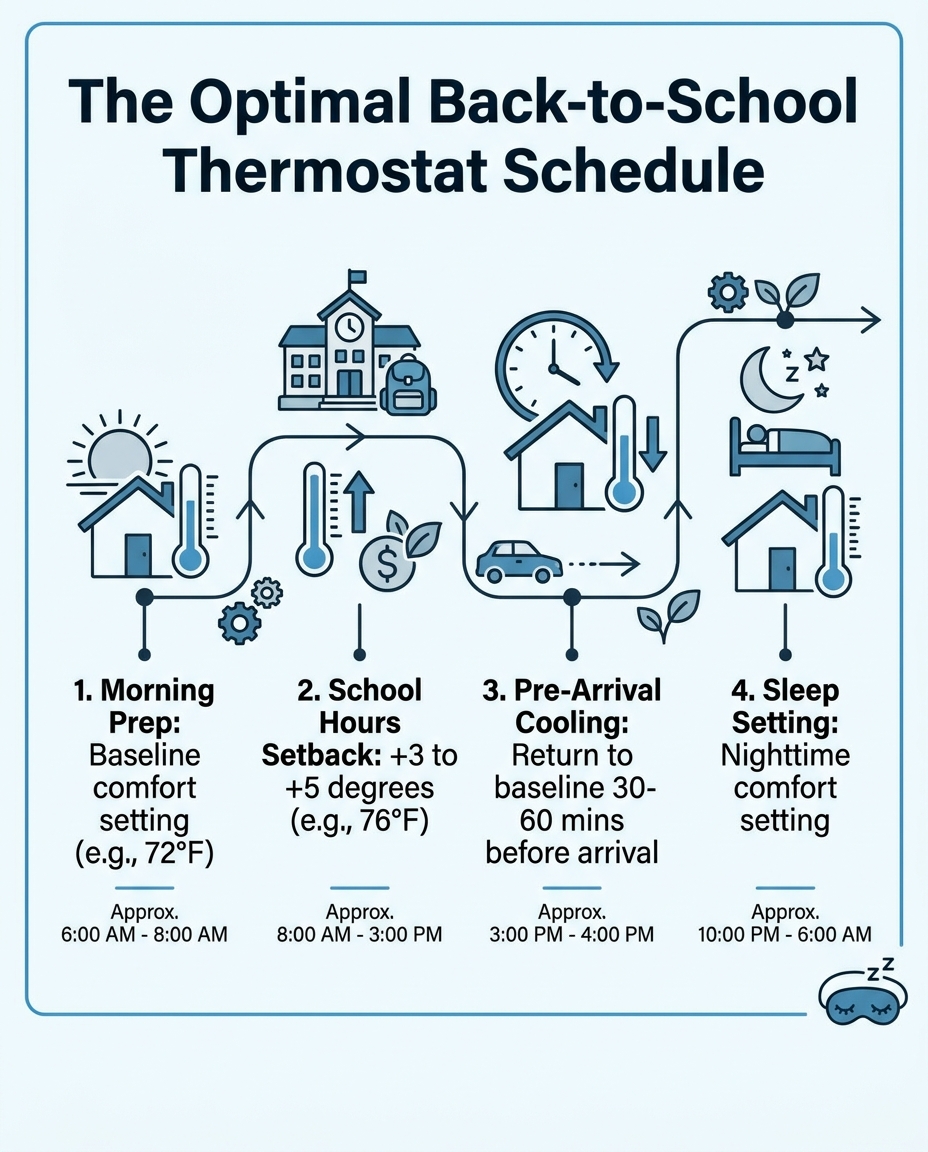
Quick Look: Optimal Back-to-School Thermostat Schedule
• Morning prep: Standard comfort setting (e.g., 72°F) to handle the busy morning routine.
• School hours setback: +3 to +5 degrees (e.g., 76°F) to save energy while controlling humidity.
• Pre-arrival cooling: Return to the comfort setting 30 to 60 minutes before the family arrives.
• Sleep setting: Nighttime comfort setting prioritized for humidity control and restful sleep.

Morning Prep: Keeping the House Comfortable During the Rush
The first phase of your new daily thermostat timeline centers around the chaotic morning rush. Getting everyone out of bed, fed, dressed, and out the door requires a comfortable environment. To achieve this, our service team recommends setting your thermostat to trigger your ideal morning comfort temperature about 15 to 20 minutes before the first person in the house wakes up. This brief head start ensures the air is already circulating and the house feels fresh when feet hit the floor.
Managing morning heat loads: You might not realize how much heat a family generates simply by getting ready for the day. Between hot showers running, hair dryers operating, the toaster oven cooking breakfast, and people constantly moving from room to room, the indoor temperature can naturally rise. Maintaining your baseline comfort setting (usually around 70°F to 72°F) through this morning routine helps manage this extra heat generation effectively.
During the late August back-to-school transition, morning outdoor temperatures are generally cooler than the afternoon peaks. Because the outside air is milder early in the day, your system will not have to work incredibly hard to maintain this baseline comfort level. Avoid the temptation to drop the temperature excessively low in the morning just to cool the house down faster; sticking to your standard baseline is the most efficient way to handle the morning rush without overworking the equipment.
Timing the Morning Wake-Up Setting
If your alarm goes off at 6:30 AM, program the thermostat to hit your target temperature at 6:15 AM. If your smart thermostat has a "recovery" or "early start" feature, it will automatically calculate when to turn on the system so that the house reaches the exact target temperature right at 6:15 AM. This takes the guesswork out of your morning scheduling.
The Empty House Setback: Maximizing School-Day Energy Savings
Once the morning rush is over and the house empties out, it is time to implement the daytime setback. You should trigger the setback temperature right as the last person leaves for work or heads to the school bus stop. This is where the bulk of your energy savings will occur during the week.
The U.S. Department of Energy generally recommends a 7 to 10-degree setback for empty homes to maximize efficiency. However, as our experienced technicians know regarding the unique climate in Cinnaminson, you must modify this advice. A 3 to 5-degree setback is the absolute sweet spot for late-summer New Jersey weather. This smaller adjustment saves a considerable amount of energy over a seven-to-eight-hour period without losing the critical battle against indoor moisture.
Leveraging automation: Chaotic mornings often lead to forgotten tasks, including adjusting the thermostat. This is where exploring smart thermostat installation benefits truly pays off. Modern thermostats offer geofencing technology, which tracks your smartphone's location and automatically enters setback mode when you leave a certain radius of your house. If you prefer a more predictable approach, a fixed daily schedule programmed into the device guarantees the setback happens every single weekday at the exact same time, regardless of how rushed your morning becomes.
• Fixed Schedule — How It Works: Changes temperature at specific times (e.g., 8:00 AM to 76°F). — Best For: Families with highly predictable, rigid daily routines.
• Geofencing — How It Works: Adjusts based on the physical location of connected smartphones. — Best For: Households with varying schedules or unpredictable departure times.
• Manual Adjustment — How It Works: Requires physical interaction with the thermostat each day. — Best For: Homes without smart technology (highly prone to being forgotten).
By consistently reducing the cooling load for a third of the day, you significantly cut down on the system's overall run time. Over the course of a month, this disciplined approach to the empty house setback yields noticeable reductions in energy consumption.
Pre-Arrival Cooling: Beating the Afternoon Heat Before the Bus Arrives
The ultimate goal of a smart late August back-to-school schedule is ensuring the home is a sanctuary when the family returns. Walking into a hot, stagnant house after a long day of classes or sports practice is frustrating. To prevent this, schedule the thermostat to return to the baseline comfort setting 30 to 60 minutes before the kids get off the bus or you return from work.
The importance of gradual recovery: As local HVAC professionals, we always stress the importance of gradual recovery over a rapid temperature drop. When you allow the system 45 minutes to cool the house, it runs steadily and efficiently, pulling out humidity and slowly lowering the temperature. If you wait until you walk through the door to crank the thermostat down, the system is forced to run at maximum capacity during the hottest part of the late afternoon, which strains the compressor and wastes energy.
Why Smart Thermostats Excel at Recovery
Advanced smart thermostats take the guesswork out of this pre-arrival phase. These devices learn your home's unique heating and cooling patterns. They factor in the current outdoor temperature, the indoor humidity, and how well your house holds its temperature. If you tell the thermostat you want the house to be 72°F by 3:30 PM, the device will calculate exactly when to start the cooling cycle to hit that target precisely on time. The relief of walking into a properly cooled, dehumidified home after a hot late-summer day is immediate, and achieving it gradually protects your equipment.
Evening and Sleep Settings for Late-Summer Nights
As the late afternoon turns into evening, your thermostat schedule enters its final daily phase. You should maintain your afternoon comfort setting through dinner and evening activities. Kitchens generate a lot of heat during meal preparation, and with the whole family gathered in the living spaces, the cooling system needs to maintain a steady airflow to keep everyone comfortable.
Transitioning to sleep: When it is time for bed, you have a few options depending on your family's preferences. Many people sleep better in a cooler environment, so dropping the temperature a degree or two at night is common. However, if you utilize ceiling fans in the bedrooms, you can actually adjust the sleep setting slightly higher. The wind-chill effect created by a ceiling fan makes the room feel a few degrees cooler than it actually is, allowing you to save energy overnight without sacrificing comfort.
• Keep interior doors open: Allow air to circulate freely through the hallways to prevent hot spots.
• Utilize ceiling fans: Ensure fans are spinning counterclockwise to push cool air down.
• Close the blinds: Keep late afternoon sun from heating up western-facing bedrooms before sleep.
It is also important to note the shifting Cinnaminson weather. As September approaches, nighttime temperatures will naturally begin to drop. This means your cooling system will naturally run less overnight, even if you leave the setpoint exactly the same. The outdoor air simply won't demand as much from your equipment, providing a natural taper to your late-summer energy usage.
End-of-Summer System Health: Preparing for the Final Heat Waves
While a properly scheduled thermostat significantly reduces daily strain, it is crucial to remember that your air conditioning unit has already worked incredibly hard all summer long. By the time the late August back-to-school season arrives, your equipment has logged hundreds of hours of operation. Connecting your efficient thermostat habits with overall system maintenance is vital during this high-stress time of year.
The role of air filters: One of the most important things you can do right now is check and replace your air filters. After a long summer of constant use, filters often become heavily clogged with dust, pollen, and pet dander by late August. A clogged filter severely restricts airflow, which means your system will struggle to recover from the daytime temperature setbacks we discussed earlier. If your system takes hours to drop the temperature three degrees, a dirty filter is often the culprit.
An aging or struggling unit might not recover well from daytime setbacks at all, signaling the need for professional attention. One local homeowner experienced this firsthand when their central air unit went down completely on a sweltering holiday weekend. Our Climate Mechanics owner and service tech arrived quickly, diagnosed the issue, and had the unit back up and running within 30 minutes. Catching performance issues early—such as a system that fails to cool the house before the kids get home—often prevents these sudden weekend emergencies.
Warning Signs Your AC is Struggling with the Schedule
If you notice any of the following symptoms when your system tries to recover from its daytime setback, it may be time to look into an HVAC maintenance program before the final heat waves of September hit:
• Extended run times: The system runs constantly but never quite reaches the target temperature.
• Short cycling: The unit turns on and off rapidly without completing a full cooling cycle.
• Warm air from vents: The air blowing into the rooms feels lukewarm rather than crisp and cold.
• Unusual noises: Grinding, squealing, or rattling sounds during the afternoon startup.
Proactive system care right now ensures your home stays comfortable through the end of the cooling season and prepares the equipment for a smooth transition into the heating season.
Frequently Asked Questions About Late-Summer Thermostat Settings
What is the best AC temperature for an empty house?
The best temperature is typically 3 to 5 degrees higher than your normal comfort setting. In humid climates, setting the temperature too high prevents the system from running enough to remove moisture from the air. A moderate setback balances energy savings with critical indoor humidity control.
How do I set my thermostat schedule for the school year?
You should align your temperature setbacks with the exact hours the house is completely empty. Program the thermostat to raise the temperature right when the last person leaves in the morning, and ensure it begins cooling the house back down 30 to 60 minutes before the first person arrives home.
Should I turn my AC off during the day in summer?
No, turning it off completely is generally a bad idea in humid regions like ours. Doing so allows indoor humidity to spike, which makes the house feel sticky and forces the system to overwork and consume excess energy when it is finally turned back on.
Does turning the AC up during the day save energy?
Yes, setting the temperature just a few degrees higher reduces the overall cooling load on your system. By giving the equipment a break for seven to eight hours a day, you can significantly lower your household energy bills over the course of the month.
How does high humidity affect my thermostat settings?
High humidity makes the indoor air feel much warmer than the actual temperature reading. Because of this, your AC needs to run periodically to remove moisture even if the house is empty, which is why moderate setbacks are preferred over drastic temperature changes.
Lock In Your Energy Savings This School Year
Transitioning away from constant summer cooling doesn't have to be complicated. By establishing clear, practical thermostat scheduling parameters, you can perfectly balance daytime energy savings with the after-school comfort your family deserves. The key is managing the humidity while giving your equipment a much-needed break during the empty hours of the day. As the new routine begins, take ten minutes to reprogram your schedule and set your home up for success. If you find that your current thermostat is difficult to program or your system is struggling to keep up with adjusting your thermostat schedule when the kids go back to school in Cinnaminson, it may be time to have the system inspected by our experts at Climate Mechanics. A quick tune-up or a smart thermostat upgrade can ensure your home remains an efficient, comfortable sanctuary all season long.
