



Why Last Winter's Wear and Tear Stays Hidden Until Fall
September in the Delaware Valley is just around the corner, which means we are rapidly approaching the critical pre-heating season transition. As the leaves begin to turn and the weather cools, it is incredibly easy to forget that your heating equipment has been sitting completely idle since early spring. Here at Climate Mechanics, the most pressing question we get from homeowners right now is how a cracked heat exchanger goes unnoticed until the first cold snap. When the weather is mild, your system is not under any stress, creating a false sense of security that everything is perfectly fine.
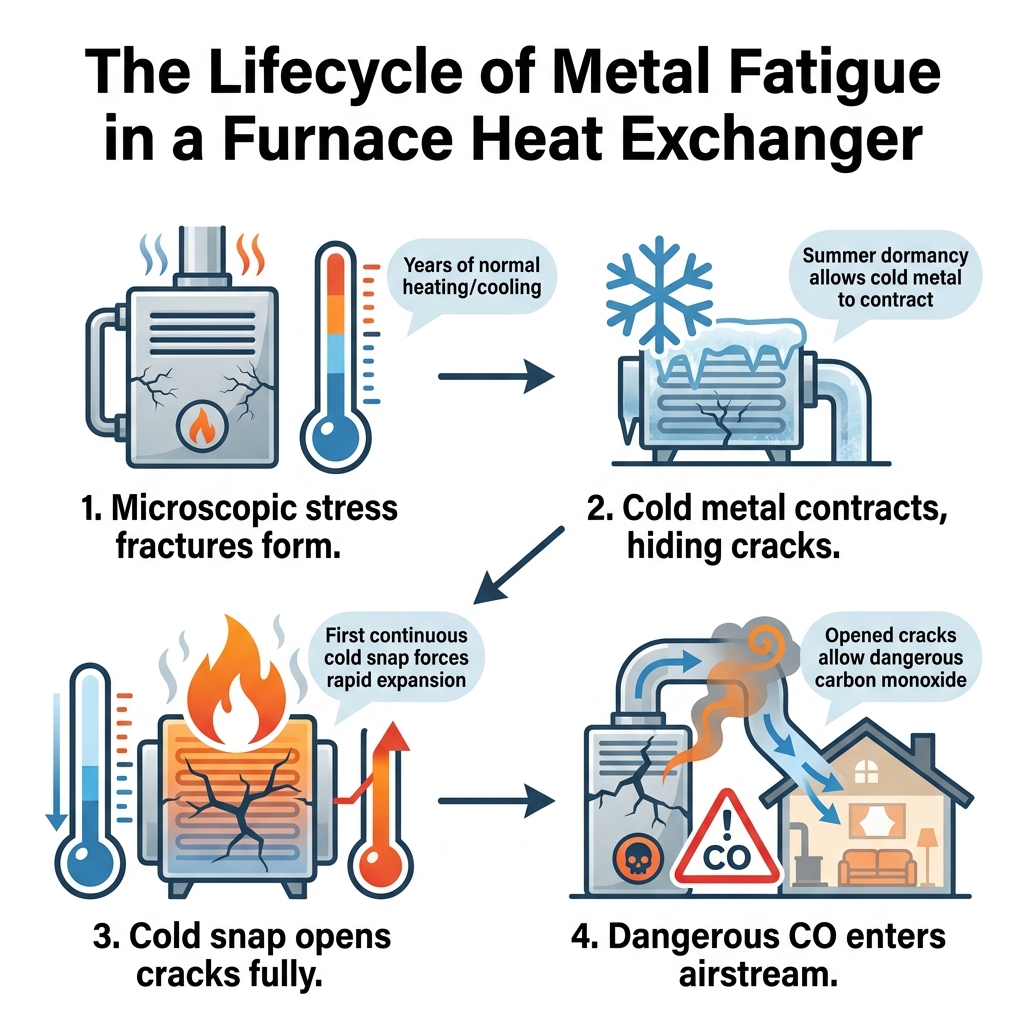
Whether you rely on older furnaces to keep your home warm or you find yourself needing immediate Cinnaminson furnace repair, understanding what happens inside your equipment during the off-season is the key to a safe winter. In our experience, the core issue is microscopic metal fatigue. Over the previous winter, the constant heating and cooling cycles caused the metal inside your heating system to expand and contract thousands of times. This thermal stress creates tiny, invisible fissures in the metal components.
Because the system remains dormant throughout the summer, these microscopic cracks stay tightly closed and completely hidden. Our team typically advises that the critical decision point for any homeowner is whether to schedule a professional inspection during the September pre-heating season transition, or wait until the first freezing night forces the system into continuous operation. Waiting for the cold to test your system is a gamble, as the sudden thermal stress will force those hidden cracks to expand rapidly, potentially leading to a dangerous breakdown right when you need the heat the most.
Understanding Your Furnace's Heat Exchanger
To understand why these hidden cracks are so dangerous, you first need to understand the fundamental role of the heat exchanger. We always explain to our customers that this component is arguably the most critical piece of equipment inside your heating system. Its primary function is to transfer the heat generated by the burners into the air that circulates throughout your home, all while safely containing the dangerous combustion gases produced during the heating process.
Think of the heat exchanger as a sealed metal barrier. On one side of this barrier, you have the intense heat and toxic exhaust gases—including carbon monoxide—created by burning fuel. On the other side, you have the clean, breathable indoor air that gets pushed through your ductwork. The metal must withstand extreme temperature fluctuations during every single heating cycle, containing the exhaust while allowing the heat to radiate through.
The Shield Between Heat and Exhaust
The integrity of this metal shield is absolutely non-negotiable for your indoor air quality and overall household safety. When the system is operating correctly, the combustion gases are contained within the heat exchanger and safely vented outdoors through a dedicated exhaust pipe.
• The combustion phase: Burners ignite fuel, creating intense heat and toxic exhaust gases inside the sealed metal chamber.
• The transfer phase: The blower motor pushes cold indoor air over the extremely hot exterior of the metal chamber, warming the air without it ever touching the toxic exhaust.
• The ventilation phase: The dangerous exhaust gases are carried safely out of your home through the flue pipe, leaving only warm, clean air to circulate through your vents.
If this barrier is compromised in any way, the entire safety mechanism fails. The extreme temperatures the metal must withstand over many years eventually take a toll, which is why our technicians emphasize understanding the physical limits of the equipment for proactive maintenance.
The Physics of Metal Fatigue in Heating Systems
The reason heat exchangers crack over time comes down to basic physics. When metal is heated, it expands. When it cools down, it contracts. In plain English, this constant expanding and contracting is known as thermal expansion and contraction. Every time your thermostat calls for heat, the burners ignite, and the metal chamber rapidly heats up and expands. Once the target temperature is reached, the burners shut off, and the metal cools and contracts.
Over the course of a single winter, this cycle happens thousands of times. Over a decade, it happens tens of thousands of times. This constant, repetitive movement creates cumulative wear on the metal. Eventually, the metal begins to lose its flexibility, leading to microscopic stress fractures. These cracks do not happen overnight; they are the direct result of years of continuous thermal stress.
The Microscopic Origins of Metal Fatigue
As a heating unit ages, the metal becomes increasingly brittle and susceptible to these micro-fissures. A pattern we see often is that a system that is ten or fifteen years old has endured massive amounts of thermal stress, making it a prime candidate for metal fatigue. When the fatigue reaches a critical point, the only safe solution is a full furnace replacement to restore the integrity of the barrier.
• New, Healthy Metal — Flexibility & Response to Heat: Expands and contracts smoothly without structural stress. — Safety Risk Level: Very Low Risk
• Aging, Stressed Metal — Flexibility & Response to Heat: Loses elasticity; microscopic surface wear begins to form. — Safety Risk Level: Moderate Risk (Requires Monitoring)
• Fatigued, Cracked Metal — Flexibility & Response to Heat: Cannot absorb thermal expansion; microscopic fissures tear open. — Safety Risk Level: Severe Risk (Immediate Danger)
Understanding this progression highlights why a proactive approach is necessary. The damage accumulates slowly, but the failure happens suddenly when the metal can no longer handle the stress of the heating cycle.
Why Summer Dormancy Hides Winter Damage
One of the most frustrating aspects of metal fatigue we encounter is that homeowners rarely notice the damage during the off-season. When your heating system is turned off in the spring and remains dormant for months, the metal inside the heat exchanger cools completely, settles, and contracts tightly.
Because the metal is cold and inactive, the microscopic cracks that formed during the previous winter close up. The edges of the fissures press tightly together, making them virtually invisible to the naked eye. This dormancy creates a dangerous illusion. When you test your system on a mild day in early autumn, it might turn on, run for ten minutes, and shut off without any noticeable issues.
This false sense of security is exactly why the September pre-heating season transition is so deceptive. The damage is already there, embedded in the metal, just waiting for a catalyst to expose it. The timeline of this hidden damage typically follows a specific pattern:
1. Late Winter Accumulation: The system runs heavily during February and March, pushing aging metal past its breaking point and creating microscopic fractures.
2. Spring Deactivation: The system is turned off. The metal cools completely, and the microscopic fractures contract and press tightly closed.
3. Summer Dormancy: The system sits entirely inactive. The cracks remain hidden in the cold, contracted metal.
4. Early Fall Illusion: Mild weather requires only brief heating cycles. The metal does not get hot enough for long enough to fully expose the cracks, masking the underlying danger.
The system is effectively a ticking clock. The structural integrity is already compromised, and it will only take a sudden, sustained period of intense heat to force those hidden cracks wide open.
The Catalyst: How the First Cold Snap Triggers Failure
The catalyst that finally exposes the hidden damage is the arrival of freezing weather. In our years serving the region, we've seen firsthand how Cinnaminson and the Delaware Valley experience abrupt late-fall temperature drops. We often see weather patterns shift rapidly from mild, comfortable daytime temperatures to freezing overnight lows. This sudden drop places immense, sudden thermal stress on your dormant heating equipment.
When the temperature plummets, your thermostat demands continuous, high-stress operation. Instead of running for ten minutes and shutting off, the burners run continuously for hours to fight the freezing temperatures outside. This sustained, intense heat forces the dormant, cold metal to expand rapidly and continuously.
As the metal stretches under this extreme thermal expansion, the microscopic summer fissures are forced to stretch and open fully. What was a tightly closed, invisible hairline fracture in August becomes a gaping, open crack in November. This sudden thermal expansion is exactly what leads to emergency breakdowns on the coldest nights of the year, leaving Cinnaminson NJ area homes without heat when they need it most. If you want to know what to look out for during this critical time, our team highly recommends learning about the warning signs your furnace heat exchanger is cracked.

The Silent Danger of Carbon Monoxide Leaks
The mechanical failure of a heat exchanger is frustrating because it leaves you without heat, but the true danger lies in what escapes through those open cracks. When the fissures stretch open during continuous runtime, the barrier between the toxic exhaust and your breathable indoor air is broken. Toxic combustion gases, primarily carbon monoxide, can now escape directly into your home's airstream.
According to data from the Centers for Disease Control and Prevention (CDC), carbon monoxide is an odorless, colorless, and tasteless gas. You cannot see it, you cannot smell it, and you cannot taste it. Because it is completely undetectable by human senses, it is responsible for hundreds of non-fire-related fatalities annually. When our team finds a cracked heat exchanger, our immediate concern is that the blower motor could push this invisible gas straight through your ductwork and into your living areas, bedrooms, and hallways.
Why Standard Smoke Alarms Fall Short
A common misconception we hear is that standard safety equipment will alert you to this danger. However, standard smoke detectors will not catch this specific issue. Smoke detectors are designed to sense particulate matter from a fire; they are completely blind to carbon monoxide gas.
• Standard Smoke Detector — What It Senses: Smoke particles, active fires, smoldering materials. — Protection Level for Heat Exchangers: Zero protection against CO gas leaks.
• Dedicated CO Detector — What It Senses: Carbon monoxide gas concentrations in the air. — Protection Level for Heat Exchangers: High protection; essential for early warning.
• Combination Unit — What It Senses: Both smoke particles and CO gas. — Protection Level for Heat Exchangers: Excellent comprehensive protection.
This reinforces the absolute necessity of having functional, up-to-date carbon monoxide detectors installed on every level of your home, especially near all sleeping areas. While CO detectors are a critical last line of defense, our goal at Climate Mechanics is always to prevent the gas from ever entering the home in the first place.
Why Professional Diagnostics Are the Only Way to Find Invisible Cracks
Because these microscopic cracks are invisible during the off-season and highly dangerous when they open, proactive professional maintenance is the only reliable solution. It is crucial to understand that a homeowner cannot visually inspect the heat exchanger themselves. The component is buried deep inside the cabinet, surrounded by sensitive wiring, gas lines, and other critical parts. Attempting a DIY inspection is not only ineffective, but it also risks exposing you to dangerous gases or damaging the equipment.
Finding these hidden stress fractures requires specialized tools and extensive training. Our professional technicians utilize advanced diagnostic equipment, such as highly sensitive combustion analyzers that can detect trace amounts of escaping gases before they reach dangerous levels. We also use specialized, high-definition inspection cameras (borescopes) that snake deep into the heat exchanger cells to visually identify microscopic metal fatigue that is invisible from the outside.
The value of scheduling furnace maintenance during the September pre-heating season transition cannot be overstated. By catching mechanical stress early, you prevent sudden emergencies. For example, during a previous winter, our technicians responded to a local homeowner who reached out on a snowy day when their heating system suddenly stopped working, suspecting a simple dirty sensor. Our team was dispatched quickly, identified the more severe underlying mechanical issue—a cracked heat exchanger—and took the time to educate the customer on how proactive maintenance prevents these sudden, freezing-weather failures.
This is where thorough, expert safety inspections by trained local technicians make all the difference. We know exactly how to identify the early stages of metal fatigue, ensuring your system is structurally sound before it is subjected to the continuous stress of winter weather.
Frequently Asked Questions About Heat Exchanger Safety
Why do furnace heat exchangers crack?
Furnace heat exchangers crack due to cumulative metal fatigue caused by thermal expansion and contraction. Every time the furnace runs, the metal heats up and expands; when it shuts off, the metal cools and contracts. Over many years, this constant flexing creates microscopic stress fractures that eventually tear open into full cracks.
Can carbon monoxide leak from a cracked heat exchanger?
Yes, a cracked heat exchanger is the primary cause of carbon monoxide leaks in a heating system. The heat exchanger acts as a barrier between the toxic combustion exhaust and your clean indoor air. When that barrier cracks, the blower motor can push the dangerous, odorless gas directly into your home's ductwork.
Why did my furnace break on the first cold night?
Your furnace likely broke on the first cold night because continuous, high-stress operation forced dormant mechanical issues to the surface. Microscopic cracks in the heat exchanger that stayed tightly closed during summer dormancy are suddenly forced to expand rapidly under the intense heat of continuous operation, triggering a system failure.
How do you know if your heat exchanger is cracked?
You cannot definitively know if your heat exchanger is cracked without a professional diagnostic inspection. While symptoms like soot buildup, unusual smells, or a yellow burner flame can indicate a problem, microscopic metal fatigue requires specialized tools like combustion analyzers and inspection cameras to properly identify.
Is it safe to run a furnace with a cracked heat exchanger?
No, it is never safe to run a furnace with a cracked heat exchanger. Operating a compromised system risks pumping lethal carbon monoxide gas into your living spaces. If a crack is discovered, the system must be shut down immediately until the component is replaced or a new unit is installed.
Can a cracked heat exchanger be repaired, or does it require replacement?
A cracked heat exchanger cannot be safely patched or repaired with sealants or welding. Because the metal is already fatigued and subjected to extreme thermal stress, any patch will quickly fail. The only safe and code-compliant solutions are to replace the entire heat exchanger component or upgrade to a new furnace.
Secure Your Peace of Mind Before Freezing Temperatures Arrive
Understanding the physics of metal fatigue shifts your perspective from reactive repair to proactive safety. Now that you know how thermal expansion and contraction affect aging metal, it is clear why microscopic cracks stay hidden during the summer and suddenly trigger emergencies when the weather turns freezing. Relying on a dormant system to perform flawlessly under sudden, intense stress is a risk that we believe Cinnaminson NJ area homes do not need to take.
A clear, non-technical understanding of these mechanics highlights that a professional inspection is the only safe way to verify your system's structural integrity. Do not wait for the first cold snap to test your equipment. Schedule a comprehensive pre-season safety check with Climate Mechanics today to ensure your heat exchanger is solid, your indoor air remains clean, and your household stays safe and warm all winter long.
